



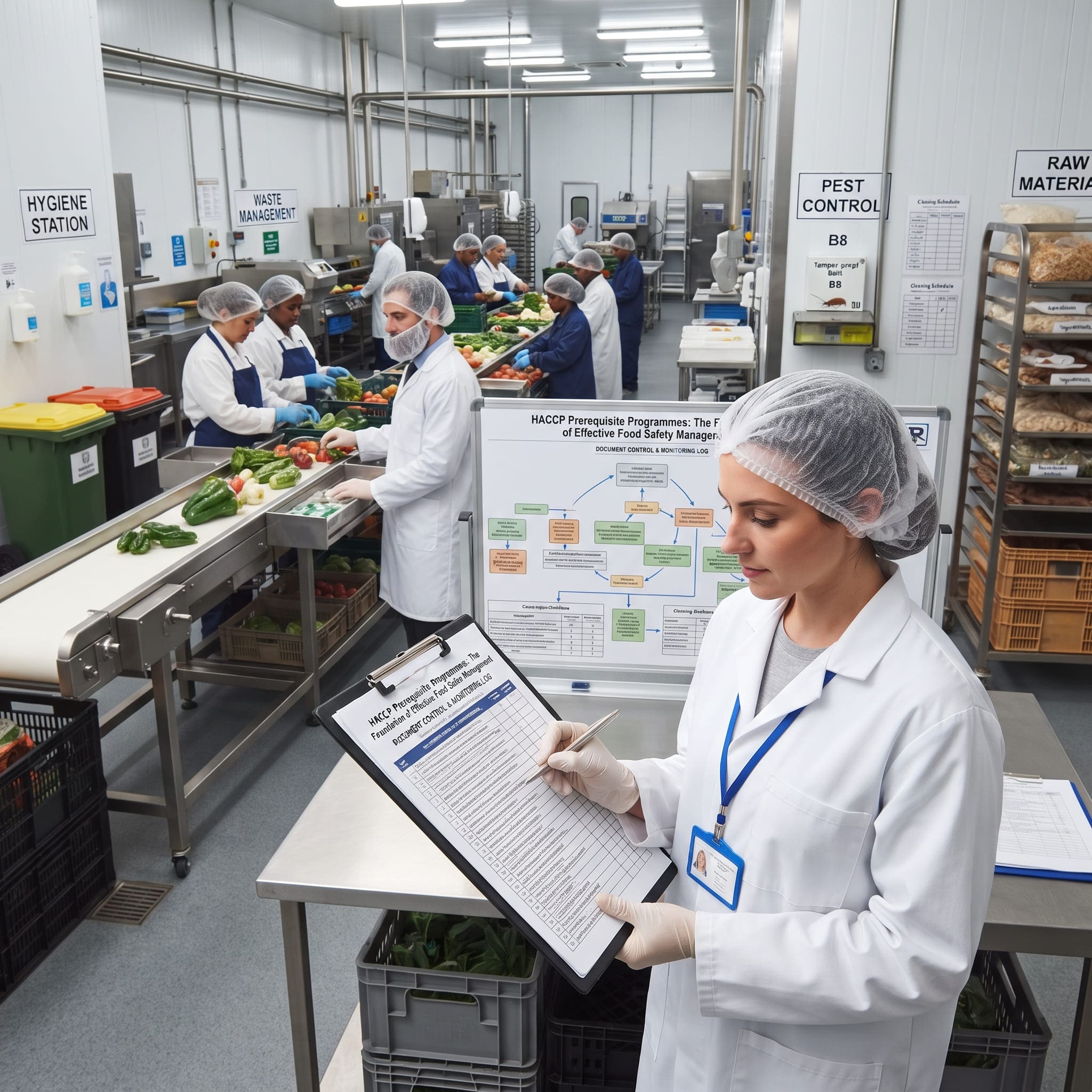
HACCP prerequisite programmes are the basic food safety conditions and practices that need to be established before a HACCP system can work effectively. They provide the foundation for controlling everyday food safety risks and help create an environment where more specific HACCP controls can operate successfully.
For restaurants, cafés, takeaways, catering businesses, bakeries, food retailers and other food businesses in Ireland, prerequisite programmes can cover areas such as cleaning, personal hygiene, pest control, maintenance, waste management, supplier controls and staff training.
Understanding prerequisite programmes is an important part of HACCP training Ireland, particularly for people responsible for developing, implementing or maintaining food safety procedures.
This article explains what HACCP prerequisite programmes are, why they matter and how food businesses can use them as part of an effective food safety management system.
What Are HACCP Prerequisite Programmes?
Prerequisite programmes are the basic conditions and activities that support hygienic food production and help control general food safety risks.
They operate alongside the HACCP system.
Examples can include:
- Personal hygiene
- Cleaning and sanitation
- Pest control
- Waste management
- Equipment maintenance
- Supplier management
- Food storage
- Water supply
- Staff training
- Premises management
These programmes help establish a suitable food safety environment before specific hazards are considered through the HACCP process.
A HACCP system should therefore not be viewed as a standalone document.
It operates within a wider food safety management system.
Why Are Prerequisite Programmes Important?
Imagine a restaurant has a carefully designed HACCP plan that identifies cooking as an important control.
However:
- Employees do not wash their hands correctly.
- Food-contact surfaces are not cleaned properly.
- Pests are not controlled.
- Equipment is poorly maintained.
- Waste is not managed appropriately.
The HACCP plan may be technically detailed, but the overall food safety system could still be weak.
Prerequisite programmes help establish the basic conditions needed for safe food handling.
They reduce general risks so that the HACCP system can focus on significant hazards requiring specific control.
Prerequisite Programmes and HACCP
HACCP focuses on identifying and controlling significant food safety hazards.
Prerequisite programmes deal with the broader conditions required to support food safety.
For example:
Prerequisite programme: Cleaning and sanitation
HACCP control: A specific cooking process used to control a significant biological hazard
Both are important, but they have different purposes.
A business should establish appropriate prerequisite programmes before relying on its HACCP plan to manage specific hazards.
Personal Hygiene
Personal hygiene is one of the most important prerequisite programmes for many food businesses.
Employees can potentially transfer microorganisms through their hands, clothing or personal behaviour.
A personal hygiene programme may cover:
- Hand washing
- Protective clothing
- Personal cleanliness
- Reporting illness according to workplace procedures
- Appropriate behaviour
- Hair restraints where required
- Jewellery and personal items
- Hand-washing facilities
Employees should understand their responsibilities and receive appropriate training.
Cleaning and Sanitation
Cleaning is another fundamental prerequisite programme.
Food businesses need suitable procedures for cleaning:
- Work surfaces
- Food-contact equipment
- Utensils
- Floors
- Walls
- Storage areas
- Refrigeration equipment
A cleaning programme should establish:
- What needs to be cleaned
- How it is cleaned
- How often it is cleaned
- Who is responsible
- What cleaning products are used
- How cleaning is checked
Good cleaning procedures help reduce contamination risks.
Pest Control
Pests can introduce biological and physical hazards into food premises.
Examples include:
- Rodents
- Flies
- Cockroaches
- Other insects
A pest control programme may include:
- Preventing pest access
- Maintaining premises
- Managing waste
- Keeping food appropriately stored
- Inspecting for evidence of pests
- Taking action when signs are discovered
Businesses may use professional pest control services where appropriate.
Waste Management
Food waste can create hygiene and pest control problems if it is not properly managed.
A waste management programme may cover:
- Waste containers
- Collection arrangements
- Internal waste storage
- External waste areas
- Cleaning of waste containers
- Disposal procedures
Employees should understand how waste is handled and where it should be placed.
Waste should not be allowed to create unnecessary contamination risks.
Equipment Maintenance
Poorly maintained equipment can create food safety problems.
Examples include:
- Damaged refrigeration equipment
- Broken seals
- Cracked food-contact surfaces
- Faulty thermometers
- Damaged utensils
- Defective cooking equipment
A maintenance programme helps businesses identify and address problems.
Equipment should be maintained in a condition that supports hygienic food handling.
Supplier Controls
Food safety begins before ingredients arrive at the premises.
Supplier controls can help businesses manage risks associated with purchased ingredients and materials.
A business may consider:
- Supplier approval
- Product specifications
- Allergen information
- Delivery conditions
- Packaging integrity
- Temperature requirements
- Traceability information
The exact supplier controls depend on the type of food business and its products.
Receiving Deliveries
Receiving food deliveries can also form part of a prerequisite programme.
Employees may need procedures for checking:
- Packaging
- Product condition
- Labelling
- Dates where applicable
- Temperature where required
- Delivery documentation
Problems should be reported and handled according to the business's procedures.
Good receiving controls help prevent unsuitable products from entering the food preparation process.
Food Storage
Appropriate food storage helps protect food from contamination and deterioration.
Storage procedures may cover:
- Refrigerated foods
- Frozen foods
- Dry ingredients
- Ready-to-eat food
- Raw ingredients
- Allergen-containing ingredients
Businesses should consider separation, appropriate containers, labelling and stock rotation.
Storage arrangements should reflect the nature of the products being handled.
Water Supply
Water can also be relevant to food safety.
Businesses need an appropriate supply of water for activities such as:
- Food preparation
- Cleaning
- Hand washing
- Equipment cleaning
Where water quality is relevant to the food operation, appropriate controls should be included in the food safety management system.
Temperature Control
Temperature management can be part of prerequisite programmes and may also form part of HACCP controls.
For example, a business may have general refrigeration procedures covering storage.
A particular cooking process, however, may be identified as a CCP if it is essential for controlling a significant hazard.
The distinction depends on the hazard analysis and the specific food process.
Allergen Management
Allergen management is another area that businesses need to consider.
Prerequisite controls may include:
- Ingredient information
- Storage arrangements
- Cleaning
- Staff training
- Labelling procedures
- Communication procedures
Allergen controls should be appropriate to the foods and services provided by the business.
Employees should know how to access accurate allergen information and should never guess when answering customer questions.
Cross-Contamination Prevention
Prerequisite programmes can also help prevent cross-contamination.
Controls may include:
- Hand hygiene
- Separation of raw and ready-to-eat foods
- Cleaning
- Equipment management
- Appropriate storage
- Workflow controls
These practices help reduce the possibility of hazards being transferred between foods, surfaces or equipment.
Staff Training
Employees need to understand the food safety procedures that apply to their roles.
Training may cover:
- Personal hygiene
- Cleaning
- Cross-contamination
- Allergen management
- Food storage
- Temperature control
- HACCP principles
The level of training should be appropriate to each employee's responsibilities.
People responsible for developing and maintaining HACCP-based procedures need adequate training in applying HACCP principles, according to the Food Safety Authority of Ireland.
HACCP Prerequisite Programmes for Small Businesses
Small businesses sometimes assume that prerequisite programmes are only necessary for large food manufacturers.
In reality, restaurants, cafés and takeaways also need basic food safety controls.
A small café might have prerequisite programmes covering:
- Cleaning
- Personal hygiene
- Pest control
- Waste
- Equipment maintenance
- Food storage
- Staff training
The documentation and complexity can be proportionate to the size and nature of the operation.
The important point is that the controls should be practical and effective.
Documenting Prerequisite Programmes
Businesses should document appropriate prerequisite procedures.
Documents might include:
- Cleaning schedules
- Pest control records
- Maintenance records
- Supplier records
- Training records
- Waste procedures
- Personal hygiene procedures
- Storage procedures
Not every programme needs the same type or amount of documentation.
Records should be useful rather than creating unnecessary paperwork.
Monitoring Prerequisite Programmes
Businesses should monitor their prerequisite programmes to ensure that procedures are being followed.
For example, a manager might check:
- Whether cleaning has been completed
- Whether food is stored appropriately
- Whether waste areas are maintained
- Whether pest control measures are effective
- Whether equipment is functioning correctly
Problems should be addressed through appropriate corrective actions.
Verification of Prerequisite Programmes
Verification can help determine whether prerequisite programmes remain effective.
A business might review:
- Cleaning records
- Pest control reports
- Maintenance records
- Staff practices
- Supplier performance
- Training records
Verification can identify patterns that might otherwise be missed.
For example, repeated cleaning failures may indicate that the schedule needs to be changed or staff need additional training.
HACCP Prerequisite Programmes and CCPs
It is important not to confuse prerequisite programmes with Critical Control Points.
A prerequisite programme generally provides basic environmental and operational conditions for food safety.
A CCP is a specific step where control is essential for controlling a significant hazard.
For example:
Cleaning programme → Prerequisite programme
Specific validated cooking process → Potential CCP
The HACCP team should determine the appropriate controls through hazard analysis.
HACCP Training Ireland
HACCP training Ireland can help food workers and managers understand how prerequisite programmes support HACCP.
Training may cover:
- HACCP principles
- Food safety hazards
- Prerequisite programmes
- Hazard analysis
- Critical Control Points
- Monitoring
- Corrective actions
- Verification
- Documentation
Understanding these relationships can help employees see that food safety is not limited to one particular CCP.
HACCP Level 1 and Level 2 Training
Food businesses may use different levels of HACCP training depending on employee responsibilities.
HACCP Level 1 training may introduce:
- Food hygiene
- Food safety hazards
- Basic HACCP principles
- Employee responsibilities
HACCP Level 2 training may provide more detailed information about:
- Hazard analysis
- Prerequisite programmes
- CCPs
- Critical limits
- Monitoring
- Corrective actions
- Verification
- Documentation
Course content varies between providers.
If you are looking for a HACCP Level 2 certificate, review the course syllabus to ensure it covers the topics relevant to your role.
HACCP Certificate Ireland
People searching for a HACCP certificate Ireland may encounter courses advertised as:
- HACCP course Ireland
- HACCP training Ireland
- HACCP certification Ireland
- HACCP certification course
- HACCP training certificate
- HACCP Level 2 certificate
- HACCP food safety training
When choosing training, consider the level of responsibility associated with your role.
A food handler may have different training requirements from someone responsible for managing a HACCP system.
Online HACCP Training
Online HACCP training can provide a flexible way to learn about HACCP and prerequisite programmes.
An online HACCP course Ireland may cover:
- Food safety hazards
- Hygiene
- Prerequisite programmes
- HACCP principles
- CCPs
- Monitoring
- Corrective actions
- Verification
Online learning can be useful for employees who need flexible study arrangements.
However, employees should still understand the specific procedures used by their workplace.
Common Prerequisite Programme Mistakes
Food businesses should avoid several common problems.
Treating Prerequisites as Optional
Basic hygiene controls are an essential part of food safety management.
Creating Procedures Nobody Follows
Procedures need to reflect actual working practices.
Excessive Paperwork
Documentation should support food safety rather than become unnecessary administration.
Poor Staff Training
Employees need to understand the procedures relevant to their roles.
Failing to Review Programmes
Processes and premises change, so prerequisite programmes may also need updating.
Ignoring Repeated Problems
Recurring failures can indicate that a programme needs improvement.
Practical Prerequisite Programme Checklist
A food business can ask:
- Are personal hygiene procedures established?
- Is there an effective cleaning programme?
- Are pests appropriately controlled?
- Is waste managed correctly?
- Is equipment maintained?
- Are suppliers appropriately controlled?
- Are deliveries checked?
- Is food stored safely?
- Are allergen controls established?
- Are cross-contamination risks controlled?
- Are employees appropriately trained?
- Are procedures monitored?
- Are problems corrected?
- Are programmes reviewed when circumstances change?
The checklist should be adapted to the individual business.
Final Thoughts
HACCP prerequisite programmes provide the foundation for effective food safety management.
They can cover:
- Personal hygiene
- Cleaning and sanitation
- Pest control
- Waste management
- Equipment maintenance
- Supplier controls
- Food storage
- Water supply
- Allergen management
- Staff training
These programmes create the basic conditions needed for a HACCP system to function effectively.
For food businesses in Ireland, suitable HACCP training Ireland can help employees understand how prerequisite programmes relate to hazard analysis, Critical Control Points, monitoring and verification.
If you are looking for a HACCP course Ireland, HACCP certificate Ireland, HACCP certification course, HACCP Level 2 training, HACCP training certificate or online HACCP training, consider whether the course content matches your responsibilities.
Ultimately, HACCP is more effective when it is supported by strong everyday food safety practices. A business with appropriate prerequisite programmes has a stronger foundation for identifying and controlling significant food safety hazards.
Rather than treating HACCP as a document that exists separately from daily operations, food businesses should integrate prerequisite programmes into everyday work. When employees understand and consistently follow these basic controls, the entire food safety management system becomes more practical, organised and effective.