



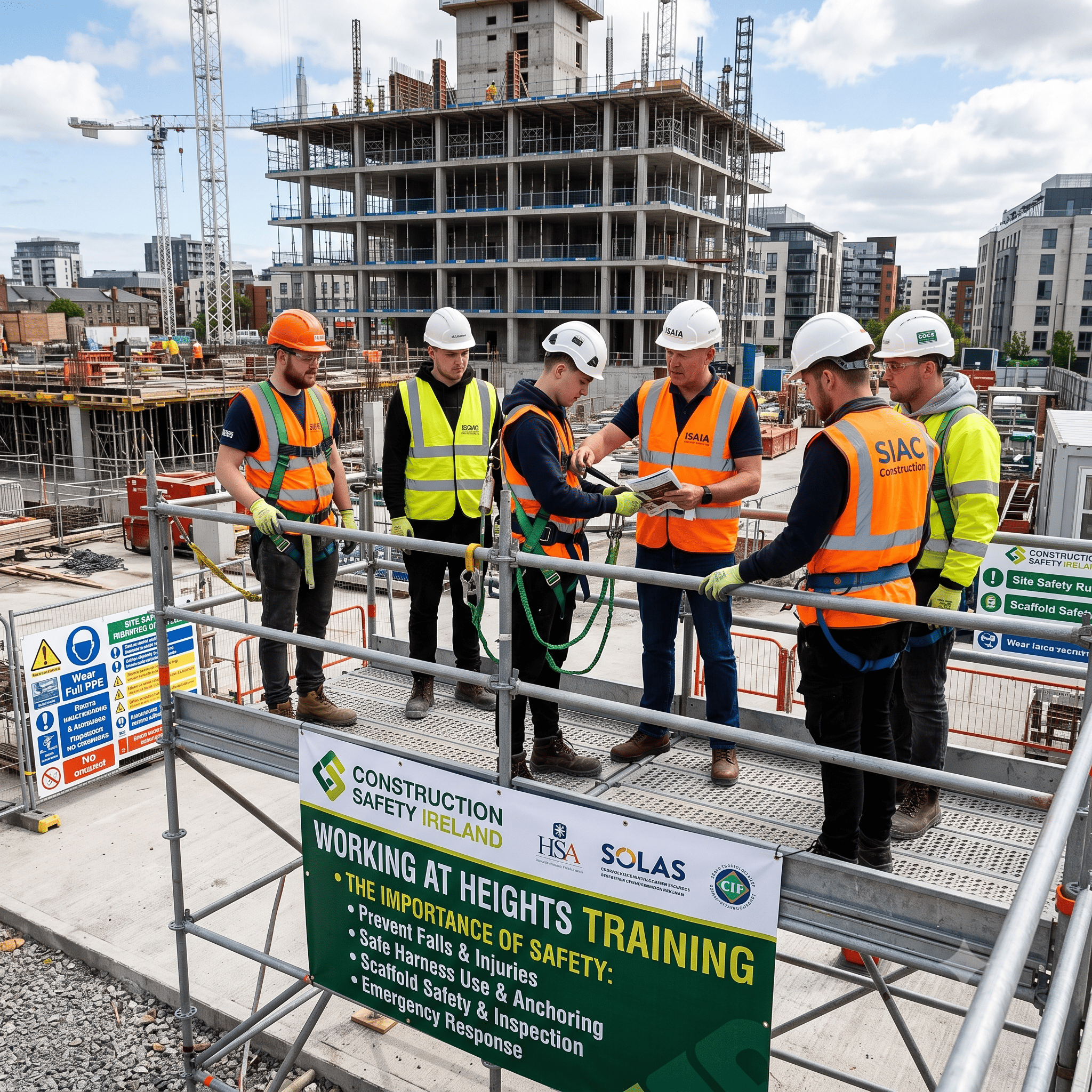
Creating a safe workplace is one of the most important responsibilities of every employer in Ireland. Regardless of industry, organisations must identify workplace hazards, assess risks, and provide employees with the knowledge and skills needed to perform their duties safely. Among the many workplace hazards that exist, working at height continues to be one of the most significant causes of serious injuries and fatalities.
Employees working on roofs, ladders, scaffolding, elevated platforms, and warehouse shelving face risks every day. Without proper planning and training, these tasks can lead to preventable accidents. This is why working at heights training in Ireland has become an essential part of modern workplace safety programmes. By teaching workers how to recognise hazards, assess risks, use equipment correctly, and follow safe procedures, training plays a vital role in reducing accidents and creating safer working environments.
This guide explains how working at heights training supports workplace safety in Ireland, the legal responsibilities of employers and employees, and the practical ways training helps prevent accidents across different industries.
Why Workplace Safety Matters
A safe workplace benefits everyone. Employees can perform their duties with greater confidence, while employers reduce the likelihood of accidents, project delays, and operational disruptions.
Effective workplace safety helps organisations:
- Protect employees from harm
- Reduce workplace injuries
- Improve productivity
- Meet legal obligations
- Build employee confidence
- Enhance business reputation
Safety is not simply about following rules—it is about creating a culture where hazards are identified and managed before accidents occur.
Understanding Working at Height
Working at height refers to any work activity where a person could fall from one level to another and suffer injury.
Examples include:
- Using ladders
- Working on roofs
- Operating mobile elevated work platforms (MEWPs)
- Working from scaffolding
- Installing electrical systems
- Warehouse stock retrieval
- Building maintenance
- Window cleaning
- Telecommunications work
- Solar panel installation
Even relatively low-level falls can result in serious injuries, making proper safety procedures essential.
Why Falls From Height Continue to Cause Accidents
Falls remain one of the leading causes of workplace injuries because many elevated tasks appear routine or familiar.
Common causes include:
- Poor planning
- Incorrect ladder use
- Unsafe scaffolding
- Lack of fall protection
- Slippery surfaces
- Inadequate supervision
- Failure to inspect equipment
- Unsafe shortcuts
Many of these incidents can be prevented through comprehensive working at heights training in Ireland.
Irish Workplace Safety Responsibilities
Under the Safety, Health and Welfare at Work Act 2005, employers have legal responsibilities to protect employees while at work.
Employers must:
- Provide safe workplaces
- Identify workplace hazards
- Carry out risk assessments
- Maintain safe work equipment
- Provide appropriate training
- Ensure employees are competent
- Supervise high-risk activities
Employees also have responsibilities to cooperate with safety procedures, use equipment correctly, and report hazards.
How Working at Heights Training Prevents Accidents
Training helps workers develop practical skills that reduce workplace risks.
1. Improving Hazard Awareness
One of the biggest causes of workplace accidents is failing to recognise hazards before work begins.
Training teaches workers to identify risks such as:
- Open edges
- Fragile roof surfaces
- Falling object hazards
- Uneven platforms
- Poor lighting
- Slippery conditions
- Weather-related dangers
When hazards are recognised early, appropriate control measures can be implemented.
2. Encouraging Better Risk Assessment
A good risk assessment helps workers think about safety before starting a task.
Training explains how to:
- Examine work areas
- Identify hazards
- Assess risk levels
- Choose suitable controls
- Plan work safely
Effective planning often prevents accidents before they happen.
3. Promoting Safe Ladder Use
Ladders are among the most commonly used pieces of equipment in many industries.
Training teaches workers how to:
- Select the correct ladder
- Inspect equipment before use
- Position ladders safely
- Maintain three points of contact
- Avoid overreaching
Following these principles greatly reduces ladder-related accidents.
4. Increasing Awareness of Scaffolding Safety
Construction and maintenance workers frequently use scaffolding.
Training covers:
- Safe access
- Platform inspections
- Guardrail systems
- Identifying unsafe structures
- Reporting defects
Workers who understand scaffolding safety are less likely to expose themselves to unnecessary risks.
5. Correct Use of Personal Protective Equipment
Training explains how to use and inspect:
- Safety harnesses
- Lanyards
- Anchor points
- Helmets
- Protective footwear
- Fall arrest systems
PPE is most effective when workers understand its limitations and use it correctly.
6. Improving Emergency Preparedness
Despite careful planning, emergencies can still occur.
Training prepares workers to:
- Report incidents quickly
- Follow emergency procedures
- Support rescue planning
- Communicate effectively during emergencies
Prepared employees are better able to respond calmly and safely.
Industries That Benefit From Working at Heights Training
Many industries require employees to work above ground level.
These include:
- Construction
- Roofing
- Warehousing
- Manufacturing
- Facilities management
- Telecommunications
- Utilities
- Renewable energy
- Property maintenance
- Industrial cleaning
Each industry presents different hazards, but the principles of working safely at height remain consistent.
Benefits for Employees
Completing working at heights training in Ireland offers several important advantages.
Employees benefit through:
- Increased safety awareness
- Greater confidence
- Better hazard recognition
- Improved decision-making
- Enhanced employability
- Professional development
Workers who understand workplace hazards are better equipped to protect themselves and others.
Benefits for Employers
Investing in health and safety courses in Ireland also provides significant organisational benefits.
Reduced Workplace Accidents
Well-trained employees are less likely to engage in unsafe behaviour or misuse equipment.
Improved Legal Compliance
Training helps employers demonstrate that workers have received appropriate instruction under Irish workplace safety legislation.
Lower Operational Costs
Fewer accidents can help reduce costs associated with:
- Lost productivity
- Workplace investigations
- Equipment damage
- Project delays
- Staff absences
Improved Productivity
Safe workplaces often operate more efficiently because fewer disruptions occur due to preventable incidents.
Stronger Safety Culture
Training encourages employees to:
- Report hazards
- Follow procedures
- Support colleagues
- Take responsibility for workplace safety
Positive safety cultures contribute to long-term organisational success.
Online Working at Heights Training
Many organisations now choose working at heights online training in Ireland because it offers flexibility and convenience.
Online learning allows workers to:
- Study at their own pace
- Access courses remotely
- Learn from multiple devices
- Receive digital certificates
For employers, online training makes workforce development easier while reducing scheduling challenges.
Choosing the Right Training Provider
When selecting health and safety courses online in Ireland, employers should consider providers offering:
- Up-to-date course content
- Compliance with Irish legislation
- Practical workplace examples
- Easy-to-use learning platforms
- Recognised certification
- Ongoing learner support
Quality training should prepare employees for the real situations they may encounter at work.
Maintaining Long-Term Workplace Safety
Training is one part of an effective safety programme.
Employers should also:
- Conduct regular risk assessments
- Inspect equipment routinely
- Monitor workplace conditions
- Encourage safety reporting
- Provide refresher training
- Review safety procedures regularly
Continuous improvement helps maintain high workplace safety standards.
Final Thoughts
Workplace Safety Ireland: How Working at Heights Training Reduces Accidents demonstrates why working at heights training is one of the most valuable investments an organisation can make. Falls from height continue to be a major cause of workplace injuries, but many incidents can be prevented through proper planning, effective supervision, suitable equipment, and comprehensive training.
By completing working at heights training in Ireland, employees gain essential skills in hazard identification, risk assessment, safe equipment use, and emergency response. Employers benefit through improved legal compliance, fewer workplace accidents, lower operational costs, and a stronger culture of safety.
Whether delivered in person or through health and safety courses online in Ireland, working at heights training helps organisations create safer workplaces where employees can carry out elevated tasks with greater confidence, competence, and awareness. Investing in workplace safety today contributes to healthier employees, more efficient operations, and a safer future for businesses across Ireland.