



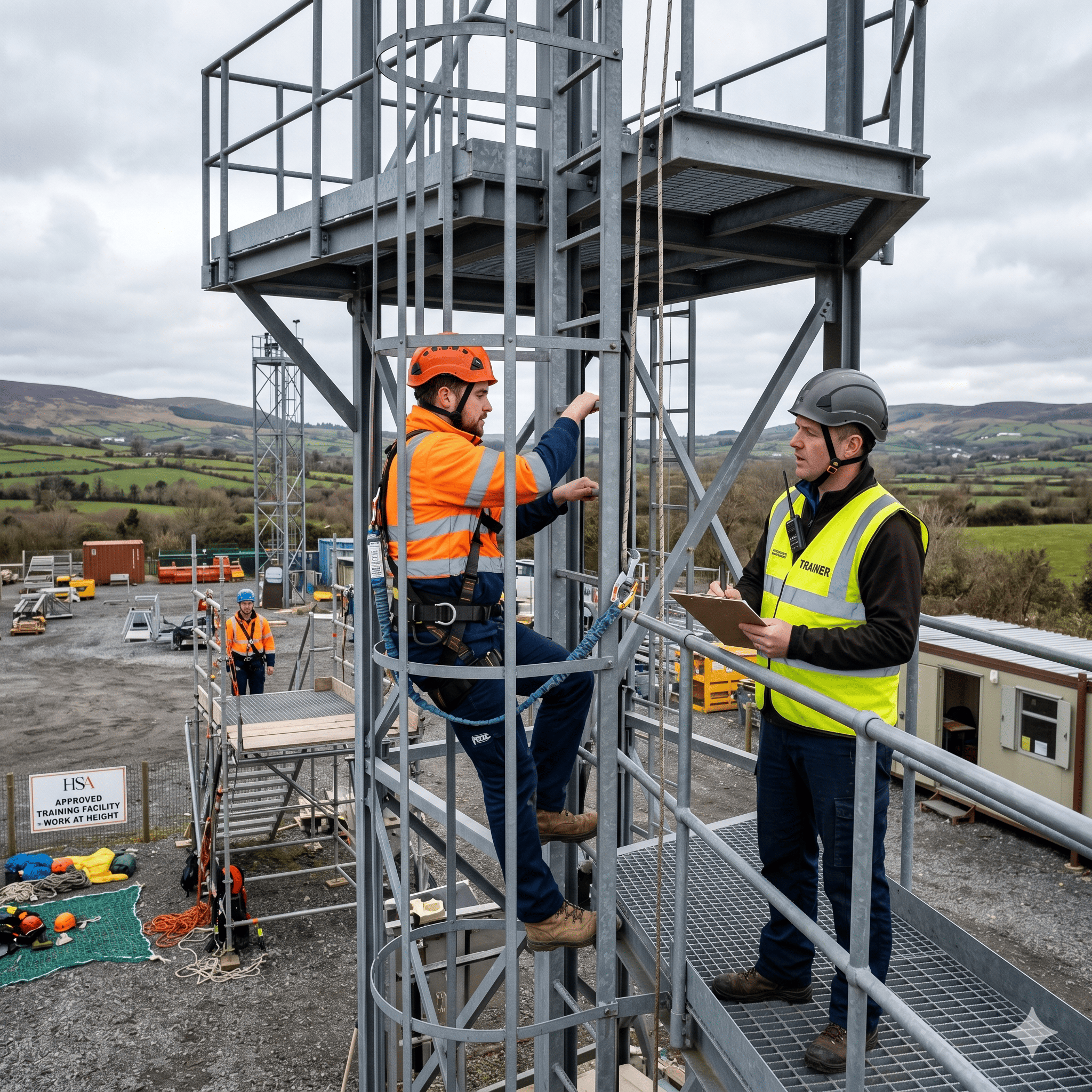
Working at Heights Training in Ireland is a critical requirement for anyone employed in high-risk industries where tasks are performed above ground level. Construction, roofing, warehousing, maintenance, telecommunications, and facilities management all involve situations where workers may be exposed to fall hazards. Because of this, proper training is not optional—it is a legal and practical necessity.
Falls from height remain one of the leading causes of serious workplace injuries and fatalities in Ireland. Even seemingly simple tasks like using a ladder or accessing a mezzanine floor can become dangerous without the right knowledge and preparation. This is why health and safety courses in Ireland place strong emphasis on working at heights competence and safe work practices.
This guide explains the essential skills learned during working at heights training, why they matter, and how they improve safety standards across high-risk jobs in Ireland.
Why Working at Heights Training Is Essential
Working at height refers to any activity where a person could fall and suffer injury. This includes both obvious and everyday tasks such as:
- Working on scaffolding
- Using ladders in warehouses or offices
- Roof inspections or repairs
- Using mobile elevated work platforms (MEWPs)
- Accessing elevated storage or mezzanine floors
- Installing equipment at height
Because risks exist in many routine tasks, working at heights training in Ireland is required across a wide range of industries.
The main purpose of training is to ensure workers can:
- Recognise hazards
- Use equipment safely
- Follow correct procedures
- Prevent accidents before they happen
The Importance of Safety Skills in High-Risk Jobs
High-risk jobs require more than physical ability—they require awareness, planning, and responsibility. Without proper training, workers may unknowingly take risks that lead to serious accidents.
Health and safety courses online in Ireland help workers build essential safety skills that protect both themselves and their colleagues.
Key benefits include:
- Reduced workplace accidents
- Improved decision-making
- Better compliance with regulations
- Increased confidence in high-risk environments
Legal Requirements in Ireland
Employers in Ireland have strict legal obligations under workplace safety laws.
Safety, Health and Welfare at Work Act 2005
Employers must:
- Ensure safe working conditions
- Provide proper training and supervision
- Identify and control risks
- Maintain competent workers
Work at Height Regulations
These require:
- Risk assessments before work begins
- Use of suitable equipment
- Proper training for workers
- Avoidance of unnecessary height work
These laws make working at heights training in Ireland essential for legal compliance in high-risk industries.
Essential Skills Learned in Working at Heights Training
A high-quality working at heights training course in Ireland focuses on practical, real-world skills that workers use daily.
1. Hazard Identification Skills
Workers learn how to identify dangers before starting any task at height.
This includes recognising:
- Unprotected edges
- Fragile surfaces
- Slippery or uneven ground
- Weather-related risks
- Falling object hazards
- Poor lighting conditions
Early hazard identification is one of the most important skills for preventing accidents.
2. Risk Assessment and Planning Skills
Before starting work, employees must evaluate the environment and plan safe procedures.
Training teaches workers how to:
- Assess site conditions
- Identify potential risks
- Evaluate severity and likelihood
- Implement control measures
- Plan safe access routes
Good planning reduces uncertainty and prevents unsafe decisions.
3. Ladder Safety Skills
Ladders are widely used but frequently involved in accidents.
Training includes:
- Selecting the correct ladder type
- Setting up on stable ground
- Inspecting ladders before use
- Maintaining three-point contact
- Avoiding overreaching
- Ensuring correct ladder angle
These skills are essential in almost every industry.
4. Scaffolding Awareness Skills
Even when workers do not erect scaffolding themselves, they must know how to use it safely.
Training covers:
- Safe access and exit points
- Guardrail systems and toe boards
- Platform stability checks
- Identifying unsafe scaffolding
- Reporting defects
5. Mobile Elevated Work Platform (MEWP) Skills
MEWPs such as cherry pickers and scissor lifts are common in construction and maintenance.
Workers learn:
- Safe operation procedures
- Emergency lowering systems
- Harness requirements
- Load limits and stability checks
Proper MEWP use reduces serious fall risks.
6. Personal Protective Equipment (PPE) Skills
PPE is a critical layer of protection when working at height.
Training includes how to use:
- Safety harnesses
- Lanyards and anchor points
- Fall arrest systems
- Helmets
- Safety footwear
Workers also learn how to inspect equipment for damage before use.
7. Fall Prevention Skills
Preventing falls is the main objective of all health and safety courses in Ireland focused on height work.
Workers are trained to:
- Maintain stable positioning
- Avoid unsafe shortcuts
- Use barriers and guardrails
- Follow safe movement techniques
- Keep work areas clear
8. Emergency Response Skills
Even with strong safety measures, emergencies can occur.
Training includes:
- Rescue planning
- Emergency communication
- Incident reporting
- Basic response procedures
- Evacuation awareness
Quick response can significantly reduce injury severity.
9. Communication Skills
Clear communication is essential in high-risk environments.
Workers learn to:
- Report hazards immediately
- Communicate with supervisors
- Use safety signals when required
- Coordinate with team members
Good communication improves overall site safety.
10. Environmental Awareness Skills
Weather and environmental conditions can greatly affect safety.
Training teaches workers to assess:
- Wind speed
- Rain and slippery surfaces
- Ice or frost conditions
- Visibility and lighting
Workers learn when it is unsafe to continue work.
Benefits of Working at Heights Training
Improved Workplace Safety
Workers are less likely to suffer falls or injuries.
Legal Compliance
Employers meet Irish safety requirements.
Increased Productivity
Trained workers work more efficiently and confidently.
Reduced Costs
Fewer accidents mean fewer claims and downtime.
Stronger Safety Culture
Workers take responsibility for safe practices.
Online Working at Heights Training
Many employers use working at heights online training in Ireland because it is flexible and efficient.
Benefits include:
- Learn at your own pace
- Access from any device
- Fast certification process
- Lower training costs
- Ideal for refresher training
After completion, workers receive a working at heights certificate online, often within a short time.
Common Mistakes Training Helps Prevent
Training reduces dangerous behaviours such as:
- Using unsafe ladders
- Ignoring weather conditions
- Skipping equipment inspections
- Incorrect PPE use
- Rushing tasks
- Poor planning
These mistakes are responsible for many workplace accidents.
Choosing the Right Training Provider
When selecting health and safety courses online in Ireland, ensure:
- Accredited certification
- Compliance with Irish law
- Clear course structure
- Employer recognition
- Strong reputation
A reliable provider ensures training is valid and practical.
Final Thoughts
Working at Heights Training Ireland: Essential Skills for High-Risk Jobs highlights the importance of developing practical safety skills for anyone working above ground level. In high-risk industries, proper training is the difference between safe work practices and serious accidents.
Through working at heights training in Ireland, workers gain essential abilities such as hazard identification, risk assessment, equipment use, PPE handling, and emergency response. These skills not only protect workers but also improve productivity and compliance across workplaces.
Ultimately, working at heights training is not just a requirement—it is a vital investment in safety, responsibility, and professional competence in Ireland’s high-risk industries.