



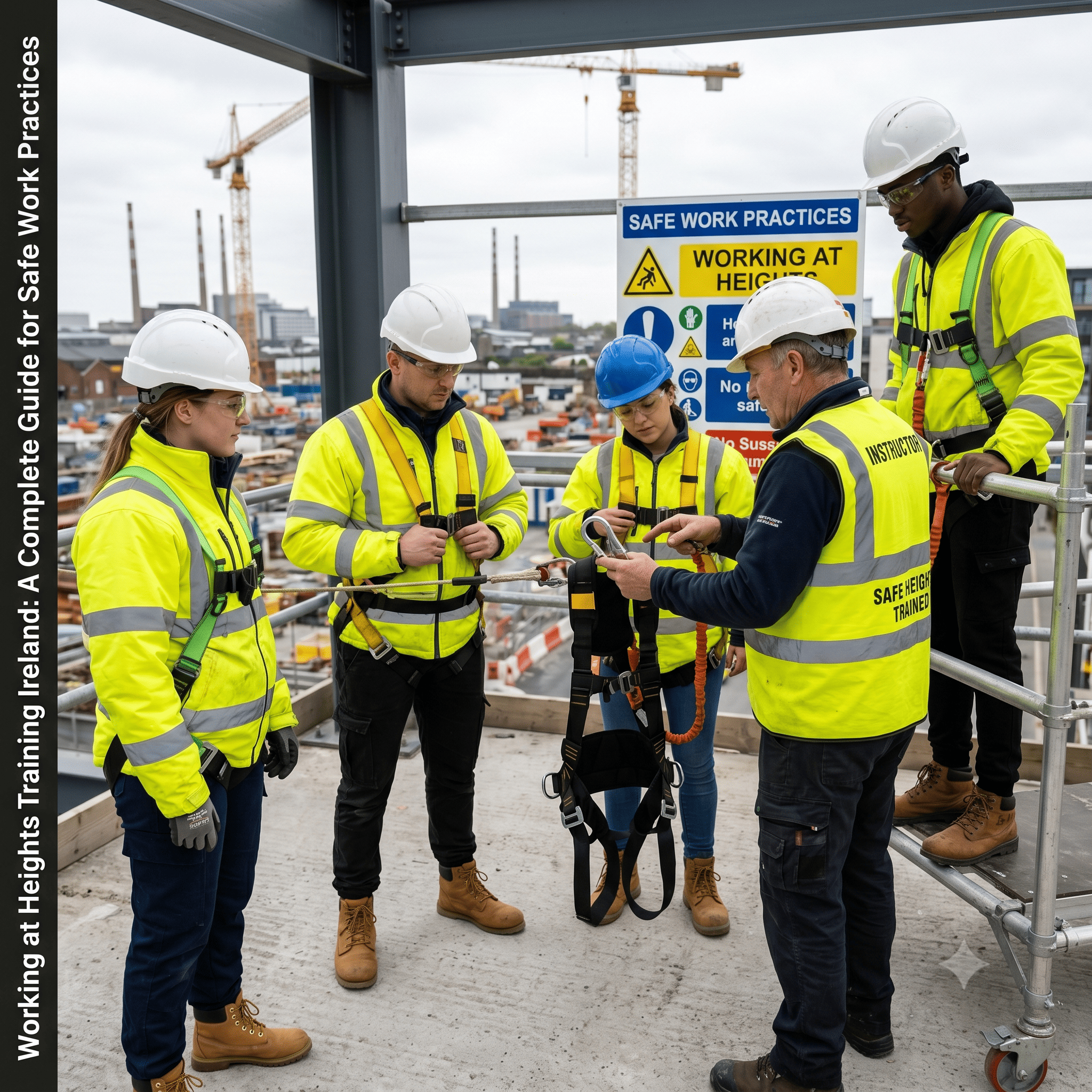
Working at Heights Training in Ireland is a fundamental requirement for anyone who carries out tasks above ground level in construction, maintenance, warehousing, roofing, telecommunications, or facilities management. It is one of the most important areas of health and safety courses in Ireland because falls from height remain a leading cause of serious workplace injuries and fatalities.
Whether workers are using ladders, scaffolding, mobile elevated work platforms (MEWPs), or simply accessing elevated areas, proper training ensures they understand the risks and know how to control them. This guide provides a complete overview of safe work practices, legal requirements, training content, and why working at heights certification is essential in Ireland today.
Why Working at Heights Training Matters
Working at height refers to any situation where a person could fall and suffer injury. This includes not only rooftops and scaffolding but also lower-level tasks such as using step ladders, accessing mezzanines, or working near open edges.
Accidents often occur because of:
- Poor planning before starting work
- Lack of awareness of hazards
- Incorrect use of equipment
- Unsafe working surfaces
- Rushing or taking shortcuts
- Inadequate supervision
Proper working at heights training in Ireland helps prevent these issues by teaching workers how to identify risks and follow safe procedures.
Legal Requirements in Ireland
Employers in Ireland are legally responsible for ensuring worker safety under several key regulations.
Safety, Health and Welfare at Work Act 2005
This legislation requires employers to:
- Provide a safe working environment
- Ensure employees are properly trained
- Assess workplace risks
- Prevent avoidable accidents
General Application Regulations (Work at Height Rules)
These regulations require employers to:
- Avoid working at height where possible
- Use suitable equipment
- Carry out risk assessments
- Provide appropriate training and supervision
These laws make health and safety courses online in Ireland essential for compliance in any workplace involving elevated tasks.
Who Needs Working at Heights Training?
Many people assume this training is only for construction workers, but it applies to a wide range of industries, including:
- Construction and building trades
- Roofing and scaffolding
- Warehousing and logistics
- Maintenance and repair services
- Telecommunications
- Facilities management
- Electrical installation work
If a job involves any risk of falling, training is required.
Key Principles of Safe Work at Height
A good working at heights training course in Ireland is built around several core safety principles.
1. Avoid Working at Height Where Possible
The safest approach is always to avoid working at height if an alternative exists.
Examples include:
- Using extendable tools from ground level
- Prefabrication at ground level
- Using remote inspection equipment
2. Prevent Falls
If working at height cannot be avoided, steps must be taken to prevent falls.
This includes:
- Using guardrails and barriers
- Installing safe platforms
- Ensuring stable working surfaces
3. Minimise Consequences of a Fall
If prevention is not possible, measures must reduce the severity of injury.
This includes:
- Safety harnesses
- Fall arrest systems
- Airbags or safety nets
What Working at Heights Training Covers
A comprehensive health and safety course in Ireland includes both theoretical and practical knowledge.
Hazard Identification
Workers learn to recognise dangers such as:
- Unprotected edges
- Fragile roofing materials
- Slippery surfaces
- Poor lighting conditions
- Weather-related risks like wind or rain
- Falling objects
Risk Assessment and Planning
Before starting work, employees must:
- Assess the site environment
- Identify hazards
- Evaluate risk levels
- Implement control measures
- Plan safe access routes
Good planning is one of the most effective ways to prevent accidents.
Ladder Safety
Ladders are one of the most common causes of workplace falls.
Training includes:
- Choosing the correct ladder type
- Setting up on stable ground
- Inspecting before use
- Maintaining three-point contact
- Avoiding overreach
- Safe climbing and descending
Scaffolding Safety
Workers learn how to use scaffolding safely, including:
- Safe access and exit points
- Guardrail systems
- Platform stability checks
- Identifying unsafe structures
- Reporting defects
Mobile Elevated Work Platforms (MEWPs)
Training covers safe use of equipment such as:
- Scissor lifts
- Cherry pickers
- Boom lifts
Workers learn:
- Proper operation
- Harness use
- Emergency lowering systems
- Load limits and safety checks
Personal Protective Equipment (PPE)
PPE is essential for working at height safely.
Workers are trained in:
- Safety harnesses
- Lanyards and anchor points
- Fall arrest systems
- Helmets
- Safety footwear
Proper inspection and usage are also covered.
Emergency Procedures
Even with safety measures, accidents can happen.
Training includes:
- Rescue planning
- Emergency communication
- Incident reporting
- Evacuation procedures
- Basic first aid awareness
Online Working at Heights Training in Ireland
Many employers now use working at heights online training in Ireland because it is flexible and efficient.
Benefits of Online Training
- Learn at your own pace
- Complete training from anywhere
- Faster certification process
- Reduced costs for employers
- Easy access for large teams
Online training is especially useful for theory-based learning and refresher courses.
Benefits of Working at Heights Training
Improved Safety
Workers are less likely to be involved in accidents.
Legal Compliance
Employers meet Irish safety regulations.
Increased Productivity
Trained workers perform tasks more efficiently.
Reduced Costs
Fewer accidents mean fewer insurance claims and downtime.
Better Safety Culture
Workers become more aware of risks and responsibilities.
Common Workplace Mistakes Prevented by Training
Training helps eliminate common errors such as:
- Using unsafe ladders
- Ignoring weather conditions
- Skipping equipment inspections
- Incorrect PPE use
- Poor planning
- Rushing tasks
These mistakes are often responsible for serious accidents.
Choosing the Right Training Provider
When selecting health and safety courses online in Ireland, it is important to ensure:
- Accredited certification
- Compliance with Irish law
- High-quality course content
- Employer recognition
- Strong provider reputation
A reliable provider ensures the training is both valid and practical.
Final Thoughts
Working at Heights Training Ireland: A Complete Guide for Safe Work Practices highlights the importance of proper safety education in high-risk environments. Working at height is one of the most dangerous activities in many industries, but with the right training, most accidents can be prevented.
A structured working at heights training in Ireland course teaches essential skills such as hazard identification, risk assessment, safe equipment use, and emergency response. Whether delivered online or in a classroom, this training plays a vital role in protecting workers and ensuring compliance with Irish safety laws.
Ultimately, working at heights training is not just a legal requirement—it is a critical investment in safety, professionalism, and workplace responsibility. By ensuring all employees are properly trained, businesses can create safer environments where workers return home safely every day.