



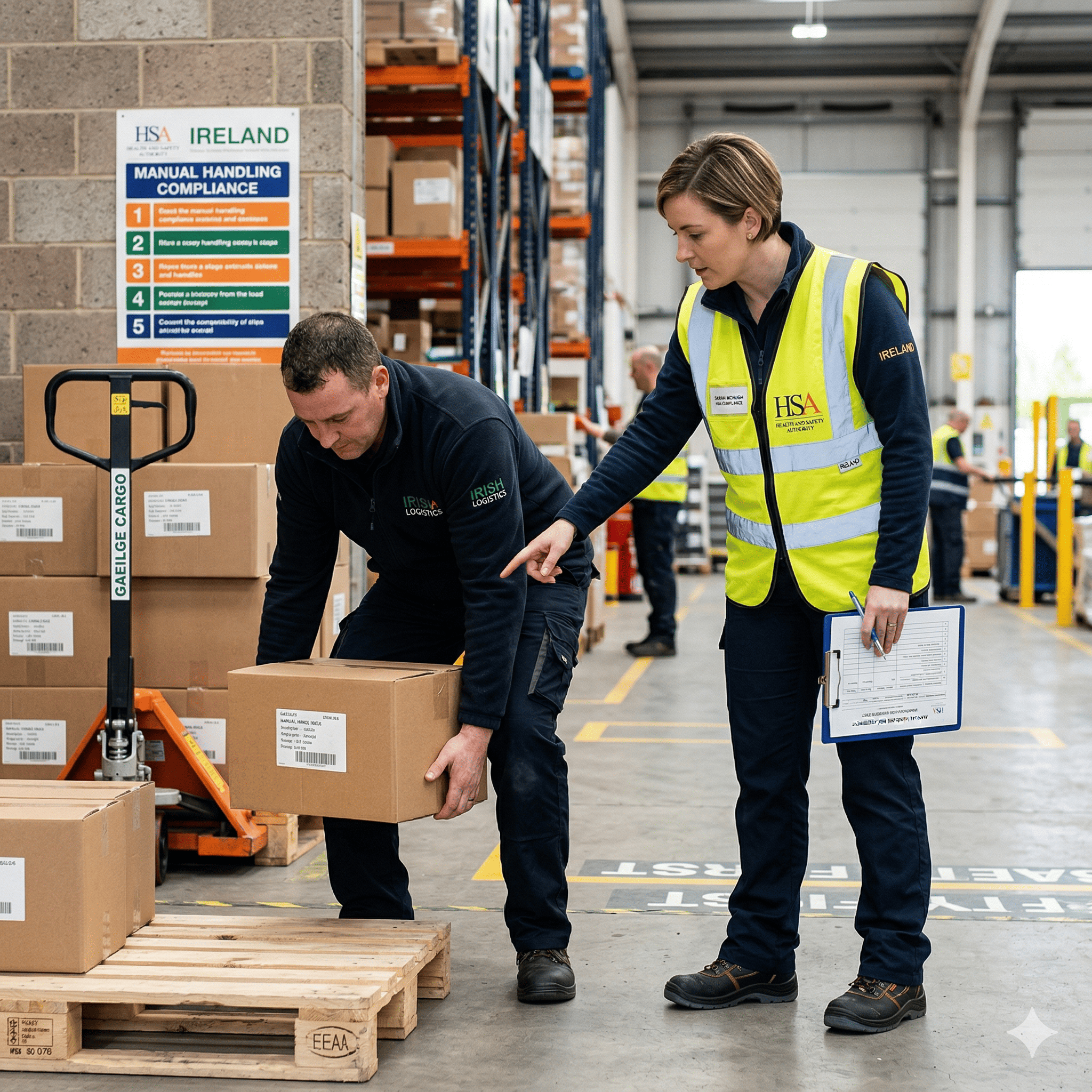
Manual handling is a common activity in workplaces across Ireland, from lifting boxes in warehouses to moving equipment in healthcare facilities. While it may seem routine, improper manual handling can lead to serious injuries, lost productivity, and even legal consequences. Understanding the legal requirements of manual handling compliance in Ireland is essential for employers and employees alike. By ensuring proper training and certification, businesses can protect staff, comply with the law, and create safer workplaces.
What is Manual Handling?
Manual handling refers to any task that requires lifting, carrying, pushing, pulling, or moving objects by hand or bodily force. While these tasks are often essential to daily operations, performing them incorrectly can result in injuries such as back strains, sprains, or musculoskeletal disorders.
In Ireland, employers are legally obligated to identify and minimize the risks associated with manual handling. Providing a manual handling course Ireland ensures employees understand safe practices and are equipped to handle objects properly, reducing the likelihood of accidents and workplace claims.
The Legal Framework for Manual Handling in Ireland
Workplace safety in Ireland is governed primarily by the Safety, Health and Welfare at Work Act 2005 and associated regulations. These laws place clear responsibilities on employers to protect the health and safety of their staff, including those performing manual handling tasks.
Key Legal Requirements:
- Risk Assessment
Employers must carry out thorough assessments to identify potential manual handling hazards. This involves evaluating the weight of objects, the environment, employee capability, and any repetitive tasks that may cause injury. - Training Obligations
Staff must receive adequate instruction and supervision on how to perform manual handling safely. This includes training in correct lifting techniques, posture, and the use of mechanical aids. Completing a manual handling certificate Ireland confirms that employees have met this requirement. - Provision of Equipment
Employers are responsible for providing appropriate equipment, such as trolleys, hoists, or lifting aids, to reduce physical strain on employees. - Monitoring and Review
Regular reviews of manual handling procedures ensure ongoing compliance. Training should be refreshed periodically, especially if there are changes in tasks or equipment.
Non-compliance with these regulations can result in fines, legal action, and reputational damage. A certified manual handling training Ireland program helps businesses meet these obligations effectively.
The Importance of Certification
A manual handling certificate Ireland serves as proof that employees have received formal training in safe handling practices. Certification benefits both employers and staff:
- For Employers: Demonstrates compliance with Irish law, protects against potential legal claims, and shows a commitment to workplace safety.
- For Employees: Provides assurance of skills, improves confidence in handling tasks, and reduces the risk of injury.
Certification can be obtained through in-person training or via flexible online options. A manual handling course online allows employees to complete their certification quickly while still meeting legal requirements.
Benefits of Ensuring Legal Compliance
Adhering to manual handling laws offers tangible benefits for workplaces beyond just avoiding penalties:
1. Reduced Workplace Injuries
Training and compliance significantly decrease the number of injuries related to manual handling. Proper techniques and risk awareness prevent back injuries, sprains, and long-term musculoskeletal issues.
2. Lower Costs
Workplace injuries often lead to sick leave, compensation claims, and higher insurance premiums. Ensuring compliance reduces these costs and minimizes disruption to operations.
3. Increased Productivity
Employees who are confident in safe handling practices perform tasks more efficiently. A workforce trained in proper manual handling is less likely to experience fatigue, accidents, or downtime.
4. Stronger Safety Culture
Compliance demonstrates that the organization values employee wellbeing. Regular training encourages staff to report hazards and participate actively in maintaining a safe workplace.
Choosing the Right Training for Compliance
To meet legal requirements, a manual handling course Ireland should cover the following areas:
- Legal Responsibilities: Understanding employer and employee obligations under Irish law.
- Risk Assessment Procedures: How to identify hazards and minimize risks.
- Safe Lifting Techniques: Correct posture, positioning, and lifting methods.
- Use of Mechanical Aids: Training in equipment such as trolleys, hoists, and other lifting devices.
- Practical Assessments: Scenario-based exercises to demonstrate knowledge and skill.
Both online and in-person courses are valid for legal compliance. Online options are increasingly popular due to their flexibility, while in-person courses provide hands-on practice. Many organizations adopt a blended approach for maximum effectiveness.
Online Training and Legal Compliance
Manual handling course online platforms are designed to meet Irish legal standards. Online courses provide interactive modules covering all essential areas of manual handling, ensuring employees understand their responsibilities and the correct procedures. Upon completion, participants receive a manual handling certificate Ireland, which is recognized for compliance purposes.
Advantages of online training for compliance include:
- Accessibility: Employees across multiple locations can complete training simultaneously.
- Flexibility: Staff can complete modules at their own pace without disrupting daily operations.
- Tracking and Documentation: Online platforms maintain records of completion, making it easier to demonstrate compliance during audits or inspections.
Real-World Examples of Compliance Benefits
Several Irish organizations have successfully improved workplace safety through manual handling compliance:
- Warehouses report fewer back injuries among staff after implementing certified training programs.
- Healthcare facilities have reduced patient-handling incidents through structured courses.
- Offices using blended online and in-person training experience improved employee confidence and lower absenteeism.
These examples show that compliance is not just about avoiding penalties—it directly contributes to a safer, more efficient, and productive workplace.
Common Challenges in Compliance
Even with clear legal requirements, some workplaces struggle with manual handling compliance. Common challenges include:
- High Staff Turnover: New employees may not always receive timely training.
- Limited Resources: Smaller businesses may lack the budget for in-person training.
- Inconsistent Practices: Without standardized procedures, employees may perform tasks incorrectly.
Online courses and structured certification programs provide practical solutions to these challenges, ensuring that all staff, regardless of location or role, meet legal obligations.
Conclusion
Understanding the legal side of manual handling compliance in Ireland is essential for every employer. By providing a manual handling course Ireland and obtaining a manual handling certificate Ireland, businesses can fulfill their legal duties, reduce workplace injuries, and foster a safety-conscious culture.
Online training options now make it easier than ever to meet compliance requirements quickly and efficiently. Whether through blended or fully online programs, ensuring all staff are trained and certified protects employees, supports legal compliance, and improves overall workplace productivity.
Investing in certified manual handling training is not just a legal necessity—it is a proactive step toward creating safer, smarter, and more efficient workplaces across Ireland.