



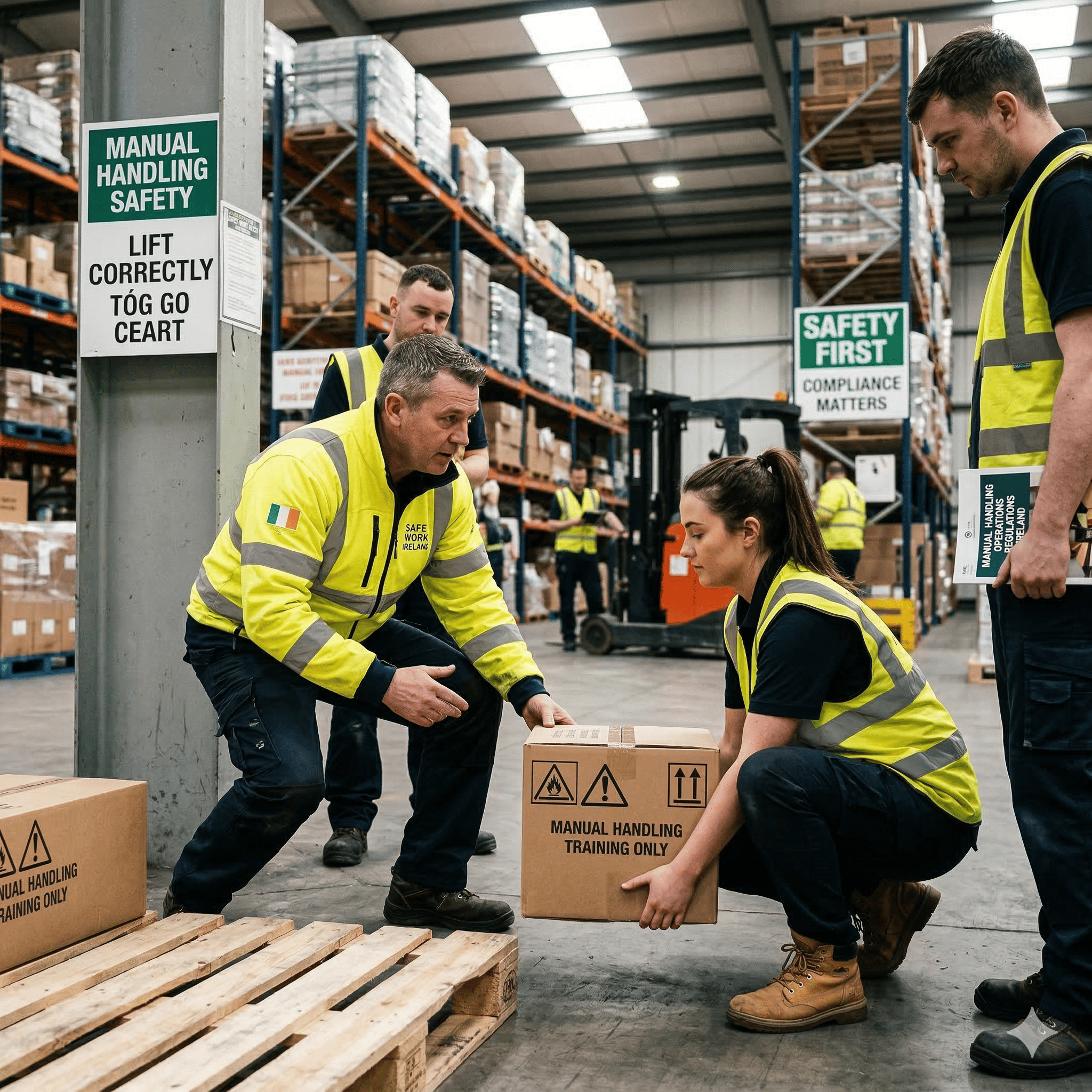
Workplace safety is a critical responsibility for employers across Ireland. Manual handling tasks—lifting, carrying, pushing, or pulling loads—are a routine part of many jobs in healthcare, construction, retail, warehousing, and hospitality. Without proper training and procedures, these activities can lead to serious injuries, particularly musculoskeletal disorders and back strains. This is why understanding manual handling compliance Ireland is essential for every employer.
Compliance is not just about meeting legal obligations; it’s also about protecting employees, reducing workplace injuries, and improving overall productivity. This guide explains what manual handling compliance Ireland entails, the responsibilities of employers, and how manual handling training Ireland and manual handling certification Ireland play a central role in maintaining safety standards.
What Is Manual Handling Compliance?
Manual handling compliance Ireland refers to adhering to legal and regulatory requirements related to the safe handling of objects in the workplace. It ensures that employers implement measures to reduce the risk of injury while providing employees with proper training and equipment.
The main purpose of compliance is to:
-
Prevent workplace injuries related to manual handling
-
Meet the requirements set out by the Health and Safety Authority (HSA)
-
Provide employees with training, guidance, and supervision
-
Maintain records of manual handling training Ireland and certifications
Employers who fail to comply with these regulations may face penalties, fines, or legal action. More importantly, non-compliance increases the likelihood of workplace accidents.
Legal Requirements for Employers in Ireland
Under the Safety, Health and Welfare at Work (General Application) Regulations 2007, employers are legally required to:
-
Provide Instruction and Training
Employees who perform manual handling tasks must receive adequate training. Completing a manual handling course Ireland ensures that workers understand safe lifting techniques, risk assessment, and injury prevention. -
Assess Manual Handling Risks
Employers must identify and evaluate tasks that could pose a risk of injury. This includes considering the weight of loads, frequency of handling, working environment, and employee capabilities. -
Implement Safe Procedures
Organizations must provide clear guidance, equipment, and processes to minimize risks associated with manual handling tasks. -
Maintain Records and Certification
Keeping records of manual handling certification Ireland demonstrates compliance during inspections or audits and helps track employee training status.
By following these requirements, businesses maintain manual handling compliance Ireland and foster a safer work environment.
The Role of Manual Handling Training
Training is the cornerstone of manual handling compliance Ireland. A well-structured manual handling training Ireland program equips employees with the knowledge and skills to perform manual handling tasks safely.
Key components of training include:
-
Safe Lifting Techniques: Proper posture, grip, and movement strategies to avoid strain
-
Risk Awareness: Identifying hazards and understanding the limits of the human body
-
Practical Application: Hands-on exercises or demonstrations of safe handling techniques
-
Legal Responsibilities: Understanding both employer and employee obligations
Completing training leads to Irish manual handling certification, which confirms that employees are qualified to handle manual tasks safely.
Benefits of Compliance for Employers
Maintaining manual handling compliance Ireland provides multiple benefits for businesses:
1. Reduced Workplace Injuries
Proper training and procedures significantly lower the risk of accidents, protecting employees from musculoskeletal injuries and other physical harm.
2. Legal Protection
Compliance demonstrates that the organization is fulfilling its statutory duties under Irish workplace safety laws, reducing the risk of penalties and legal claims.
3. Improved Productivity
Employees trained in safe handling techniques can work more efficiently and confidently, minimizing downtime caused by injuries.
4. Enhanced Reputation
Businesses that prioritize employee safety build trust and credibility among staff, clients, and regulatory authorities.
5. Cost Savings
Reducing workplace injuries helps lower insurance premiums, compensation claims, and costs related to absenteeism.
Implementing Manual Handling Compliance
Employers can take several steps to ensure their organization meets manual handling compliance Ireland:
-
Conduct a Risk Assessment
Identify tasks that involve lifting or moving loads and evaluate potential hazards. -
Provide Adequate Training
Offer manual handling training Ireland or manual handling training online Ireland to all employees involved in manual handling tasks. -
Offer Ongoing Refresher Training
Encourage employees to update their skills periodically, ensuring compliance with current safety standards. -
Introduce Safe Equipment and Procedures
Provide tools, aids, or ergonomic solutions to reduce the physical strain on employees. -
Monitor and Document Compliance
Keep records of completed training, certifications, and risk assessments to demonstrate adherence to legal requirements.
The Role of Online Training
In 2026, manual handling training online Ireland has become a popular choice for businesses seeking flexible, cost-effective training solutions. Online courses allow employees to learn at their own pace while still earning recognized manual handling certification Ireland.
Benefits of online training for compliance include:
-
Easy access for employees across multiple locations
-
Cost and time savings compared to in-person courses
-
Standardized content ensuring consistent training
-
Quick certification and tracking for regulatory reporting
By incorporating online training, employers can simplify compliance management while maintaining high safety standards.
Common Mistakes Employers Should Avoid
Even with training, some organizations struggle with compliance. Common pitfalls include:
-
Failing to provide refresher training for staff
-
Not conducting proper risk assessments for new tasks
-
Allowing employees to perform manual handling without certification
-
Ignoring ergonomic solutions or safety equipment
-
Failing to document training and compliance efforts
Avoiding these mistakes ensures full adherence to manual handling compliance Ireland regulations.
Final Thoughts
Manual handling compliance Ireland is essential for every employer, not only to meet legal obligations but also to protect employees, reduce injuries, and improve workplace efficiency. By providing proper manual handling training Ireland, obtaining manual handling certification Ireland, and implementing safe procedures, businesses can maintain a safe and compliant working environment.
With the rise of manual handling training online Ireland, compliance has become more accessible and practical, allowing modern businesses to train their workforce efficiently while maintaining high safety standards.
Investing in proper training and compliance is more than just a regulatory requirement—it is a long-term investment in the health, safety, and productivity of your workforce.