



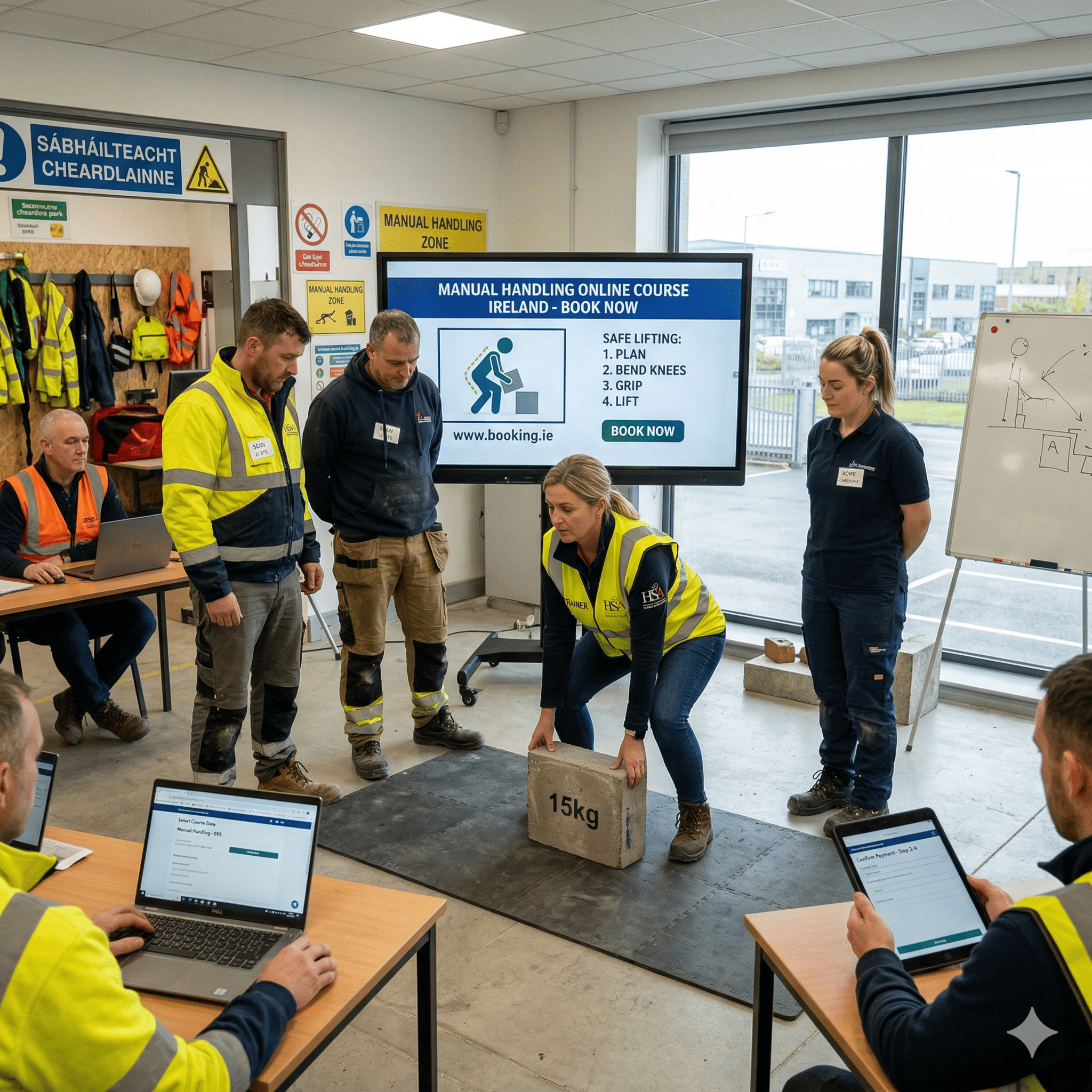
Workplace safety is more than just a legal requirement—it’s essential for protecting employees and creating a productive environment. One of the most critical areas is manual handling, which refers to lifting, carrying, pushing, or pulling objects in the workplace. Improper manual handling can lead to injuries, reduced efficiency, and even legal complications for your business.
Thankfully, in Ireland, enrolling in a manual handling course online has never been easier. This guide will walk you step-by-step through booking your training, ensuring you gain a recognized manual handling certificate Ireland that is both practical and compliant with workplace safety standards.
Step 1: Understand Your Training Requirements
Before you even begin searching for a course, it’s crucial to assess your needs:
- Identify the purpose: Are you seeking basic manual handling knowledge for personal development, or do you need certification for workplace compliance?
- Determine the level of training: Some courses are designed for general employees, while others cater to specific industries such as healthcare, warehousing, or construction.
- Team vs. individual training: Decide if the course is for you alone or for multiple staff members. Bulk bookings often come with discounts, which can be useful for small businesses.
Understanding your training requirements will help you choose the right manual handling course Ireland without wasting time or money.
Step 2: Research Accredited Training Providers
Not all training providers are equal. When searching for an online manual handling course, make sure to choose a provider that is reputable and recognized in Ireland.
Key factors to consider:
- Certification recognition: Ensure the course provides a valid manual handling certificate Ireland accepted by employers and regulatory bodies.
- Experience and credibility: Check reviews and testimonials to see the provider’s reputation. Look for courses with positive feedback from past participants.
- Course flexibility: Online courses should accommodate your schedule, offering self-paced modules or live webinars.
Popular search terms you can use to find reliable providers include:
- “manual handling training Ireland”
- “manual handling course Ireland”
- “manual handling certificate Ireland”
Using these keywords strategically in your search will help you find providers that focus specifically on the Irish market and compliance requirements.
Step 3: Compare Course Features and Benefits
Once you have a list of potential providers, it’s important to compare the features of each course:
- Duration of the course: Online manual handling courses can range from a quick 30-minute overview to multi-hour comprehensive training sessions. Choose one that matches your schedule and depth of learning required.
- Course content: Look for modules covering safe lifting techniques, risk assessment, ergonomics, and workplace-specific scenarios. Some courses also include quizzes or interactive elements to enhance retention.
- Cost: Prices can vary depending on course length, accreditation, and certification. While it might be tempting to choose the cheapest option, prioritize quality and certification recognition over cost.
- Support: A good provider will offer instructor support or a Q&A section in case participants have questions or need clarification.
💡 Pro Tip: Check if the course offers updates or refresher modules. Some workplaces require certification renewal, so ongoing access is a bonus.
Step 4: Register for the Course Online
After selecting the right provider, the registration process is straightforward. Most online platforms follow similar steps:
- Visit the provider’s website and navigate to the manual handling course page.
- Fill in personal or company details—name, email, phone number, and employer information if necessary.
- Select the course type (self-paced or live session).
- Complete payment using secure methods like credit card, PayPal, or bank transfer.
- Receive confirmation: You will typically get an email with login instructions, course start date, and access credentials.
Keep a copy of the confirmation email and payment receipt for future reference, especially if claiming reimbursement or company funding.
Step 5: Complete the Online Manual Handling Training
The core of your manual handling training Ireland experience is completing the course itself. Most online courses are designed to be engaging, practical, and applicable to real-life scenarios.
Typical course components include:
- Video tutorials: Step-by-step demonstrations on safe lifting, pushing, and pulling techniques.
- Interactive exercises: Quizzes and scenario-based tasks to reinforce understanding.
- Practical tips: Guidance on risk assessment, ergonomics, and minimizing injury.
💡 Pro Tip: Take notes and practice techniques even while learning online. The knowledge is most valuable when applied consistently in the workplace.
Step 6: Obtain Your Manual Handling Certificate Ireland
Upon successful completion of the course, you will receive your manual handling certificate Ireland, either digitally or by post. This certificate serves as proof that you:
- Understand workplace manual handling regulations
- Can safely handle loads and prevent injury
- Comply with Irish Health and Safety Authority (HSA) requirements
Employers often require this certificate for record-keeping and compliance audits, making it an important credential for career development and workplace safety.
Step 7: Apply What You Learned in the Workplace
A certificate is only valuable if knowledge is applied. Encourage employees or yourself to:
- Use proper lifting techniques: Bend knees, keep the back straight, and avoid twisting.
- Assess risks: Check the load’s weight, stability, and environment before lifting.
- Follow workplace policies: Ensure all safety measures, tools, and equipment are used appropriately.
Consistent practice of these techniques can significantly reduce workplace injuries and promote a culture of safety.
Step 8: Consider Refresher Courses
Manual handling skills can degrade over time, and workplace procedures may change. Most organizations in Ireland recommend refresher training every 1–2 years to ensure employees remain compliant.
Benefits of refresher courses:
- Keeps staff up-to-date with new regulations or safety guidelines
- Reinforces safe techniques and reduces risk of injury
- Shows commitment to workplace health and safety, which is valued by regulators and insurers
Step 9: Bonus Tips for Online Manual Handling Courses
- Check device compatibility: Ensure your computer, tablet, or smartphone can run the course smoothly.
- Set aside focused time: Even self-paced courses require attention to fully understand safety procedures.
- Download or print materials: Many courses provide PDFs or manuals that are useful as future references.
- Engage with instructors: Ask questions if something is unclear—interaction enhances learning.
Conclusion
Booking a manual handling course online in Ireland has never been easier. By following these steps—from identifying your training needs to obtaining a valid manual handling certificate Ireland—you can ensure that you or your employees are well-prepared for a safer, more compliant workplace.
Online courses offer flexibility, convenience, and effective training that meets Irish regulatory standards. Whether you’re an individual looking to enhance your skills or a business aiming to maintain health and safety compliance, completing a manual handling course online is a proactive step toward workplace safety and efficiency.
Start your journey today and take the first step in preventing injuries, improving productivity, and securing a recognized certification that demonstrates your commitment to safe practices.