



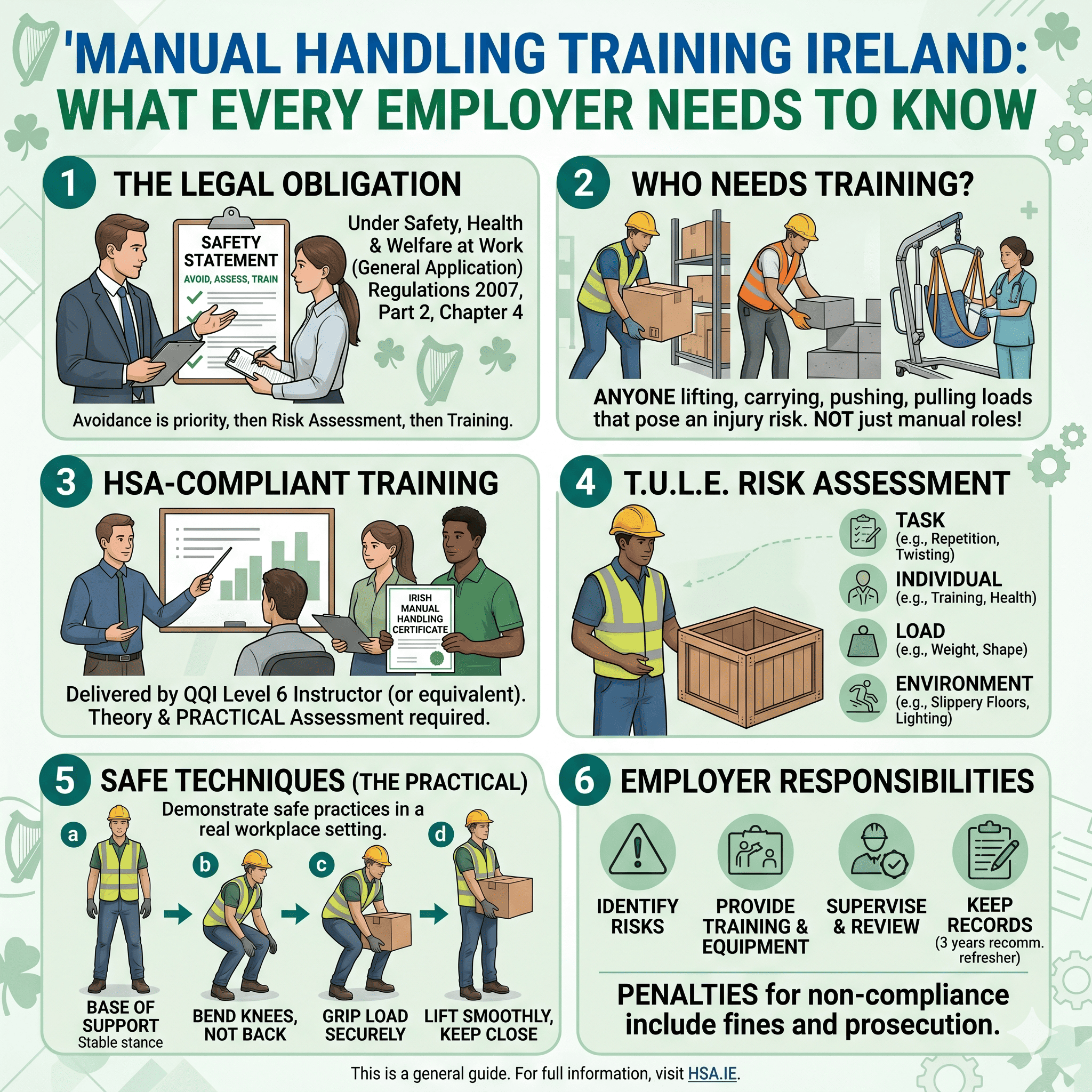
Workplace safety is no longer just a legal requirement—it’s a critical part of running a successful and sustainable business. Across Ireland, employers in industries such as construction, healthcare, logistics, retail, and manufacturing rely on employees to perform physical tasks every day. These tasks often involve lifting, carrying, pushing, or pulling loads, all of which fall under manual handling.
Without proper training, these routine activities can quickly lead to injuries, lost productivity, and increased operational costs. That’s why understanding manual handling training Ireland is essential for every employer. Providing a recognised manual handling course Ireland and ensuring staff hold a valid manual handling certificate Ireland is one of the most effective ways to create a safer, more efficient workplace.
This guide explains what employers need to know, from legal responsibilities to practical implementation.
Why Manual Handling Training Matters
Manual handling injuries are among the most common causes of workplace accidents in Ireland. These injuries don’t just affect employees physically—they also impact business performance.
Common consequences include:
- Increased absenteeism
- Reduced productivity
- Higher insurance and compensation costs
- Disruption to daily operations
The goal of manual handling Ireland training is not just to prevent injuries but to improve how work is carried out. When employees understand safe techniques, they work more efficiently and with greater confidence.
Employer Responsibilities in Ireland
Employers have a duty of care to protect the health and safety of their employees. This includes identifying risks and providing appropriate training.
In practical terms, this means:
- Assessing tasks that involve manual handling
- Reducing risks wherever possible
- Providing proper training when risks cannot be eliminated
A structured manual handling course Ireland helps meet these obligations by ensuring employees understand how to work safely.
What Manual Handling Training Actually Covers
A high-quality training program goes far beyond basic lifting advice. Effective manual handling training Ireland focuses on real-world application.
Employees typically learn:
- How injuries occur and how to prevent them
- Correct lifting and carrying techniques
- Risk assessment before performing tasks
- Safe use of equipment and aids
- The importance of posture and movement
By completing the course, employees earn a manual handling certificate Ireland, confirming they have the knowledge required to perform tasks safely.
Identifying When Training Is Needed
Not every role involves manual handling, but many do—even in office environments.
Training is required when employees:
- Lift or carry items regularly
- Move stock or equipment
- Perform repetitive physical tasks
- Work in environments with physical demands
Even occasional manual handling can pose risks if done incorrectly. Employers should take a proactive approach rather than waiting for incidents to occur.
Choosing the Right Manual Handling Course Ireland
Not all training is equal, and selecting the right course is crucial.
Employers should look for:
- Clear, easy-to-understand content
- Practical, real-life examples
- Recognised certification
- Flexible delivery options
A good manual handling course Ireland should focus on practical skills that employees can apply immediately, not just theory.
Online vs In-Person Training
Modern workplaces require flexible solutions, and training is no exception.
Online Training
- Accessible anytime
- Ideal for remote or distributed teams
- Cost-effective and scalable
In-Person Training
- Hands-on demonstrations
- Direct feedback from instructors
- Suitable for high-risk environments
Both formats can provide a valid manual handling certificate Ireland, so the choice depends on your business needs.
Making Training Part of Daily Work
Training alone is not enough—its real value comes from daily application.
Employers should ensure that:
- Safe techniques are consistently used
- Supervisors reinforce good practices
- Employees feel comfortable asking questions
When manual handling Ireland becomes part of routine work, safety improves naturally.
The Importance of Risk Assessment
One of the most valuable skills employees gain from manual handling training Ireland is the ability to assess risks before acting.
This includes evaluating:
- The weight and shape of a load
- The environment and potential hazards
- Personal capability
Encouraging employees to “think before they lift” can prevent a large number of workplace injuries.
Reducing Costs Through Prevention
Workplace injuries are expensive—not just financially, but operationally.
Costs can include:
- Medical expenses
- Compensation claims
- Lost productivity
- Recruitment and training of replacements
Investing in a manual handling course Ireland is far more cost-effective than dealing with the consequences of preventable injuries.
Supporting Employee Confidence and Performance
Training doesn’t just improve safety—it improves performance.
Employees who complete manual handling training Ireland:
- Feel more confident in their tasks
- Work more efficiently
- Make fewer mistakes
A valid manual handling certificate Ireland gives employees reassurance that they are working correctly and safely.
Keeping Certification Up to Date
Manual handling training is not a one-time requirement. Skills can fade, and bad habits can develop over time.
Employers should:
- Schedule refresher training every 2–3 years
- Monitor workplace practices
- Encourage continuous learning
A manual handling course online makes it easier to keep certification current without disrupting operations.
Creating a Culture of Safety
The most successful workplaces don’t just follow safety rules—they build a culture around them.
Employers can promote this by:
- Leading by example
- Recognising safe behaviour
- Encouraging open communication
- Providing the right tools and equipment
When employees see that safety is valued, they are more likely to follow best practices.
Common Mistakes Employers Should Avoid
Even with good intentions, some employers make mistakes when implementing training.
These include:
- Treating training as a one-time task
- Choosing low-quality courses
- Failing to monitor workplace behaviour
- Not providing proper equipment
Avoiding these pitfalls ensures that manual handling Ireland training delivers real results.
The Long-Term Value of Training
Investing in manual handling training Ireland provides long-term benefits that go beyond compliance.
These include:
- Fewer workplace injuries
- Improved productivity
- Better employee morale
- Stronger business reputation
A safe workplace is not just a legal requirement—it’s a competitive advantage.
Conclusion
Understanding manual handling training Ireland is essential for every employer who wants to protect their workforce and improve business performance. Providing a high-quality manual handling course Ireland and ensuring employees hold a valid manual handling certificate Ireland is one of the most effective ways to reduce risk and build a safer workplace.
However, training is only the starting point. The real impact comes from applying safe practices every day and creating an environment where safety is part of the culture.
By taking a proactive approach to manual handling Ireland, employers can reduce injuries, improve efficiency, and create a workplace where employees feel confident, supported, and safe.