



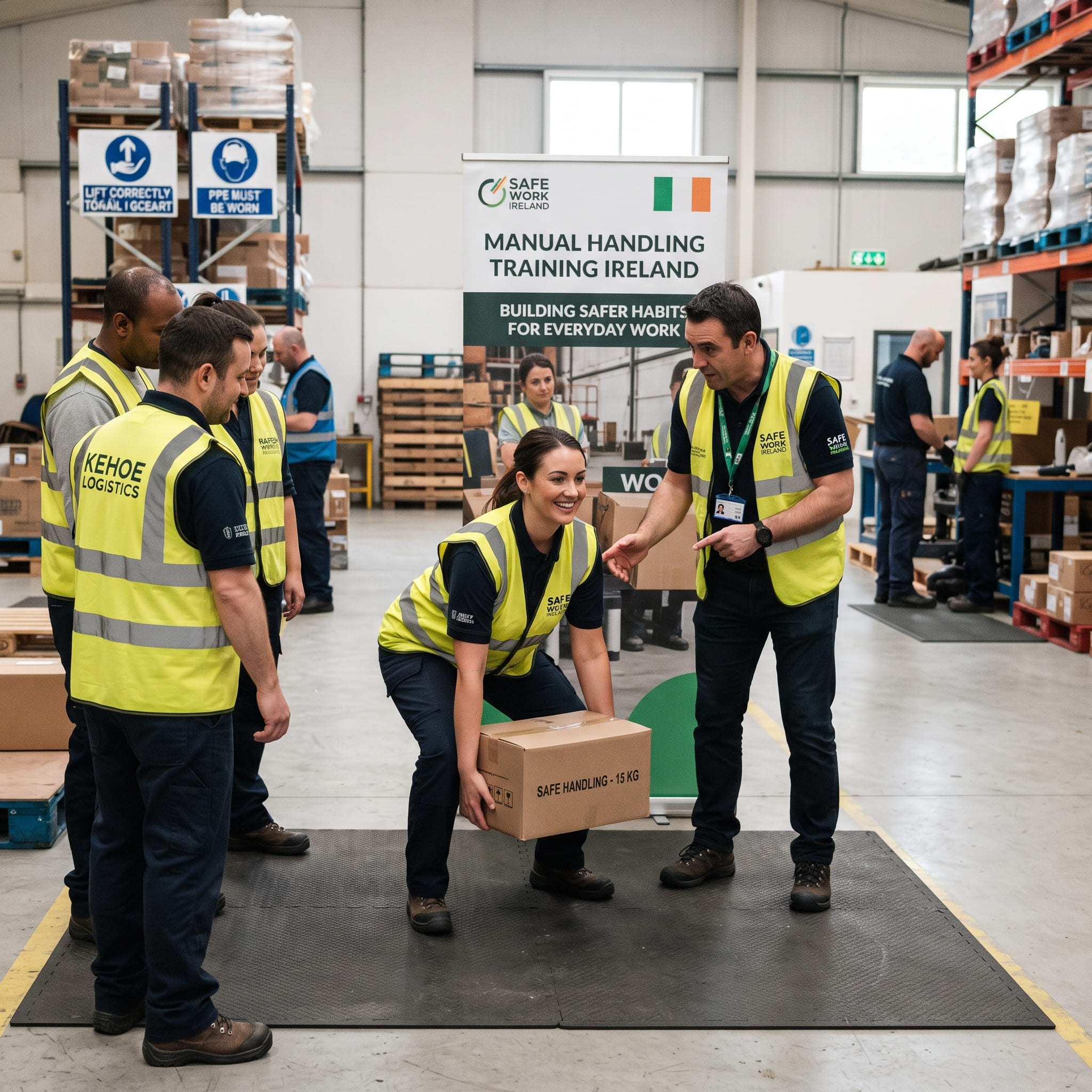
Workplace safety is built through the everyday decisions employees make. A worker may lift a box, move equipment, push a trolley or carry supplies dozens of times during a normal working day. When these tasks are performed safely and consistently, they can become part of a strong workplace safety culture.
However, unsafe habits can also become routine.
An employee who regularly bends awkwardly to pick up a box, carries loads that are too heavy or twists while putting items down may eventually treat these actions as normal. Over time, repeated poor practices can increase physical strain and contribute to manual handling injuries.
This is why Manual Handling Training Ireland is about more than teaching employees how to lift an object correctly. Effective training helps workers understand the risks associated with everyday tasks and develop habits that encourage safer decisions.
A suitable Manual Handling Course Ireland can teach employees how to assess loads, plan movements, recognise hazards, use appropriate handling equipment and communicate when assistance is required.
The goal is to make safe behaviour part of everyday work.
What Are Safe Manual Handling Habits?
A safe habit is an action that becomes a natural part of how an employee approaches a task.
Instead of thinking about safety only after something goes wrong, employees learn to consider it before and during the task.
Examples include:
- Checking a load before lifting it.
- Planning the route.
- Keeping frequently used items accessible.
- Using a trolley when appropriate.
- Asking for assistance with awkward loads.
- Avoiding unnecessary twisting.
- Keeping walkways clear.
- Reporting hazards.
These actions may take only a few seconds but can have an important role in reducing unnecessary risks.
Why Everyday Habits Matter
Most employees do not perform manual handling only once.
A warehouse worker may handle hundreds of products.
A healthcare employee may repeatedly move equipment or supplies.
A retail employee may restock shelves throughout the day.
A construction worker may regularly move tools and materials.
Because these tasks are repeated, the way they are performed matters.
A small unsafe movement repeated many times can create more physical demand than an isolated task.
Developing safer habits therefore helps employees approach routine activities more consistently.
Think Before You Lift
One of the most useful habits employees can develop is simply pausing before lifting.
Before picking something up, ask:
How heavy is it?
Is it awkward?
Can I get a good grip?
Where am I taking it?
Is the route clear?
Do I need help?
Is there equipment available?
This quick assessment can prevent employees from automatically lifting a load without considering the circumstances.
Plan the Route
Safe handling does not end with lifting the object.
Employees should also think about where they are going.
A route may contain:
- Obstacles.
- Wet surfaces.
- Uneven flooring.
- Narrow doorways.
- Stairs.
- Other workers.
- Workplace equipment.
A clear route can make the movement easier to control.
If the route is unsuitable, the task should be reassessed before the employee begins.
Keep Loads Close Where Appropriate
When carrying a load, keeping it close to the body where practical can help reduce unnecessary reaching.
Holding an object far away from the body can increase the physical demands of the task.
Employees should also avoid carrying loads in positions that restrict their ability to move safely.
Avoid Unnecessary Twisting
Twisting while lifting or carrying can create awkward body positions.
A safer approach is generally to position the body appropriately before moving the load.
If an employee needs to change direction, moving the feet rather than relying on excessive twisting can help maintain better control.
Do Not Rush Routine Tasks
Familiarity can encourage employees to rush.
A worker may think:
"I've moved this hundreds of times."
That mindset can lead to shortcuts.
Employees should continue to assess tasks even when they perform them regularly.
Workplace conditions can change, and a load that was manageable yesterday may not be presented in exactly the same way today.
Use Handling Equipment
A common unsafe habit is manually carrying items simply because a trolley or other handling aid is nearby but not used.
Where suitable equipment is available, employees should understand when and how it should be used.
Examples include:
- Trolleys.
- Pallet trucks.
- Carts.
- Hoists.
- Lift-assist equipment.
Mechanical assistance can reduce the physical demands associated with moving certain loads.
Develop Good Storage Habits
Storage can have a major effect on everyday manual handling.
Employees should avoid creating situations where frequently handled items are:
- Blocked by other products.
- Stored in unstable piles.
- Difficult to reach.
- Left on walkways.
Good storage organisation can reduce unnecessary bending, reaching, carrying and double handling.
Reduce Double Handling
Double handling occurs when an item is moved more times than necessary.
For example:
Delivery → temporary storage → stockroom → workstation
Each additional movement creates another handling task.
Better planning can sometimes allow products and equipment to be moved directly to where they are needed.
This can make work both safer and more efficient.
Build the Habit of Asking for Help
Employees should feel comfortable asking colleagues for assistance.
A large, awkward or unstable object may not be suitable for one person.
Asking for help is not a sign of weakness. It is an important part of making sensible safety decisions.
Team handling should still be properly planned and coordinated.
Communicate During Team Handling
When two or more employees move a load together, communication becomes particularly important.
The team should agree on:
- Who will lead.
- When to lift.
- Which direction to move.
- When to stop.
- Where to place the load.
Simple commands such as "ready", "lift", "stop" and "lower" can help coordinate movements.
Recognise When a Task Has Changed
A safe habit is to reassess a task when circumstances change.
For example:
- A heavier load arrives.
- The normal route is blocked.
- A trolley becomes unavailable.
- The storage location changes.
- The workplace becomes crowded.
Employees should not automatically use the same method simply because it worked previously.
Safe Habits and Workplace Fatigue
Fatigue can affect concentration and physical performance.
Employees who have been performing repetitive manual handling for several hours may become more likely to rush or use poor techniques.
Employers should consider workload, repetition and task organisation.
Employees should also communicate when fatigue or workload makes a task difficult to perform safely.
Training New Employees
New employees are still developing their workplace habits.
Early training can therefore be particularly valuable.
Employees should understand:
- Workplace manual handling procedures.
- Available equipment.
- Reporting procedures.
- Common hazards.
- When assistance is required.
Good habits are easier to establish when safe practices are introduced from the beginning.
Refreshing Existing Habits
Experienced workers can also benefit from refresher training.
People can develop shortcuts over time, particularly when tasks become familiar.
Refresher training provides an opportunity to review established practices and consider whether changes to equipment, workplace layout or procedures require a different approach.
The HSA's manual handling guidance recommends refresher training at appropriate intervals and following significant changes to work, equipment or the work area.
Manual Handling Training Ireland
Professional Manual Handling Training Ireland can help employees turn safety knowledge into everyday workplace behaviour.
Training can cover:
- Risk assessment.
- Load assessment.
- Lifting.
- Carrying.
- Pushing.
- Pulling.
- Team handling.
- Mechanical handling aids.
- Hazard recognition.
The aim is to help employees understand why safe practices matter, not simply memorise a list of instructions.
Manual Handling Course Ireland
A suitable Manual Handling Course Ireland should give employees knowledge that can be applied to real workplace situations.
For example, an employee might encounter a box that is heavier than expected.
Instead of immediately lifting it, a trained worker can stop and consider:
Can I handle this safely?
Do I need assistance?
Is there a trolley available?
Is the route clear?
This decision-making process is an important part of building safer habits.
Manual Handling Certificate Ireland
Employees who successfully complete appropriate training may receive a Manual Handling Certificate Ireland.
A certificate can provide evidence that training has been completed.
However, safe habits must continue after the course.
The certificate is not a substitute for workplace risk assessment, appropriate equipment or following employer procedures.
Training provides the foundation; everyday behaviour puts that knowledge into practice.
How Employers Can Encourage Safer Habits
Employers can reinforce good manual handling habits by creating an environment where safe behaviour is supported.
Practical measures include:
Provide appropriate training
Employees need to understand the risks and controls associated with their tasks.
Make equipment accessible
Workers are more likely to use handling aids when they are suitable and readily available.
Keep workplaces organised
Good housekeeping can reduce unnecessary physical demands.
Encourage reporting
Employees should be able to report difficult tasks and workplace hazards.
Lead by example
Supervisors and managers should demonstrate safe working practices.
Review procedures
Workplace conditions change, so safety procedures should be reviewed when necessary.
A Simple Everyday Manual Handling Routine
Employees can develop a simple routine before moving a load.
Step 1: Stop
Take a moment before beginning.
Step 2: Assess
Consider the load, task and environment.
Step 3: Plan
Choose the safest practical method and route.
Step 4: Prepare
Clear the route and obtain assistance or equipment if required.
Step 5: Move
Use controlled movements and maintain awareness.
Step 6: Place
Ensure the load is stable before releasing it.
Step 7: Report
Raise any problems that made the task unnecessarily difficult or unsafe.
Repeating this process can help make safe decision-making automatic.
Safety Habits Benefit the Whole Workplace
When employees consistently follow safer practices, the benefits can extend beyond individual tasks.
Good manual handling habits can contribute to:
- Better hazard awareness.
- Improved communication.
- More organised workplaces.
- Better use of equipment.
- Reduced unnecessary physical strain.
- A stronger safety culture.
Employees can also become more comfortable speaking up when they identify risks.
Conclusion
Safe manual handling is not simply about knowing how to lift a box. It is about developing habits that employees can use consistently throughout their working day.
Every time a worker assesses a load, checks a route, uses appropriate equipment, asks for assistance or avoids an unnecessary awkward movement, they are reinforcing safer behaviour.
Professional Manual Handling Training Ireland can provide the knowledge needed to develop these habits. A suitable Manual Handling Course Ireland can teach employees about risk assessment, lifting, carrying, pushing, pulling, team handling and the safe use of handling aids.
A Manual Handling Certificate Ireland provides evidence of completed training, but the real value of training comes from applying the knowledge to everyday tasks.
Employers can support this process by providing appropriate equipment, maintaining organised workplaces, encouraging communication and regularly reviewing manual handling risks.
Ultimately, safer workplaces are built through consistent actions. When safe manual handling becomes part of the normal way employees work, rather than something considered only during formal training, businesses can create a stronger safety culture and help employees approach everyday physical tasks with greater awareness and confidence.