



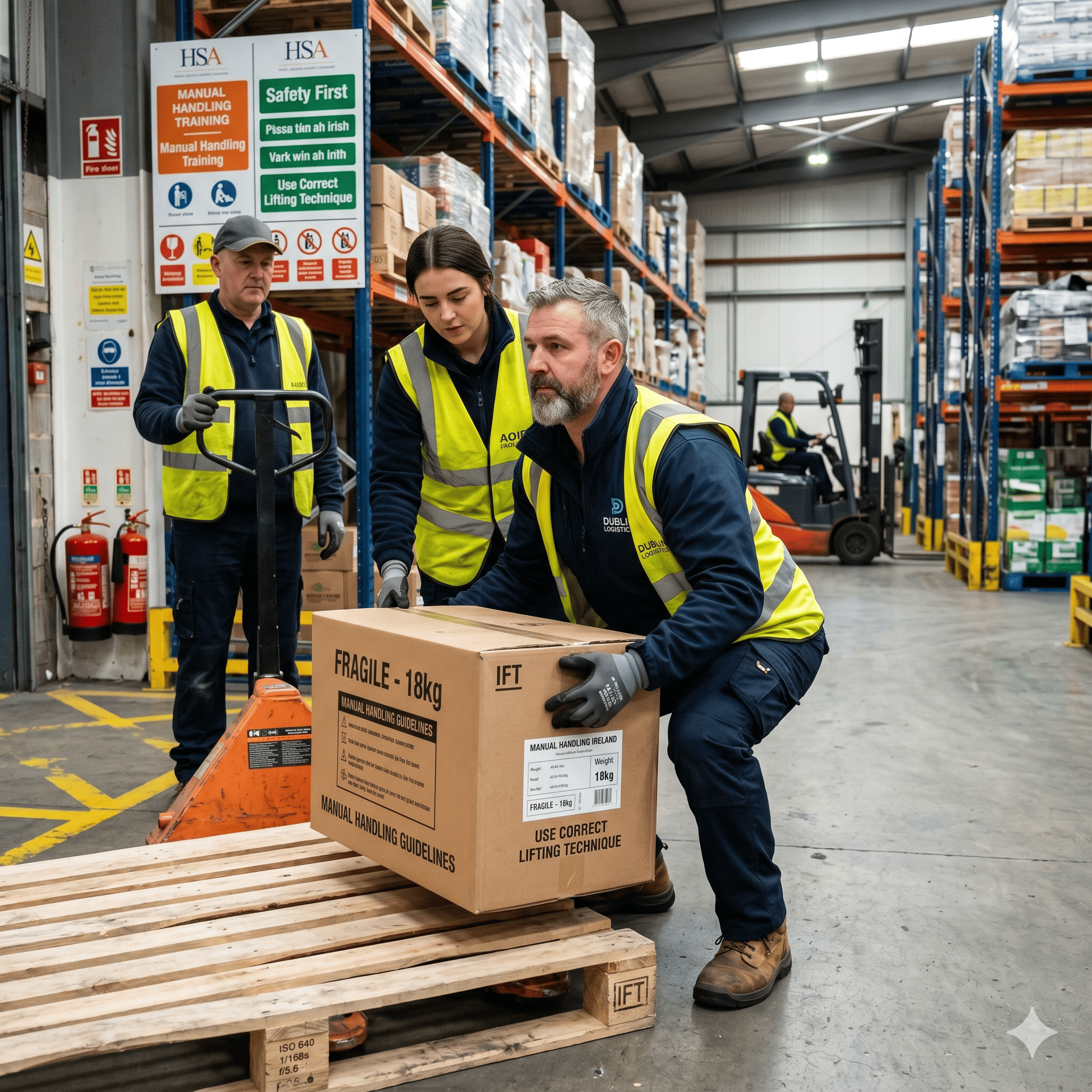
Lifting and carrying are part of everyday work in many industries across Ireland. From warehouses and retail stores to healthcare facilities and construction sites, employees regularly move objects as part of their daily responsibilities. While these tasks may appear simple, incorrect lifting techniques are one of the leading causes of workplace injuries.
Back strain, muscle pain, joint injuries, and long-term physical problems often develop because employees repeat unsafe movements over time. Many of these injuries are preventable with the right training and awareness.
This is why proper manual handling Ireland practices are essential in modern workplaces. A professional manual handling course Ireland teaches employees how to move safely and efficiently, while a valid manual handling certificate Ireland confirms that workers understand the principles of safe lifting and carrying.
In this guide, we explore practical tips from effective manual handling training Ireland that help employees reduce risk and work more safely every day.
Why Safe Lifting Matters
Unsafe lifting affects both employees and employers.
Poor manual handling practices can lead to:
- Back injuries
- Muscle strain
- Joint pain
- Reduced productivity
- Increased absenteeism
These problems often develop gradually, especially when employees repeat incorrect movements every day.
A structured manual handling course Ireland helps workers understand how to protect their bodies while improving efficiency at work.
Assess the Load Before You Lift
One of the most important safety habits is assessing the load before touching it.
Employees should ask themselves:
- Is the load too heavy?
- Is it difficult to grip?
- Is the shape awkward or unstable?
- Is the route clear?
Taking a few seconds to evaluate the task can prevent serious injuries.
Risk assessment is a key part of manual handling Ireland training because it encourages employees to think before acting.
Position Yourself Correctly
Good lifting starts with proper positioning.
Before lifting:
- Stand close to the load
- Keep your feet shoulder-width apart
- Place one foot slightly forward for balance
A stable stance improves control and reduces unnecessary strain during movement.
Correct positioning is one of the first techniques taught during manual handling training Ireland.
Lift with Your Legs, Not Your Back
Many workplace injuries happen because employees bend from the waist instead of using their legs.
Safe lifting involves:
- Bending the knees
- Keeping the back straight
- Using leg muscles to lift
- Moving smoothly without jerking
The legs are stronger than the lower back and better suited for lifting tasks.
A professional manual handling course Ireland teaches employees how to use body mechanics correctly to reduce pressure on the spine.
Keep Loads Close to Your Body
Holding a load too far away from the body places extra stress on the back and shoulders.
Employees should:
- Keep objects close to the torso
- Maintain balance while carrying
- Avoid stretching the arms outward unnecessarily
This simple adjustment improves control and reduces the effort needed to carry loads safely.
Avoid Twisting While Carrying
Twisting is one of the most common causes of back injuries.
Instead of twisting the upper body:
- Turn using your feet
- Move the entire body together
- Take small, controlled steps
Employees who complete a manual handling course Ireland learn how important body alignment is for preventing strain and injury.
Plan the Route Before Moving
Before carrying a load, employees should check the path ahead.
Potential hazards may include:
- Wet or slippery floors
- Cluttered walkways
- Uneven surfaces
- Poor lighting
Planning the route in advance helps avoid sudden movements or accidents while carrying objects.
Good manual handling Ireland practices always include awareness of the surrounding environment.
Know Your Physical Limits
One of the most important lessons in manual handling training Ireland is recognizing personal limits.
Employees should never attempt to lift or carry loads that:
- Feel too heavy
- Are unstable
- Cause immediate strain or discomfort
If necessary, employees should:
- Ask for assistance
- Break the load into smaller parts
- Use equipment instead of lifting manually
Working safely is more important than trying to complete tasks quickly.
Use Mechanical Aids When Available
Many workplaces provide tools designed to reduce physical strain.
Examples include:
- Trolleys
- Pallet trucks
- Hoists
- Lifting tables
Using equipment improves both safety and efficiency.
Employees with a valid manual handling certificate Ireland should understand when these tools are appropriate and how to use them correctly.
Carry Loads at a Comfortable Height
Loads should be carried at a height that allows clear visibility and natural movement.
Employees should avoid:
- Carrying items above shoulder level
- Holding loads too low near the ground
- Blocking their line of sight
Comfortable carrying positions improve balance and reduce unnecessary strain.
Avoid Rushing Tasks
Speed often leads to mistakes and injuries.
When employees rush:
- Posture becomes poor
- Loads are handled carelessly
- Awareness decreases
Safe lifting and carrying require controlled, steady movement.
A professional manual handling course Ireland encourages employees to focus on consistency and safety rather than unnecessary speed.
Work as a Team When Necessary
Some loads are not suitable for one person to handle alone.
During team lifts:
- Communicate clearly
- Decide who leads the movement
- Lift and lower together
- Move at the same pace
Good communication improves coordination and reduces injury risks during shared tasks.
Take Breaks to Reduce Fatigue
Fatigue affects posture, concentration, and physical control.
Employees performing repetitive lifting tasks should:
- Take regular breaks
- Rotate tasks when possible
- Stay hydrated
Tired workers are more likely to make mistakes that lead to injury.
Managing fatigue is an important part of effective manual handling Ireland safety practices.
Wear Appropriate Footwear and Clothing
What employees wear can affect safety during lifting and carrying tasks.
Proper footwear should provide:
- Good grip
- Stability
- Support for movement
Loose or unsuitable clothing can also interfere with safe movement and increase the risk of accidents.
Build Good Habits Through Consistency
Safe manual handling techniques only work when applied consistently.
Employees should aim to:
- Use proper lifting methods every time
- Avoid shortcuts
- Stay aware of posture and movement
A manual handling certificate Ireland confirms that employees understand safe techniques, but long-term safety depends on daily habits.
Why Refresher Training Is Important
Even experienced employees can develop unsafe habits over time.
Regular refresher manual handling training Ireland helps reinforce:
- Correct lifting techniques
- Risk awareness
- Safe carrying methods
Many employees now complete a manual handling course online to keep their certification current in a convenient way.
Benefits of Safer Lifting Practices
When workplaces prioritize safe lifting and carrying, the benefits are clear.
Employees experience:
- Fewer injuries
- Less physical strain
- Improved confidence
- Better long-term health
Employers benefit from:
- Reduced absenteeism
- Improved productivity
- Lower injury-related costs
- Stronger workplace morale
Strong manual handling Ireland practices support both employee well-being and business performance.
Conclusion
Safe lifting and carrying are essential skills in workplaces across Ireland. Many injuries happen because employees underestimate risks or develop poor habits over time. However, most manual handling injuries are preventable with the right training and awareness.
A professional manual handling course Ireland provides employees with practical techniques that improve safety and reduce physical strain. A valid manual handling certificate Ireland demonstrates understanding of these essential workplace skills.
Through effective manual handling training Ireland, businesses can create safer environments where employees work confidently, efficiently, and with a lower risk of injury every day.