



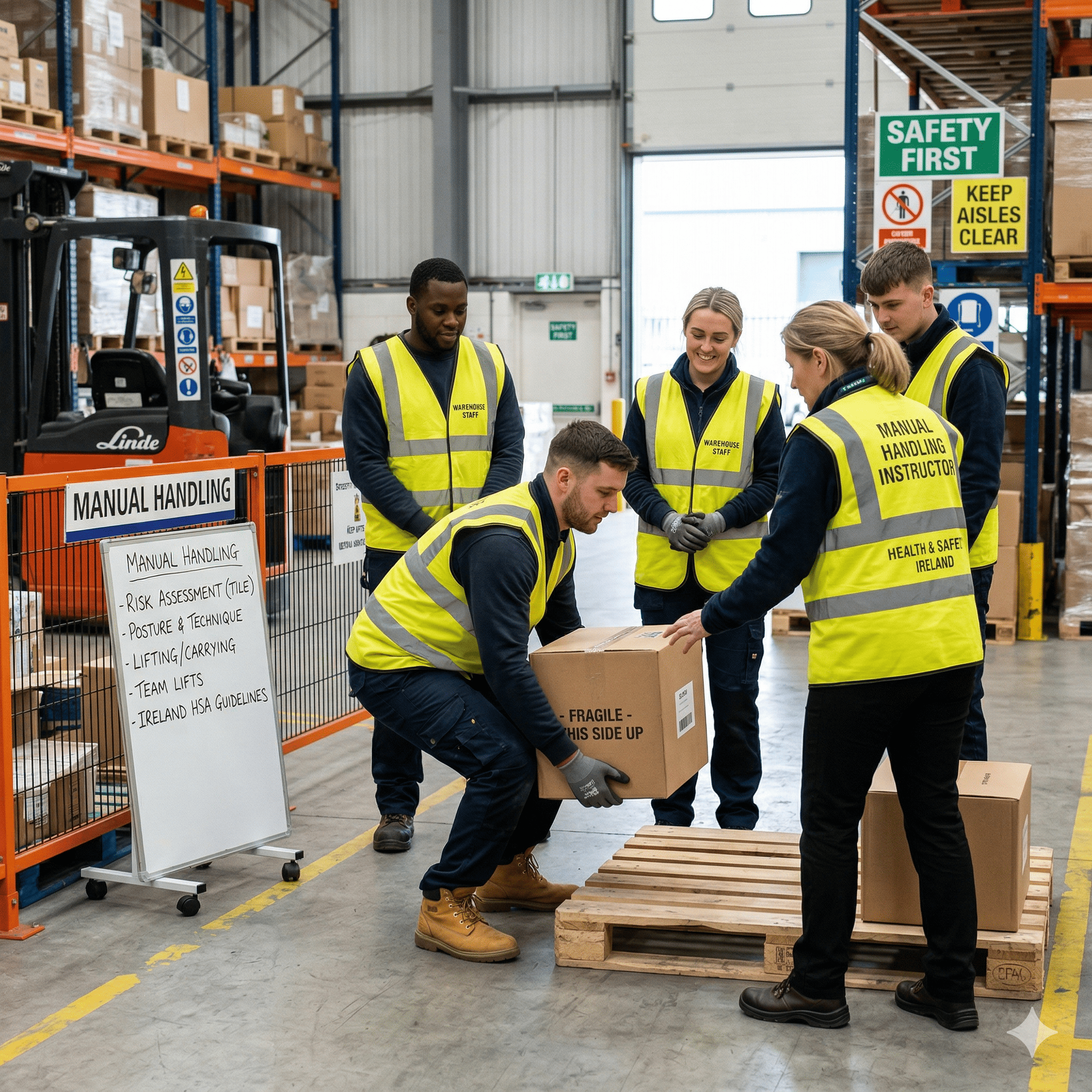
Manual handling training is a vital requirement for many workplaces across Ireland. Whether you work in construction, healthcare, retail, or an office environment, understanding how to safely handle loads is essential for preventing injuries and ensuring legal compliance.
If you’re considering enrolling in a manual handling course Ireland, you may be wondering what exactly is included in the training. In this guide, we’ll break down all the key topics covered in a certified manual handling training Ireland program so you know exactly what to expect.
What is a Manual Handling Course?
A manual handling course Ireland is designed to teach individuals how to safely lift, carry, push, and move objects in the workplace. The course combines theoretical knowledge with practical skills to reduce the risk of injury.
Upon successful completion, participants receive a manual handling certificate Ireland, which demonstrates their ability to perform manual handling tasks safely and in compliance with Irish regulations.
Why Understanding Course Content Matters
Knowing what topics are covered helps you:
- Prepare for the training
- Understand its importance
- Apply the knowledge effectively
- Pass the assessment successfully
A high-quality manual handling course online or in-person program ensures that learners gain practical, real-world skills.
1. Introduction to Manual Handling
The course typically begins with an overview of manual handling and its importance in the workplace.
Key areas include:
- Definition of manual handling
- Common workplace tasks
- Statistics on injuries related to poor handling
This section sets the foundation for understanding why manual handling training Ireland is essential.
2. Legal Requirements in Ireland
One of the most important topics covered is the legal framework surrounding manual handling.
Participants learn about:
- Employer and employee responsibilities
- Health and safety legislation
- The importance of compliance
Understanding the legal side ensures that both workers and employers meet their obligations when completing a manual handling course Ireland.
3. Anatomy and Injury Prevention
A core part of any manual handling training Ireland program is learning about the human body—especially the spine.
This section covers:
- Basic anatomy of the back and muscles
- How injuries occur
- Long-term effects of poor handling
By understanding how the body works, learners can better appreciate the importance of proper techniques.
4. Risk Assessment (TILE Method)
Risk assessment is a key component of manual handling safety.
Most courses teach the TILE method, which stands for:
- Task
- Individual
- Load
- Environment
Learners are taught how to assess risks before performing any manual handling activity. This helps prevent accidents and is a critical skill for passing a manual handling certificate Ireland.
5. Safe Lifting Techniques
Safe lifting techniques are at the heart of any manual handling course Ireland.
Participants learn:
- How to position their feet correctly
- How to bend their knees
- How to keep their back straight
- How to hold loads close to the body
These techniques reduce strain on the body and significantly lower the risk of injury.
6. Carrying, Pushing, and Pulling
Manual handling is not just about lifting.
Courses also cover:
- Safe carrying methods
- Techniques for pushing and pulling loads
- When to push instead of pull (and vice versa)
Understanding these techniques ensures that all types of manual handling tasks are performed safely.
7. Use of Mechanical Aids
In many workplaces, equipment is used to reduce the need for manual handling.
Training includes guidance on:
- Trolleys and carts
- Lifting equipment
- Handling tools
Learners are taught when and how to use these aids to minimize physical strain.
8. Ergonomics and Workplace Setup
Ergonomics focuses on designing tasks and environments to suit the worker.
This section covers:
- Proper workstation setup
- Reducing repetitive strain
- Improving posture
A good manual handling course online will include examples of how to create safer work environments.
9. Common Mistakes and How to Avoid Them
Understanding common mistakes is essential for improving safety.
Courses highlight errors such as:
- Lifting with the back instead of the legs
- Twisting while carrying loads
- Overestimating strength
- Ignoring risk assessments
Learning how to avoid these mistakes helps prevent injuries and improves overall performance.
10. Practical Demonstrations
High-quality manual handling training Ireland programs include practical demonstrations.
These may involve:
- Instructor-led examples
- Video tutorials (for online courses)
- Hands-on practice (for in-person training)
Practical learning ensures that participants can apply techniques correctly in real-life situations.
11. Assessment and Certification
At the end of the course, learners must complete an assessment to receive their manual handling certificate Ireland.
Assessment Methods:
- Multiple-choice questions
- Scenario-based questions
- Practical evaluations (if applicable)
The assessment ensures that participants understand the material and can apply it effectively.
12. Industry-Specific Applications
Some courses include examples tailored to specific industries.
For example:
- Healthcare: Patient handling techniques
- Construction: Heavy lifting and site safety
- Retail: Stock handling and repetitive tasks
This makes the training more relevant and practical for different job roles.
13. Online Learning Features
If you choose a manual handling course online, you’ll benefit from additional features such as:
- Interactive modules
- Video demonstrations
- Self-paced learning
- Instant feedback on quizzes
These features make learning more engaging and accessible.
14. Refresher Training and Certification Validity
Courses also explain the importance of keeping your certification up to date.
A manual handling certificate Ireland is typically valid for three years. After that, refresher training is recommended to maintain compliance and safety.
Benefits of Completing the Course
By covering all these topics, a manual handling course Ireland provides several key benefits:
- Improved Safety: Reduce the risk of injuries
- Legal Compliance: Meet workplace regulations
- Better Skills: Perform tasks efficiently
- Increased Confidence: Work safely in any environment
- Career Opportunities: Certification is often required
These advantages make training a valuable investment for both individuals and businesses.
Conclusion
A manual handling course Ireland covers a wide range of essential topics designed to improve workplace safety and ensure compliance with Irish regulations. From understanding legal requirements and anatomy to mastering safe lifting techniques and risk assessment, the course provides the knowledge and skills needed to handle tasks safely.
Whether you choose an in-person program or a manual handling course online, knowing what topics are included helps you prepare and succeed.
By completing a certified manual handling training Ireland course, you not only gain a manual handling certificate Ireland but also develop lifelong skills that protect your health and enhance your career.
Call to Action:
“Ready to get certified? Enroll in a trusted manual handling course Ireland today and gain the skills needed to work safely and confidently.”