



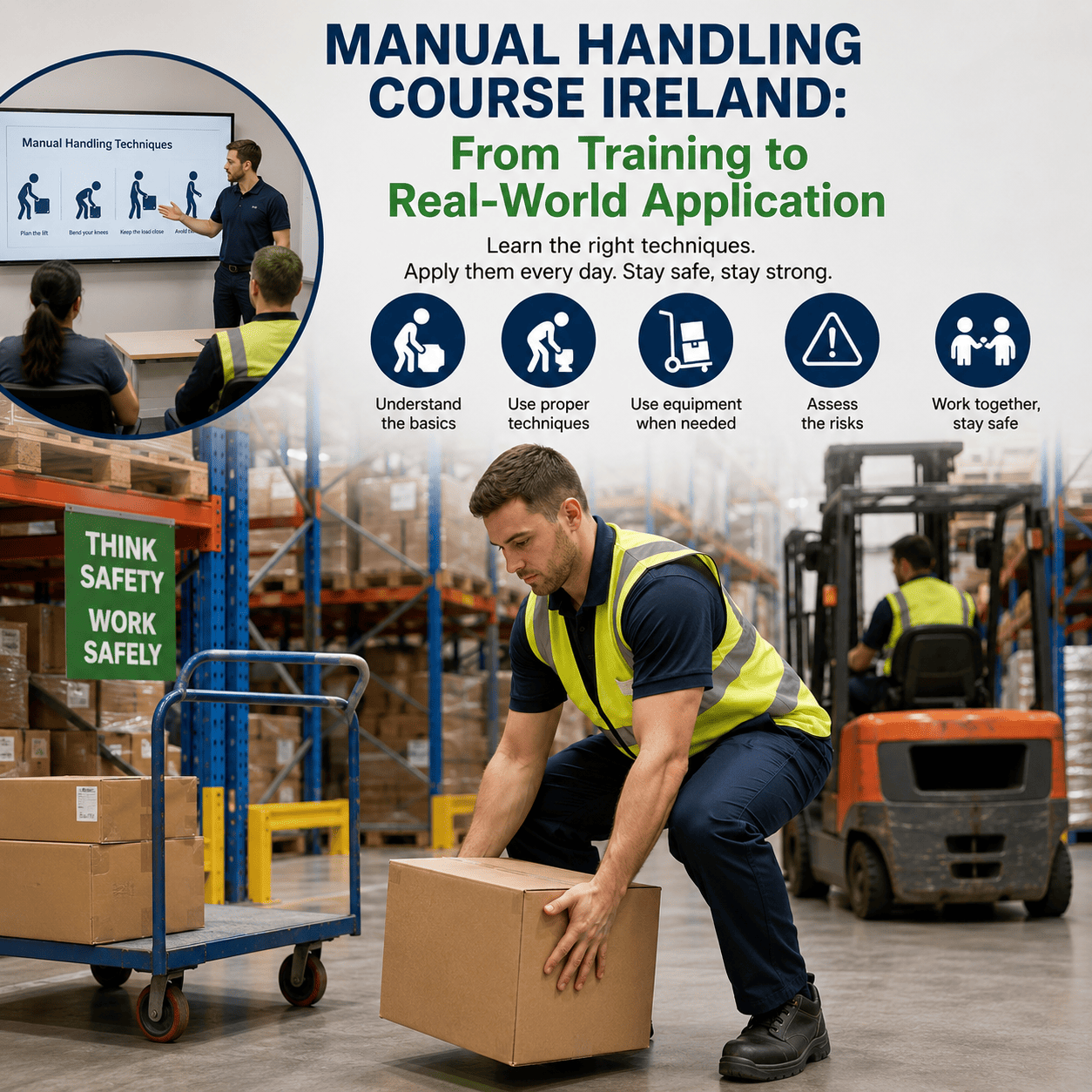
Manual handling is one of the most common workplace activities across Ireland. Employees in industries such as warehousing, retail, healthcare, manufacturing, hospitality, and construction perform lifting, carrying, pushing, and moving tasks every day. While these activities may seem routine, poor handling techniques remain one of the leading causes of workplace injuries.
Many employees complete a manual handling course Ireland to gain the knowledge needed to work safely. However, the real value of training is not simply earning a certificate. The true benefit comes when employees apply what they learn consistently in real workplace situations.
A valid manual handling certificate Ireland confirms that employees have completed training, but effective workplace safety depends on turning that knowledge into everyday habits. Proper manual handling training Ireland helps workers bridge the gap between learning safety principles and applying them practically during busy workdays.
This article explores how businesses and employees can move from training to real-world application and create safer, more productive workplaces through strong manual handling Ireland practices.
Why Practical Application Matters
Training is only effective if employees use what they learn after completing the course.
Some workers understand manual handling principles during training but return to unsafe habits once they resume daily tasks. This often happens because of:
- Workplace pressure
- Repetitive routines
- Lack of reinforcement
- Poor workplace culture
Applying safe techniques consistently is what truly reduces injuries and improves long-term workplace safety.
A professional manual handling course Ireland should focus not only on theory but also on helping employees use these skills naturally during everyday work.
Understanding Manual Handling Beyond Certification
Many businesses focus heavily on obtaining a manual handling certificate Ireland, but certification alone does not guarantee safe behavior.
Real workplace safety depends on employees understanding:
- Why safe lifting matters
- How injuries develop over time
- How to recognize risks before problems occur
Employees who understand the purpose behind safety procedures are more likely to follow them consistently.
Effective manual handling training Ireland creates awareness that extends beyond passing an assessment.
Building Safe Habits Early
The best time to develop safe manual handling habits is from the beginning of employment.
New employees are often more open to learning proper techniques before unsafe shortcuts become routine.
Training early helps workers:
- Build confidence
- Learn correct posture immediately
- Understand workplace expectations
- Avoid developing poor habits
A strong manual handling course Ireland provides a foundation that employees can carry throughout their careers.
Applying Proper Lifting Techniques Daily
One of the most important parts of real-world application is consistency.
Employees should use safe lifting techniques every time they handle loads, not only during inspections or supervised tasks.
Safe lifting involves:
- Bending the knees
- Keeping the back straight
- Holding loads close to the body
- Avoiding twisting movements
These techniques reduce strain on muscles and joints while improving balance and control.
Consistent application of these methods is central to effective manual handling Ireland safety.
Learning to Assess Risks in Real Time
Workplaces are dynamic environments where conditions can change quickly.
Employees need to apply risk assessment skills during real tasks by considering:
- The weight and shape of loads
- Environmental hazards
- Available space for movement
- Whether equipment or assistance is needed
A quality manual handling course Ireland teaches employees how to make safe decisions before lifting begins.
Real-world awareness is one of the most valuable outcomes of proper training.
Avoiding the Return to Unsafe Shortcuts
One of the biggest challenges after training is maintaining safe behavior during busy periods.
Employees may be tempted to:
- Lift quickly without planning
- Ignore proper posture
- Carry more weight than necessary
- Skip using lifting equipment
These shortcuts often lead to injuries over time.
Businesses should reinforce the message that safe handling practices are always more important than temporary speed.
Why Workplace Culture Influences Application
Training works best when the workplace environment supports safe behavior.
Employees are more likely to apply manual handling Ireland techniques consistently when:
- Managers encourage safety
- Unsafe shortcuts are corrected
- Team members support safe lifting practices
- Workloads allow employees to work responsibly
Strong safety culture helps turn training into long-term workplace habits.
The Role of Supervisors in Reinforcement
Managers and supervisors play a key role in helping employees apply training properly.
Leadership should:
- Demonstrate safe handling techniques
- Reinforce procedures regularly
- Recognize safe behavior
- Address unsafe practices immediately
Employees often follow the standards they observe from leadership.
A workplace where supervisors prioritize safety creates stronger long-term compliance with manual handling training Ireland principles.
Making Safety Part of Daily Workflow
Manual handling safety should become part of normal work routines rather than something separate from productivity.
Employees should naturally:
- Assess loads before lifting
- Plan routes before carrying items
- Use proper posture automatically
- Ask for help when necessary
The goal of a professional manual handling course Ireland is to make safe movement feel normal and automatic during everyday tasks.
Using Equipment Correctly
Modern workplaces often provide tools that reduce physical strain during manual handling tasks.
Examples include:
- Trolleys
- Hoists
- Pallet trucks
- Adjustable lifting equipment
Employees should apply training by understanding when equipment is the safer choice.
Effective manual handling Ireland practices involve working smarter rather than relying entirely on physical effort.
Adapting Training to Real Workplace Conditions
No two workplaces are exactly the same.
Employees need to apply general safety principles to specific environments such as:
- Busy warehouses
- Retail stockrooms
- Healthcare facilities
- Construction sites
A quality manual handling course Ireland prepares employees to adapt their training to changing workplace conditions and challenges.
Reinforcing Knowledge Through Repetition
Repetition is essential for turning knowledge into long-term behavior.
Employees who consistently practice proper techniques are more likely to:
- Maintain safer posture
- Reduce strain injuries
- Stay aware of hazards
- Work with greater confidence
Safe movement becomes easier and more natural through daily repetition.
Why Refresher Training Supports Real-World Application
Even experienced employees can forget techniques or develop poor habits over time.
Refresher manual handling training Ireland helps employees:
- Revisit core safety principles
- Correct unsafe routines
- Stay updated on workplace procedures
Maintaining a current manual handling certificate Ireland also reinforces accountability and professional standards.
Regular reinforcement helps training remain effective long after the original course is completed.
Encouraging Employee Responsibility
Real-world safety depends on employees taking personal responsibility for their actions.
Workers should feel encouraged to:
- Report hazards
- Request assistance when needed
- Avoid lifting beyond their limits
- Prioritize safe movement consistently
A safer workplace is built through shared responsibility among teams and management.
Benefits of Effective Real-World Application
When employees apply their training consistently, businesses experience significant long-term benefits.
These include:
- Fewer workplace injuries
- Lower absenteeism
- Improved productivity
- Better employee confidence
- Stronger workplace morale
Employees also experience less physical strain and greater comfort during daily tasks.
Why Online Learning Supports Modern Workplaces
Many businesses now use manual handling course online options to improve training accessibility and flexibility.
Online learning allows employees to:
- Complete training efficiently
- Access refresher materials easily
- Learn at their own pace
Digital learning also helps businesses maintain organized certification records and consistent training standards.
Conclusion
A manual handling course Ireland provides employees with essential knowledge, but the true value of training comes from applying these skills consistently in real workplace situations. Effective manual handling training Ireland helps employees move beyond theory and develop habits that support long-term safety and productivity.
A valid manual handling certificate Ireland demonstrates understanding of workplace safety principles, but real-world application is what truly protects employees from injury and strain.
By reinforcing strong manual handling Ireland practices through workplace culture, leadership support, and ongoing training, businesses can create safer environments where employees work confidently, efficiently, and responsibly every day.