



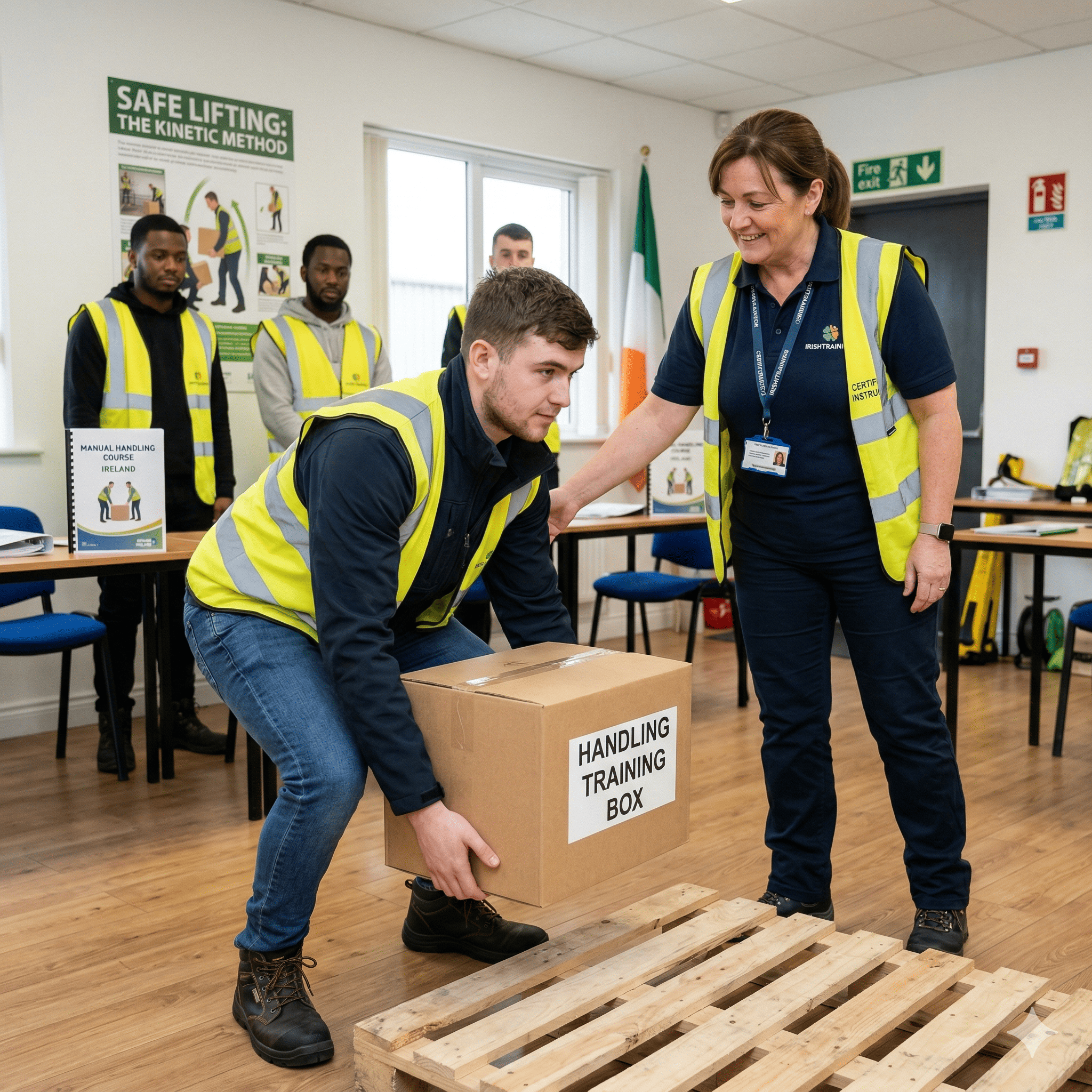
Manual handling is a fundamental part of many jobs across Ireland. Workers in industries such as construction, healthcare, retail, logistics, and hospitality regularly lift, carry, push, or move objects during their daily tasks. While these activities may seem routine, improper lifting techniques can cause serious injuries, particularly to the back, shoulders, and joints.
For this reason, many employers require workers to complete a manual handling course in Ireland before starting work. This training ensures employees understand safe lifting practices and how to prevent workplace injuries.
In this guide, we will explain everything you need to know about manual handling courses in Ireland, from beginner training to receiving your certification.
What Is Manual Handling?
Manual handling refers to any activity that involves lifting, lowering, pushing, pulling, carrying, or moving a load using physical effort. The load may be a box, piece of equipment, package, or even another person in healthcare settings.
Examples of manual handling tasks include:
- Lifting boxes in warehouses
- Moving building materials on construction sites
- Handling patients in hospitals or care homes
- Stocking shelves in retail stores
- Transporting goods in hospitality businesses
These tasks can place strain on the body if performed incorrectly. Over time, repeated poor lifting techniques can lead to injuries and long-term health problems.
Why Manual Handling Training Is Important
Manual handling injuries are one of the most common causes of workplace accidents in Ireland. Back injuries, muscle strains, and joint problems frequently occur when workers lift objects incorrectly or attempt to carry loads that are too heavy.
Manual handling training helps workers learn how to perform tasks safely and reduce the risk of injury.
A typical manual handling training course in Ireland teaches:
- Correct lifting techniques
- How to assess lifting risks
- Proper body posture when carrying loads
- Safe workplace practices
- How to use mechanical lifting aids
By learning these skills, employees can protect themselves and contribute to a safer working environment.
Manual Handling Laws in Ireland
Workplace safety in Ireland is regulated by the Safety, Health and Welfare at Work Act 2005 and related safety regulations.
These laws require employers to protect workers from injuries related to manual handling tasks.
Employers must:
- Avoid manual handling tasks when possible
- Assess the risks involved in lifting and carrying loads
- Provide manual handling training for employees
- Implement safety measures to reduce injuries
If manual handling cannot be avoided, employers are responsible for ensuring workers receive proper training.
Who Needs a Manual Handling Course?
Many industries in Ireland require employees to complete a manual handling course before starting work.
Some of the most common sectors include:
- Construction
- Warehousing and logistics
- Healthcare and nursing
- Retail and supermarkets
- Manufacturing and factories
- Hospitality and catering
In these industries, workers frequently handle heavy or awkward loads, making proper training essential.
Even office workers may need manual handling training if they occasionally move equipment, furniture, or boxes.
What Happens in a Manual Handling Course?
A manual handling course usually includes both theoretical learning and practical demonstrations. The goal is to help participants understand the risks of manual handling and learn how to perform tasks safely.
Most courses cover the following topics.
Introduction to Manual Handling
The course begins by explaining what manual handling is and why proper techniques are important for workplace safety.
Participants learn about the types of tasks that fall under manual handling and the risks associated with improper lifting.
Understanding Workplace Injuries
Workers are introduced to common injuries caused by incorrect manual handling.
These include:
- Back strain
- Muscle injuries
- Joint damage
- Long-term musculoskeletal disorders
The course explains how these injuries occur and how proper lifting techniques can prevent them.
Risk Assessment
Another important part of the course involves identifying potential hazards before lifting or moving an object.
Participants learn to assess risks using the TILE approach, which stands for:
- Task
- Individual
- Load
- Environment
This method helps workers determine whether a lifting task is safe and how to perform it correctly.
Safe Lifting Techniques
One of the most important parts of manual handling training is learning proper lifting techniques.
Workers are taught how to:
- Bend their knees instead of their back
- Keep loads close to the body
- Maintain a straight back
- Avoid twisting while lifting
- Use leg muscles rather than the spine
Practicing these techniques helps prevent injuries and reduces strain on the body.
Practical Demonstration
Many manual handling courses include a practical demonstration where participants show that they understand the correct lifting techniques.
This may involve lifting and carrying objects safely under the supervision of an instructor or submitting a demonstration during an online course.
Online Manual Handling Courses in Ireland
In recent years, online learning has made manual handling training more accessible.
Many workers now choose manual handling courses online in Ireland because they offer convenience and flexibility.
Online courses allow participants to:
- Complete training from home
- Learn at their own pace
- Access materials on a computer or smartphone
- Receive certification quickly
Most online courses take 30 to 60 minutes to complete, making them a fast and efficient way to obtain certification.
Benefits of Online Manual Handling Training
Online manual handling courses provide several advantages.
Convenience
Participants can complete training from anywhere with an internet connection.
Flexible Learning
Workers can pause and resume training whenever it suits their schedule.
Fast Certification
Many courses provide same-day certificates after the training and assessment are completed.
Lower Cost
Online training is often cheaper than traditional classroom courses.
These benefits make online training an attractive option for many workers across Ireland.
How Long Does It Take to Get Certified?
The time required to complete a manual handling course in Ireland depends on the type of training.
Traditional classroom courses may take several hours, while online courses can often be completed in under one hour.
After completing the training and passing the assessment, participants receive a manual handling certificate that confirms they have completed the course.
How Long Is a Manual Handling Certificate Valid?
In Ireland, manual handling certificates are generally recommended to be renewed every three years.
Regular refresher training ensures workers remain familiar with safe lifting practices and updated workplace safety guidelines.
Some employers may require more frequent training depending on the nature of the work.
Tips for Safe Manual Handling at Work
Even after completing a manual handling course, it is important to follow safe lifting practices in the workplace.
Key safety tips include:
- Check the weight of a load before lifting
- Ask for help when carrying heavy items
- Keep loads close to your body
- Avoid twisting your back while lifting
- Use lifting equipment whenever possible
These simple practices can help prevent injuries and improve workplace safety.
Why Manual Handling Training Benefits Employers
Providing manual handling training offers many advantages for businesses.
For employers, training helps:
- Reduce workplace injuries
- Improve employee productivity
- Ensure compliance with safety regulations
- Lower compensation and insurance costs
For employees, training helps:
- Improve safety awareness
- Prevent long-term injuries
- Increase job opportunities
- Build confidence when performing manual tasks
Investing in proper training creates a safer and more efficient workplace.
Final Thoughts
Manual handling plays an important role in many jobs across Ireland. However, without proper training and awareness, lifting and carrying tasks can lead to serious injuries.
Completing a manual handling course in Ireland helps workers understand safe lifting techniques, assess risks, and prevent workplace accidents.
Whether you are starting a new job or updating your safety training, obtaining a manual handling certificate is an important step toward maintaining workplace safety.
With the availability of online manual handling courses, workers can now complete training quickly, conveniently, and affordably while meeting the safety requirements of employers across Ireland.