



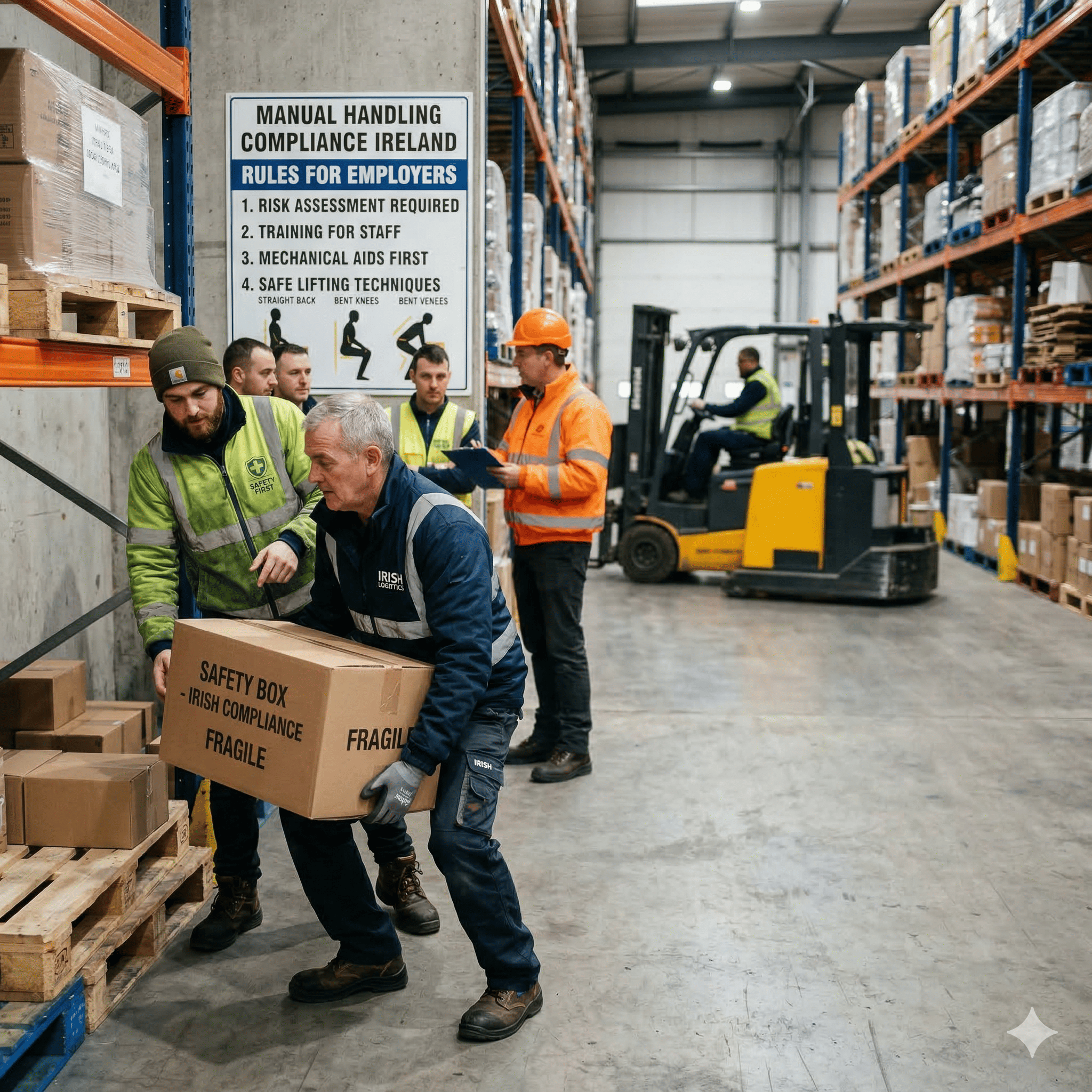
Workplace safety is a legal and ethical responsibility for every employer in Ireland. One of the most important areas of safety is manual handling, which involves lifting, carrying, pushing, or moving objects. Poor manual handling practices are a leading cause of workplace injuries, especially musculoskeletal disorders.
Ensuring manual handling compliance in Ireland is essential, not only to protect staff but also to avoid legal penalties. In this guide, we’ll cover the key rules every employer must follow, including manual handling training for staff Ireland, certification, and best practices.
1. Understand Your Legal Obligations
Under the Safety, Health and Welfare at Work Act 2005 and the Safety, Health and Welfare at Work (General Application) Regulations 2007, employers have a duty to protect their employees from workplace hazards. This includes:
-
Identifying risks related to manual handling
-
Taking measures to reduce or eliminate those risks
-
Providing adequate training for employees
Failure to comply can result in fines, prosecution, and increased insurance costs. Ensuring manual handling compliance in Ireland protects both staff and the business.
2. Conduct a Risk Assessment
The first step in compliance is to assess manual handling risks in your workplace. A proper risk assessment includes:
-
Identifying tasks that involve lifting, pushing, or carrying
-
Evaluating the weight and size of loads
-
Considering the frequency of manual handling tasks
-
Identifying environmental hazards (e.g., slippery floors, narrow corridors)
Once risks are identified, employers can implement controls, such as using mechanical aids, adjusting workstations, or changing procedures to minimize hazards.
3. Provide Manual Handling Training for Staff Ireland
One of the most important requirements for manual handling compliance in Ireland is proper training. All employees who perform manual handling tasks must receive appropriate instruction.
Key points for manual handling training for staff Ireland include:
-
Teaching safe lifting and carrying techniques
-
Explaining the risks of poor manual handling
-
Showing how to use equipment such as trolleys or hoists
-
Ensuring employees understand how to conduct a basic risk assessment
Training can be delivered in-person or through manual handling training online Ireland, as long as it is effective and leads to manual handling certification Ireland.
4. Maintain Proper Records of Training
Employers must keep accurate records of all training provided. This includes:
-
Names of employees trained
-
Dates of training sessions
-
Type of course completed
-
Certification received
Maintaining records helps demonstrate compliance with Irish health and safety laws and ensures employees know when refresher training is due.
5. Provide Equipment and Tools to Reduce Risk
Part of manual handling compliance in Ireland involves providing equipment to reduce strain and injury risks. Employers should ensure:
-
Trolleys, lifts, and hoists are available where needed
-
Workstations are ergonomically designed
-
Load weights are within safe limits for staff
Using these tools alongside manual handling training for staff Ireland reduces workplace injuries and promotes efficiency.
6. Monitor and Review Practices Regularly
Compliance is an ongoing process. Employers should:
-
Regularly review manual handling tasks
-
Update risk assessments when changes occur
-
Ensure training remains current
-
Address any incidents promptly
Regular monitoring ensures that manual handling compliance in Ireland is maintained and that staff continue to work safely.
7. Promote a Safety Culture
A workplace culture that values safety helps maintain compliance. Employers should:
-
Encourage staff to report hazards
-
Reward safe practices
-
Include manual handling procedures in induction programs
Promoting safety complements manual handling training for staff Ireland and reduces accidents.
8. Ensure Certification is Up-to-Date
Employees should have a valid manual handling certification Ireland. Certification demonstrates that staff have been trained to a recognised standard. Most certifications should be renewed every 2–3 years to ensure skills remain current.
Online options like manual handling training online Ireland make renewal easier and more convenient.
9. Avoid Common Compliance Pitfalls
Employers often make mistakes such as:
-
Providing generic training that doesn’t match job tasks
-
Failing to provide refresher courses
-
Ignoring environmental hazards
-
Not documenting training properly
Following all steps for manual handling compliance in Ireland ensures these pitfalls are avoided.
Final Thoughts
Ensuring manual handling compliance in Ireland is essential for every employer. By following the rules—conducting risk assessments, providing proper manual handling training for staff Ireland, maintaining records, supplying the right equipment, and promoting a safety culture—employers protect their staff and their business.
With flexible options like manual handling training online Ireland, achieving compliance has never been easier. Remember, proper training and ongoing monitoring are key to maintaining a safe and legally compliant workplace.