



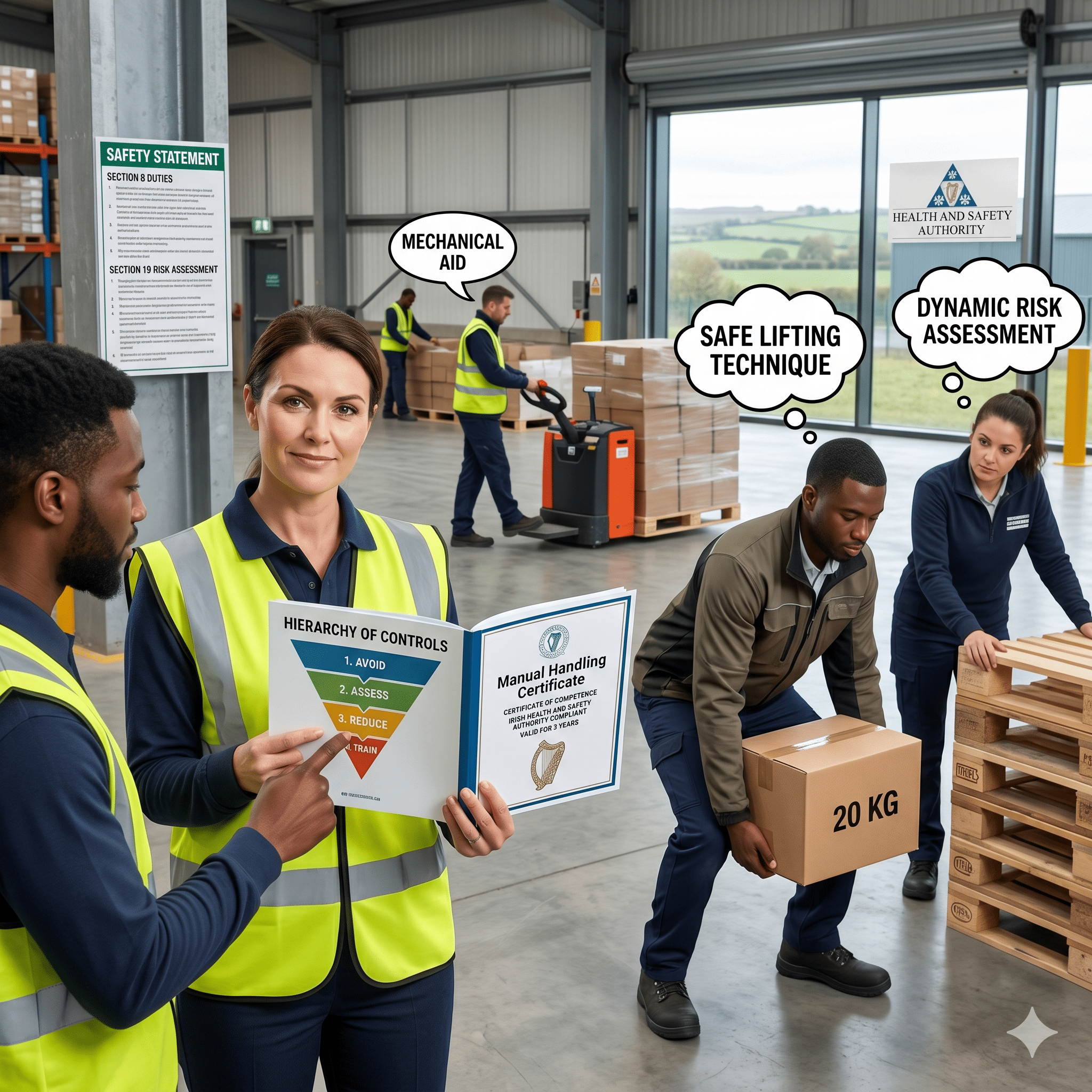
Workplace safety has become a major priority for businesses across Ireland. Employers are expected to create environments where employees can perform their duties safely while reducing unnecessary risks. One of the most important areas of workplace safety is manual handling, as many jobs involve lifting, carrying, pushing, pulling, or moving loads on a daily basis.
When manual handling tasks are performed incorrectly, the result can be workplace injuries, operational disruption, and potential legal consequences. This is why proper training is essential. Completing a recognised manual handling course Ireland and obtaining a valid manual handling certificate Ireland helps businesses meet important safety and compliance goals while also protecting employees.
For employers, compliance is not simply about following regulations—it is about creating safer systems, reducing risk, and demonstrating responsibility. Effective manual handling training Ireland plays a central role in achieving these objectives.
Understanding Workplace Compliance in Ireland
Compliance refers to meeting the legal and safety obligations required in the workplace. In Ireland, employers have a responsibility to protect the health, safety, and welfare of employees during work activities.
This includes:
- Identifying workplace hazards
- Reducing risks where possible
- Providing appropriate training
- Maintaining safe work practices
Manual handling is a major focus because it is linked to a large number of workplace injuries every year. Strong manual handling Ireland procedures help employers demonstrate that they are actively working to reduce these risks.
Why Manual Handling Is a Compliance Priority
Many workplace tasks involve physical effort. Employees may regularly:
- Lift stock or equipment
- Move materials
- Push or pull loads
- Perform repetitive handling tasks
Without proper training, these activities can lead to injuries such as:
- Back strain
- Muscle damage
- Joint injuries
- Repetitive strain disorders
These injuries can affect employee well-being while also creating financial and operational challenges for employers.
A recognised manual handling course Ireland helps businesses address these risks before they become serious problems.
What a Manual Handling Certificate Demonstrates
A manual handling certificate Ireland confirms that an employee has completed training in safe handling techniques and understands essential safety principles.
This demonstrates that workers have been trained in:
- Correct lifting methods
- Risk awareness
- Safe movement techniques
- Proper use of handling equipment
- Injury prevention practices
For employers, certification provides evidence that training has been delivered as part of workplace safety procedures.
Supporting Risk Reduction
One of the main goals of compliance is reducing workplace risk.
Effective manual handling training Ireland helps employees identify hazards before starting tasks. Workers learn how to:
- Assess the weight and shape of loads
- Recognize unsafe conditions
- Avoid dangerous lifting techniques
- Use safer alternatives when necessary
Reducing risk is one of the most important benefits of strong manual handling Ireland practices.
Helping Employers Meet Legal Responsibilities
Employers are expected to provide training when employees perform manual handling tasks as part of their work.
A professional manual handling course Ireland supports employers by helping them:
- Meet workplace safety obligations
- Demonstrate proactive risk management
- Show commitment to employee welfare
Maintaining valid manual handling certificate Ireland records also helps businesses stay organized and prepared for inspections or audits.
Creating Safer Workplace Procedures
Compliance is not only about paperwork—it is about daily workplace behavior.
Employees who complete manual handling training Ireland are more likely to:
- Follow correct procedures
- Use safer lifting methods
- Avoid unnecessary risks
- Report hazards early
This creates a more structured and safety-focused working environment.
Improving Consistency Across Teams
One challenge many businesses face is inconsistency in how tasks are performed.
Without training:
- Employees may develop unsafe habits
- Different teams may use different techniques
- Risk levels may vary across departments
A standardized manual handling course Ireland ensures employees receive consistent instruction and follow the same safety principles.
This consistency supports stronger compliance throughout the organization.
Reducing Workplace Injuries
Workplace injuries can create serious compliance issues for employers.
Injuries may lead to:
- Employee absences
- Compensation claims
- Reduced productivity
- Increased insurance costs
Investing in manual handling Ireland training helps reduce the likelihood of accidents while supporting a healthier workforce.
Prevention is always more effective than dealing with the consequences of injuries later.
Supporting Workplace Audits and Inspections
Health and safety inspections are a normal part of workplace operations in many industries.
During inspections, employers may need to demonstrate:
- That employees received proper training
- That risks have been assessed
- That safe systems are in place
A valid manual handling certificate Ireland provides clear evidence that workers have completed recognised training.
This helps businesses show that they are taking reasonable steps to maintain workplace safety.
Building a Culture of Accountability
Compliance works best when safety becomes part of workplace culture rather than just a formal requirement.
Employees who complete manual handling training Ireland often become more aware of their responsibilities and the impact of their actions.
This encourages workers to:
- Follow procedures consistently
- Support colleagues in safe practices
- Speak up about hazards or concerns
A strong culture of accountability improves both safety and compliance standards.
The Role of Online Training in Modern Compliance
Many businesses now choose online training because it offers flexibility and efficiency.
A manual handling course online allows employers to:
- Train employees across multiple locations
- Keep records organized digitally
- Ensure consistent learning experiences
- Reduce disruption to operations
Online learning has become an important part of modern manual handling Ireland compliance strategies.
Why Refresher Training Matters
Compliance is not a one-time achievement. Employees can develop poor habits over time if training is not reinforced.
Refresher manual handling training Ireland helps employees:
- Maintain safe habits
- Update their knowledge
- Stay aligned with workplace procedures
Keeping a manual handling certificate Ireland current also shows ongoing commitment to safety standards.
Benefits Beyond Compliance
While compliance is important, the benefits of proper manual handling training go much further.
Businesses often experience:
- Better productivity
- Improved employee confidence
- Lower absenteeism
- Stronger workplace morale
Employees who feel safe and supported are generally more engaged and more effective in their roles.
Supporting Long-Term Business Success
Safety and compliance are closely connected to business performance.
Companies with strong manual handling Ireland procedures often benefit from:
- Reduced operational disruption
- Better employee retention
- Improved reputation
- Greater trust from clients and partners
Investing in workplace safety helps create stability and long-term success.
Common Compliance Mistakes Employers Should Avoid
Some businesses unintentionally weaken their compliance efforts by:
- Treating training as a one-time task
- Failing to refresh employee knowledge
- Choosing low-quality training providers
- Not monitoring workplace behavior after training
Effective compliance requires continuous attention and improvement.
A high-quality manual handling course Ireland should support both knowledge and long-term behavior change.
Conclusion
A valid manual handling certificate Ireland is more than a training document—it is an important part of workplace compliance and employee protection. By completing a recognised manual handling course Ireland, employees gain the knowledge and practical skills needed to perform tasks safely and responsibly.
For employers, strong manual handling training Ireland supports legal obligations, reduces workplace risks, and helps create safer working environments. It also demonstrates a clear commitment to employee well-being and operational responsibility.
As workplace expectations continue to evolve, investing in effective manual handling Ireland practices will remain essential for businesses that want to meet compliance goals while building safer, more productive workplaces.