



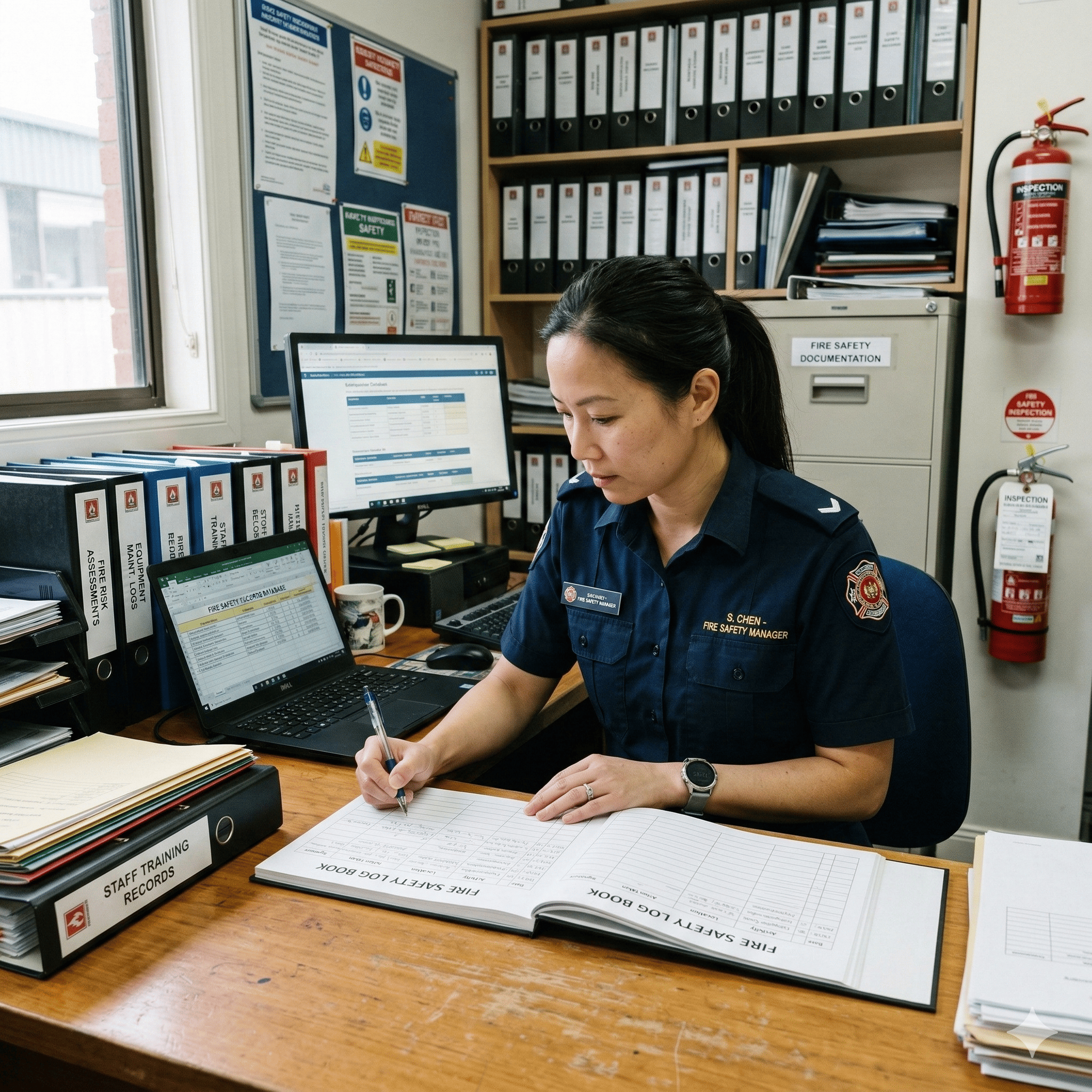
Maintaining accurate fire safety records and documentation is a critical component of effective fire safety training in Ireland. Proper documentation demonstrates compliance with legal obligations, supports risk management, and ensures that fire prevention measures are consistently monitored and improved.
In Ireland, employers are legally required to manage workplace safety, and record-keeping plays a central role in meeting these responsibilities. Structured workplace fire safety training in Ireland should always include guidance on documentation and reporting procedures.
Oversight and compliance expectations are supported by the Health and Safety Authority (HSA).
Why Fire Safety Documentation Is Important
Maintaining fire safety records helps organisations to:
-
Demonstrate compliance with Irish safety legislation
-
Provide evidence during inspections or audits
-
Support insurance requirements
-
Track training completion and certification
-
Identify recurring risks or system failures
-
Improve overall fire prevention strategies
Without proper documentation, even well-delivered fire safety awareness training in Ireland may not meet compliance standards.
Key Fire Safety Records Employers Must Keep
Effective record-keeping should cover all aspects of fire safety management. Common documentation includes:
1. Fire Risk Assessments
A written fire risk assessment should identify hazards, evaluate risks, and outline control measures. This document should be reviewed regularly and updated when workplace conditions change.
Fire risk assessments are a core element of every recognised fire safety course in Ireland.
2. Fire Safety Training Records
Employers should keep detailed records of:
-
Employee names
-
Course titles (e.g., fire safety certification in Ireland, fire warden training in Ireland)
-
Date of completion
-
Assessment results
-
Renewal dates
This documentation confirms participation in online fire safety training in Ireland or in-person instruction.
3. Fire Drill Reports
Each fire drill should be documented, including:
-
Date and time
-
Evacuation duration
-
Issues encountered
-
Attendance and headcount confirmation
-
Actions taken to improve procedures
Drill records support ongoing health and safety fire training in Ireland initiatives.
4. Fire Alarm Testing Logs
Fire alarm systems must be tested regularly. Records should include:
-
Weekly alarm test dates
-
Fault reports
-
Maintenance actions
-
Service provider details
These logs confirm that detection systems remain operational.
5. Fire Extinguisher Inspection Records
Documentation should show:
-
Monthly visual checks
-
Annual servicing
-
Replacement dates
-
Identified defects
These records are essential in supporting fire prevention training in Ireland and ensuring equipment readiness.
6. Emergency Lighting Testing
Emergency lighting systems should be tested and recorded, typically:
-
Monthly function tests
-
Annual full-duration tests
-
Any repairs or replacements
Clear documentation supports safe evacuation procedures.
Digital vs Paper Records
Many organisations now maintain digital documentation systems, especially when delivering online fire safety training in Ireland. Digital records offer:
-
Easier storage and retrieval
-
Secure backups
-
Simplified audit preparation
-
Automated renewal reminders
However, paper-based systems remain acceptable if well-organised and accessible.
How Long Should Records Be Kept?
While specific retention periods may vary depending on company policy and legal advice, it is best practice to:
-
Keep training records for several years
-
Retain fire risk assessments until updated or replaced
-
Store maintenance and inspection records in line with internal compliance procedures
Consistent documentation strengthens organisational accountability.
Role of Fire Wardens and Managers
Individuals who complete fire marshal training in Ireland or advanced fire warden training in Ireland may assist with:
-
Monitoring record accuracy
-
Reporting deficiencies
-
Coordinating drill documentation
-
Ensuring equipment inspections are recorded
Clear delegation of responsibilities improves compliance.
Preparing for Inspections
During inspections by regulatory authorities or insurers, organisations may be asked to provide:
-
Fire risk assessments
-
Evidence of completed fire safety training in Ireland
-
Alarm and extinguisher maintenance logs
-
Fire drill documentation
Accurate, organised records help demonstrate proactive fire safety management.
Conclusion
Maintaining fire safety records and documentation is not simply an administrative task — it is a legal and operational requirement. Effective record-keeping supports compliance, strengthens workplace fire safety training in Ireland, and ensures that fire prevention systems remain effective.
By integrating documentation procedures into structured fire safety training in Ireland, organisations create a safer workplace, protect employees, and demonstrate their commitment to ongoing fire safety compliance.