



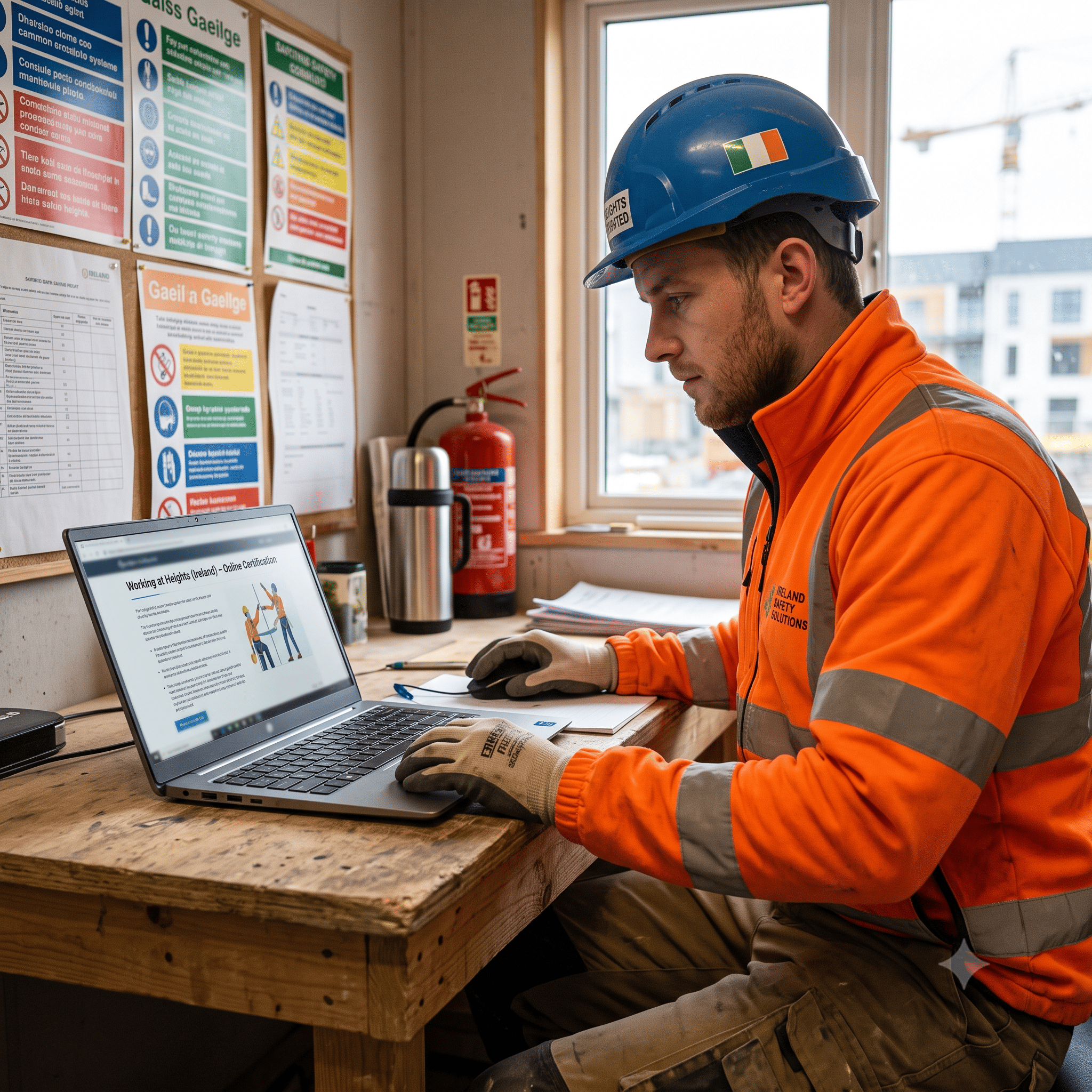
Workplace safety is a priority across every industry in Ireland, especially where employees perform tasks above ground level. Whether working on construction sites, maintaining buildings, operating elevated platforms, or retrieving stock in warehouses, employees need the knowledge to work safely and minimise the risk of falls. One of the most convenient ways to gain this knowledge is by completing a Working at Heights Certificate Online in Ireland.
Online training has become increasingly popular because it offers flexibility, convenience, and the ability to complete learning around work or personal commitments. Instead of attending a classroom course, learners can study from home, the office, or any location with an internet connection. Upon successful completion, they receive a working at heights certificate that demonstrates they have completed recognised safety training.
This guide explains how to get a working at heights certificate online in Ireland quickly, what to expect during the course, and why online certification is an excellent option for both employees and employers.
What Is a Working at Heights Certificate?
A Working at Heights Certificate confirms that an individual has completed training covering the principles of working safely where there is a risk of falling from one level to another.
The training typically focuses on:
- Hazard awareness
- Risk assessment
- Safe working procedures
- Ladder safety
- Scaffolding awareness
- Personal protective equipment (PPE)
- Emergency procedures
- Legal responsibilities
The certificate provides evidence that the learner has completed training designed to improve workplace safety awareness.
Who Needs a Working at Heights Certificate?
Many industries require employees to work above ground level.
Workers who commonly complete working at heights training in Ireland include:
- Construction workers
- Roofers
- Electricians
- Warehouse employees
- Facilities management teams
- Maintenance technicians
- Telecommunications engineers
- Solar panel installers
- Property maintenance staff
- Industrial cleaning professionals
Even where not specifically requested by an employer, completing safety training demonstrates a commitment to safe working practices.
Why Choose Online Certification?
Many organisations now prefer health and safety courses online in Ireland because they are flexible and accessible.
Online learning allows employees to:
- Study at their own pace
- Learn from any location
- Avoid travel time
- Fit training around work schedules
- Access courses using multiple devices
For employers, online learning reduces disruption while helping maintain consistent safety standards across the workforce.
Step 1: Choose a Reputable Training Provider
The first step is selecting a quality training provider.
Look for providers offering:
- Up-to-date course content
- Training based on Irish workplace safety requirements
- A user-friendly online platform
- Recognised certification
- Learner support
- Practical workplace examples
Choosing a reputable provider helps ensure the training is relevant, engaging, and valuable in real working environments.
Step 2: Register for the Course
Registration is usually straightforward.
Most online providers require learners to:
- Create an account
- Enter basic details
- Select the appropriate course
- Complete payment if applicable
Once registered, learners are generally given immediate access to the course materials.
Step 3: Complete the Online Learning
One of the biggest advantages of working at heights online training in Ireland is flexibility.
Learners can complete the course:
- At home
- In the workplace
- During evenings
- At weekends
- Around existing work commitments
Many online platforms allow users to pause lessons and continue later without losing progress.
Step 4: Study the Core Safety Topics
A professional course covers the knowledge needed to work safely at height.
Understanding Working at Height
The course explains what working at height means and why these activities present increased workplace risks.
Learners understand that even relatively low-level falls can result in serious injuries.
Hazard Identification
Participants learn how to identify common hazards, including:
- Open edges
- Fragile roof surfaces
- Slippery platforms
- Falling objects
- Poor lighting
- Unsafe access routes
- Adverse weather conditions
Recognising hazards before work begins helps prevent accidents.
Risk Assessment
Training teaches learners how to:
- Inspect work areas
- Identify hazards
- Assess risks
- Select appropriate control measures
- Plan work safely
Risk assessment is one of the most valuable workplace safety skills.
Ladder Safety
Employees receive guidance on:
- Ladder selection
- Equipment inspection
- Safe positioning
- Correct climbing techniques
- Maintaining three points of contact
- Avoiding overreaching
Proper ladder use significantly reduces workplace falls.
Scaffolding Awareness
The course explains:
- Safe access procedures
- Platform inspections
- Guardrail systems
- Identifying unsafe conditions
- Reporting defects
Understanding scaffolding safety is essential in many industries.
Personal Protective Equipment (PPE)
Training covers the safe use of:
- Safety harnesses
- Lanyards
- Anchor points
- Helmets
- Protective footwear
- Fall arrest systems
Learners also understand the importance of inspecting PPE before every use.
Emergency Procedures
The course explains how workers should:
- Report incidents
- Respond during emergencies
- Support rescue planning
- Follow workplace emergency procedures
Preparation improves confidence if unexpected situations occur.
Step 5: Complete the Course Assessment
Most online courses include an assessment at the end of the learning programme.
The assessment typically checks understanding of topics such as:
- Hazard recognition
- Safe work practices
- Equipment use
- Workplace responsibilities
- Emergency procedures
Successfully completing the assessment demonstrates that the learner has understood the course material.
Step 6: Receive Your Certificate
After successfully completing the course, learners generally receive a Working at Heights Certificate Online.
Digital certificates offer several advantages:
- Immediate availability
- Easy electronic storage
- Simple sharing with employers
- Convenient access when required
Many employers request a copy of the certificate before assigning work involving elevated tasks.
Legal Responsibilities in Ireland
Irish workplace safety legislation places responsibilities on both employers and employees.
Under the Safety, Health and Welfare at Work Act 2005, employers should:
- Provide safe workplaces
- Carry out risk assessments
- Supply suitable equipment
- Deliver appropriate training
- Ensure workers are competent
Employees should:
- Follow training
- Use equipment correctly
- Report hazards
- Cooperate with workplace safety procedures
Completing working at heights training in Ireland helps both parties meet these responsibilities.
Benefits of Online Certification for Employees
Employees gain numerous advantages from completing online training.
These include:
- Increased confidence
- Improved safety awareness
- Better understanding of workplace hazards
- Enhanced employability
- Professional development
- Greater awareness of legal responsibilities
A recognised certificate demonstrates commitment to workplace safety.
Benefits for Employers
Employers also benefit when workers complete online training.
Advantages include:
Improved Compliance
Training supports compliance with Irish workplace safety legislation.
Reduced Workplace Accidents
Knowledgeable workers are more likely to recognise hazards and follow safe procedures.
Lower Training Costs
Online learning can reduce:
- Travel expenses
- Venue hire
- Instructor costs
- Employee downtime
Easier Record Keeping
Digital certificates make it easier to:
- Maintain training records
- Monitor certification
- Schedule refresher courses
- Demonstrate compliance
Stronger Safety Culture
Training encourages employees to take greater responsibility for workplace safety.
A positive safety culture contributes to safer working environments and improved organisational performance.
Tips for Completing the Course Quickly
If you want to obtain your certificate as efficiently as possible:
- Choose a provider that offers immediate course access.
- Set aside uninterrupted study time.
- Complete the course on a reliable internet connection.
- Read each section carefully rather than rushing through it.
- Take notes on key safety principles.
- Complete the assessment as soon as you finish the learning material.
Studying efficiently while understanding the content is more valuable than simply completing the course quickly.
Final Thoughts
How to Get a Working at Heights Certificate Online in Ireland Quickly shows that gaining recognised safety training has never been more convenient. Online courses allow employees to learn at their own pace while covering essential topics such as hazard identification, risk assessment, ladder safety, personal protective equipment, emergency procedures, and workplace responsibilities.
For employers, investing in working at heights training in Ireland supports legal compliance, reduces workplace accidents, improves workforce competence, and strengthens safety culture. For employees, earning a working at heights certificate online enhances confidence, demonstrates professionalism, and prepares them to carry out elevated work more safely.
By choosing a reputable provider and completing health and safety courses online in Ireland, both employers and workers can contribute to safer workplaces while ensuring that work at height is carried out responsibly and in line with Irish workplace safety standards.