



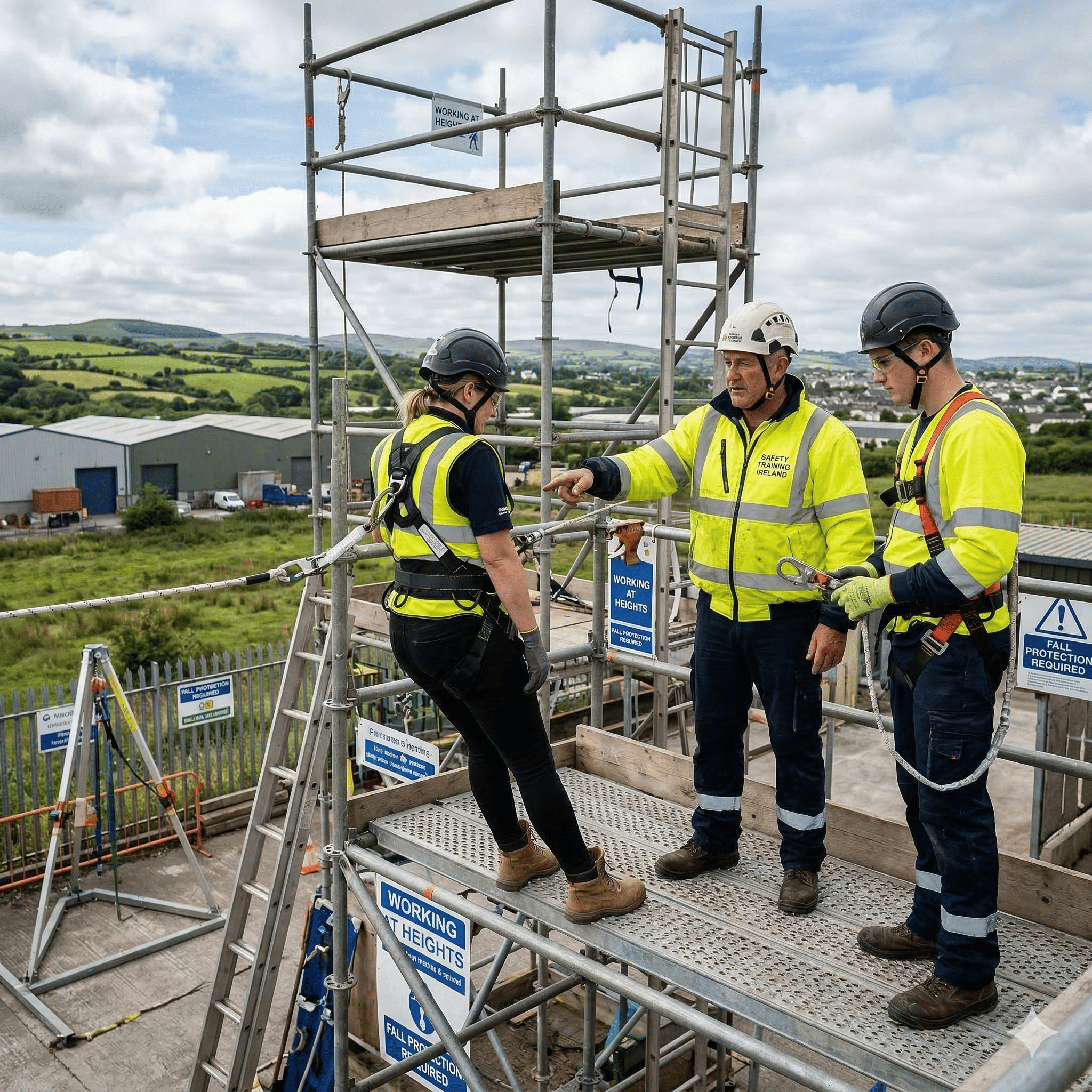
Working at heights is one of the most dangerous tasks in many industries — from construction and roofing to maintenance and utilities. Because falls from height can lead to serious injuries or fatalities, proper training isn’t just recommended — it’s essential. If you work at elevated levels or manage teams who do, choosing the right working at heights course in Ireland is crucial for safety, compliance, and professional development.
In this guide, you’ll learn how to select the best working at heights training, whether you prefer working at heights online training or an in‑person classroom format. We’ll also explain why having a valid working at heights certificate matters and how different health and safety courses online can support your learning needs.
Why Selecting the Right Course Matters
Not all training programs are created equal. The right course ensures that you:
-
Learn up‑to‑date safety practices
-
Comply with Irish health and safety regulations
-
Gain practical skills you can apply on site
-
Earn a recognized working at heights certificate
Choosing the wrong course — or one that’s not properly accredited — can leave you unprepared for real‑world hazards and may not be accepted by employers or safety auditors in Ireland.
Step 1: Understand Legal Requirements in Ireland
Before comparing courses, it’s crucial to know what Irish regulations expect. Under the Safety, Health and Welfare at Work Act and related regulations, employers must train employees who are exposed to fall hazards. Workers must be competent and able to carry out tasks safely.
A course should:
-
Cover legal frameworks relevant to working at heights
-
Teach hazard identification and risk assessment
-
Demonstrate proper use of fall protection systems
A recognized working at heights certificate shows that you understand these requirements, making you more employable and compliant.
Step 2: Decide Between Online and Classroom Training
One of the first decisions is choosing the format of your training: traditional classroom courses or working at heights online training.
📍 Classroom Training
Best for:
-
Hands‑on learners
-
Workers needing practical demonstrations
-
Teams doing group training on site
Advantages:
-
Direct instructor feedback
-
Real‑time practical exercises
-
Structured schedule
Considerations:
-
Fixed training times
-
Travel may be required
-
Higher overall cost
💻 Online Working at Heights Training
Best for:
-
Remote workers across Ireland
-
People balancing work and training
-
Learners who prefer flexibility
Advantages:
-
Study at your own pace
-
Save time and travel costs
-
Digital working at heights certificates often issued immediately
Considerations:
-
You may need to complete a separate practical assessment
-
Requires good internet access and self‑discipline
Both options can be effective when chosen for the right reasons. Many training providers now offer hybrid solutions combining online theory with practical assessment.
Step 3: Check Course Accreditation and Recognition
Before enrolling, always verify that the course is:
✔ Accredited by a recognized Irish body
✔ Aligned with HSA guidelines
✔ Widely accepted by employers across Ireland
Accreditation ensures that the course has been reviewed for quality, relevance, and compliance with Irish workplace safety standards. If a course lacks accreditation, your working at heights certificate may not be recognized by employers or safety inspectors.
Step 4: Review the Course Content
A quality working at heights training program should cover all essential topics. Look for courses that include:
Core Theoretical Modules
-
Risk assessment and hazard control
-
Legal responsibilities in Ireland
-
Fall prevention and safety planning
-
Personal protective equipment (PPE) principles
Practical Skills (often required)
-
Safe ladder use
-
Harness fitting and inspection
-
Anchor systems
-
Safe use of elevated platforms (where relevant)
Assessment and Certification
-
Quizzes or tests to check understanding
-
Practical demonstration or assessment
-
Final certification issuance
If you’re considering an online course, ensure that it provides interactive elements such as videos, case studies, and tests to reinforce learning.
Step 5: Consider Your Industry and Job Tasks
Not all working at heights courses are identical. Some may target specific sectors or roles. When choosing, ask:
-
Does this course match my job tasks?
-
Does it cover the equipment I’ll be using (e.g., scaffolding or MEWPs)?
-
Does it include practical assessment relevant to my work?
For example, a scaffold‑centric course might be best for construction workers, while a general fall protection course may suit maintenance teams.
Step 6: Compare Duration and Flexibility
Different training programs vary in:
⏱ Duration – Some courses can be completed in a few hours, while others take multiple days
📆 Flexibility – Online courses often let you study over weeks, while classroom training follows a set schedule
If you’re balancing work and training, an online option may offer the flexibility you need. Employers looking to train entire teams may prefer scheduled group sessions.
Step 7: Look at Reviews and Testimonials
Before committing, check reviews from other Irish learners or companies. Feedback can reveal:
⭐ Course quality
⭐ Clarity of instruction
⭐ Trainer competency
⭐ Value for money
⭐ Ease of completing the course online
Reviews help you anticipate what to expect and confirm whether the training meets industry standards.
Step 8: Confirm Certification and Documents Provided
Your training certificate is vital — whether you receive it digitally or physically. Ask ahead:
-
Will I receive a digital certificate immediately upon passing?
-
Is the working at heights certificate valid across Ireland?
-
How long is the certification valid (usually 2–3 years)?
-
Is a physical copy also provided?
Many online providers offer downloadable digital certificates, which simplifies record‑keeping and compliance tracking.
Step 9: Understand Costs and Value
Cost isn’t the only consideration — value is key. Compare:
💷 Course fees
🚗 Travel costs (for classroom training)
🕒 Time investment
📜 Scope and depth of training
Online courses often provide better value due to lower overhead costs, but ensure they still meet quality and compliance standards.
Step 10: Ask About Refresher and Renewal Options
Certification doesn’t last forever. A quality training provider should offer:
🔄 Renewal or refresher courses
📘 Updates on regulation changes
🛠 Additional module options (e.g., risk assessment, manual handling)
Taking refresher health and safety courses online helps workers stay up to date and compliant throughout their careers.
Classroom vs Online: Which Is Better?
Here’s a quick comparison to help you decide:
| Feature | Classroom Training | Online Training |
|---|---|---|
| Practical demonstrations | ✔ | ✘ (optional hybrid) |
| Flexibility | ✘ | ✔ |
| Travel required | ✔ | ✘ |
| Immediate certification | ✘ | ✔ |
| Cost | Higher | Lower |
| Interaction with trainer | High | Moderate |
Both formats have strong merits. The best choice depends on your learning preference, work commitments, and industry needs.
Integrating Working at Heights Training with Other Courses
Many Irish workers benefit from combining working at heights training with other health and safety courses online, such as:
-
Fire safety awareness
-
Manual handling
-
First aid at work
-
Risk assessment and control
This broader approach strengthens your safety knowledge and enhances compliance across multiple hazard areas.
Final Thoughts
Choosing the right working at heights course in Ireland ensures that you work safely, meet regulatory expectations, and gain skills that protect both you and your colleagues.
Whether you pursue working at heights online training or a traditional classroom program, focus on accreditation, course quality, certification validity, and practical relevance to your job tasks.
Obtaining your working at heights certificate is more than a formality — it’s a commitment to safety, professionalism, and workplace excellence.
Need help comparing specific online courses or providers? I can create a comparison chart or recommendations based on your industry and training needs — just let me know!