



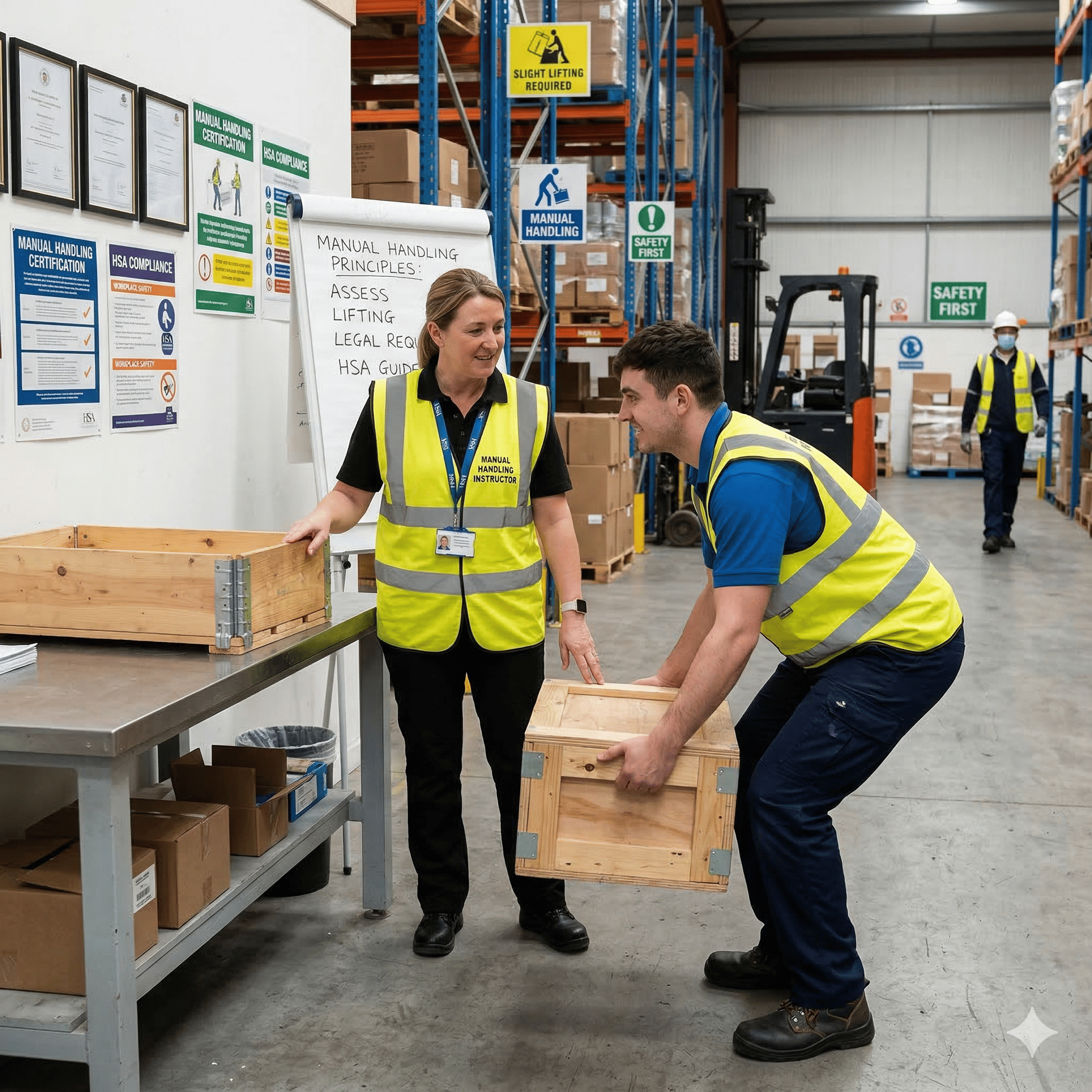
Workplace safety is a critical responsibility for businesses across Ireland. Many industries, including healthcare, construction, warehousing, logistics, retail, and hospitality, rely heavily on employees performing physical tasks such as lifting, carrying, pushing, or moving objects. While these tasks are essential, they also present significant risks, including back injuries, muscle strain, and long-term musculoskeletal disorders.
To mitigate these risks and meet legal obligations, businesses invest in manual handling training Ireland. Completing a manual handling course Ireland and obtaining Irish manual handling certification ensures employees have the skills and knowledge to handle tasks safely. Beyond protecting staff, certification also plays a key role in helping organizations achieve manual handling compliance Ireland, meet workplace safety regulations, and demonstrate due diligence in legal matters.
In this article, we explore how Irish manual handling certification supports legal compliance, why it is necessary, and the benefits it offers to both employers and employees.
Understanding Manual Handling Risks
Manual handling refers to any activity that involves lifting, lowering, pushing, pulling, or moving objects. While these tasks are routine, they carry inherent risks if performed incorrectly. Common injuries from improper manual handling include:
-
Back injuries and spinal strain
-
Muscle and joint injuries
-
Repetitive strain injuries
-
Slips, trips, and falls while handling loads
Workplace injuries can result in lost productivity, compensation claims, and legal penalties. By addressing these risks through proper training, employers reduce liability while promoting a safer working environment.
Legal Framework Governing Manual Handling in Ireland
In Ireland, workplace safety and manual handling are governed by the Safety, Health and Welfare at Work Act 2005 and the Safety, Health and Welfare at Work (Manual Handling of Loads) Regulations 2007. These regulations require employers to:
-
Assess risks associated with manual handling tasks.
-
Provide appropriate training and supervision to employees.
-
Implement measures to reduce the risk of injury.
-
Ensure that employees understand and follow safe practices.
Failure to comply can result in legal action, fines, or increased liability in the event of workplace injuries. Irish manual handling certification is a key tool to demonstrate compliance with these legal requirements.
The Role of Irish Manual Handling Certification
Irish manual handling certification is an official confirmation that an individual has completed a recognized manual handling course Ireland and understands safe manual handling practices.
Certification provides legal and practical benefits:
-
Proof of Training: Employers can demonstrate that staff have received formal instruction in safe handling techniques.
-
Evidence for Compliance: Certification documents help businesses meet regulatory obligations under manual handling compliance Ireland.
-
Risk Reduction: Certified employees are less likely to sustain injuries, reducing the likelihood of legal claims.
-
Workplace Accountability: Employees understand their responsibilities for following safe practices.
Certification, therefore, is not merely a formality—it is a strategic component of legal compliance and risk management.
Components of a Manual Handling Course Ireland
A professional manual handling course Ireland covers both theoretical knowledge and practical techniques. Key elements include:
Risk Assessment
Employees learn to evaluate the weight, stability, and accessibility of loads before attempting to move them.
Safe Lifting Techniques
Training emphasizes bending the knees, keeping the back straight, and lifting with the legs rather than the back.
Posture and Body Mechanics
Participants are taught to maintain proper posture while carrying or moving objects to prevent strain.
Hazard Identification
Workers are trained to recognize potential dangers in the workplace, including obstacles, slippery surfaces, and poorly lit areas.
Use of Equipment and Teamwork
Training covers the appropriate use of trolleys, lifting aids, and collaborative lifting techniques to reduce the risk of injury.
Completing this comprehensive training ensures employees are competent and confident in handling manual tasks safely.
Manual Handling Training Online Ireland
With technological advances, many organizations now provide manual handling training online Ireland. Online courses offer flexibility while maintaining the same quality as in-person training.
Advantages of Online Training:
-
Flexible Schedules: Employees can learn at their own pace, accommodating shift patterns and remote work.
-
Accessibility: Training can be accessed from any location, making it easier to reach all employees.
-
Cost Efficiency: Online training reduces travel and venue expenses.
-
Fast Certification: Participants receive Irish manual handling certification quickly upon course completion.
Online training ensures compliance is achievable even for geographically dispersed or busy teams.
Supporting Legal Compliance Through Certification
Irish manual handling certification directly supports legal compliance in several ways:
Demonstrating Due Diligence
By certifying employees, businesses provide clear evidence that they have fulfilled their duty of care obligations. This documentation is crucial in case of inspections, audits, or legal disputes.
Reducing Liability
Certified employees are trained in safe practices, minimizing the likelihood of injuries and subsequent compensation claims. Employers who invest in training are better protected against liability claims.
Meeting Regulatory Requirements
Certification helps organizations meet the standards outlined in the Safety, Health and Welfare at Work Act 2005 and related regulations. Regulatory bodies recognize certification as evidence of compliance.
Encouraging a Culture of Safety
When employees are certified, they are more likely to follow proper procedures, report hazards, and support colleagues in safe manual handling practices. This reinforces a culture of safety that aligns with legal obligations.
Industries That Benefit from Irish Manual Handling Certification
Certain sectors have a higher reliance on manual handling tasks, making certification essential:
Healthcare
Employees assist patients with lifting, transferring, and repositioning, which requires precise techniques to prevent injury.
Construction
Workers handle tools, building materials, and equipment, often in challenging environments.
Warehousing and Logistics
Staff move packages, pallets, and inventory regularly, making proper lifting techniques critical.
Retail
Employees manage deliveries, stock replenishment, and merchandise handling.
Hospitality
Workers move furniture, equipment, and supplies, requiring safe handling skills to avoid accidents.
In these industries, certification is not only a safety measure but a legal requirement for compliance.
Additional Benefits of Certification
Beyond legal compliance, Irish manual handling certification provides tangible workplace benefits:
-
Enhanced Employee Confidence: Workers feel more capable and secure performing physical tasks.
-
Improved Productivity: Confident employees handle loads efficiently and safely.
-
Reduced Absenteeism: Fewer injuries lead to lower sick leave and disruption.
-
Cost Savings: Reduced injury rates lower compensation claims, medical costs, and downtime.
-
Professional Recognition: Certification demonstrates a commitment to best practices and professional development.
These benefits collectively contribute to a safer, more compliant, and efficient workplace.
Maintaining Manual Handling Compliance Ireland
Achieving compliance is an ongoing process. Employers should:
-
Provide Refresher Training: Regular updates ensure employees remain aware of best practices.
-
Track Certifications: Maintain records of employee Irish manual handling certification for audits and inspections.
-
Conduct Risk Assessments: Periodically review workplace tasks to identify new hazards.
-
Encourage Reporting: Employees should feel empowered to report unsafe conditions.
-
Implement Equipment Solutions: Use lifting aids and mechanical assistance to reduce physical strain.
By combining certification with proactive management, businesses ensure long-term manual handling compliance Ireland.
Final Thoughts
Irish manual handling certification is a cornerstone of workplace safety and legal compliance. By completing a manual handling course Ireland, employees gain essential skills to handle physical tasks safely, while employers demonstrate due diligence and meet manual handling compliance Ireland standards.
Certification not only reduces the risk of injury and liability but also fosters a culture of safety, confidence, and accountability. Flexible options like manual handling training online Ireland make it easier than ever for businesses to train teams efficiently, maintain legal compliance, and protect their workforce.
Investing in manual handling certification is more than a regulatory requirement—it is a strategic step toward a safer, more productive, and legally compliant workplace in Ireland.