



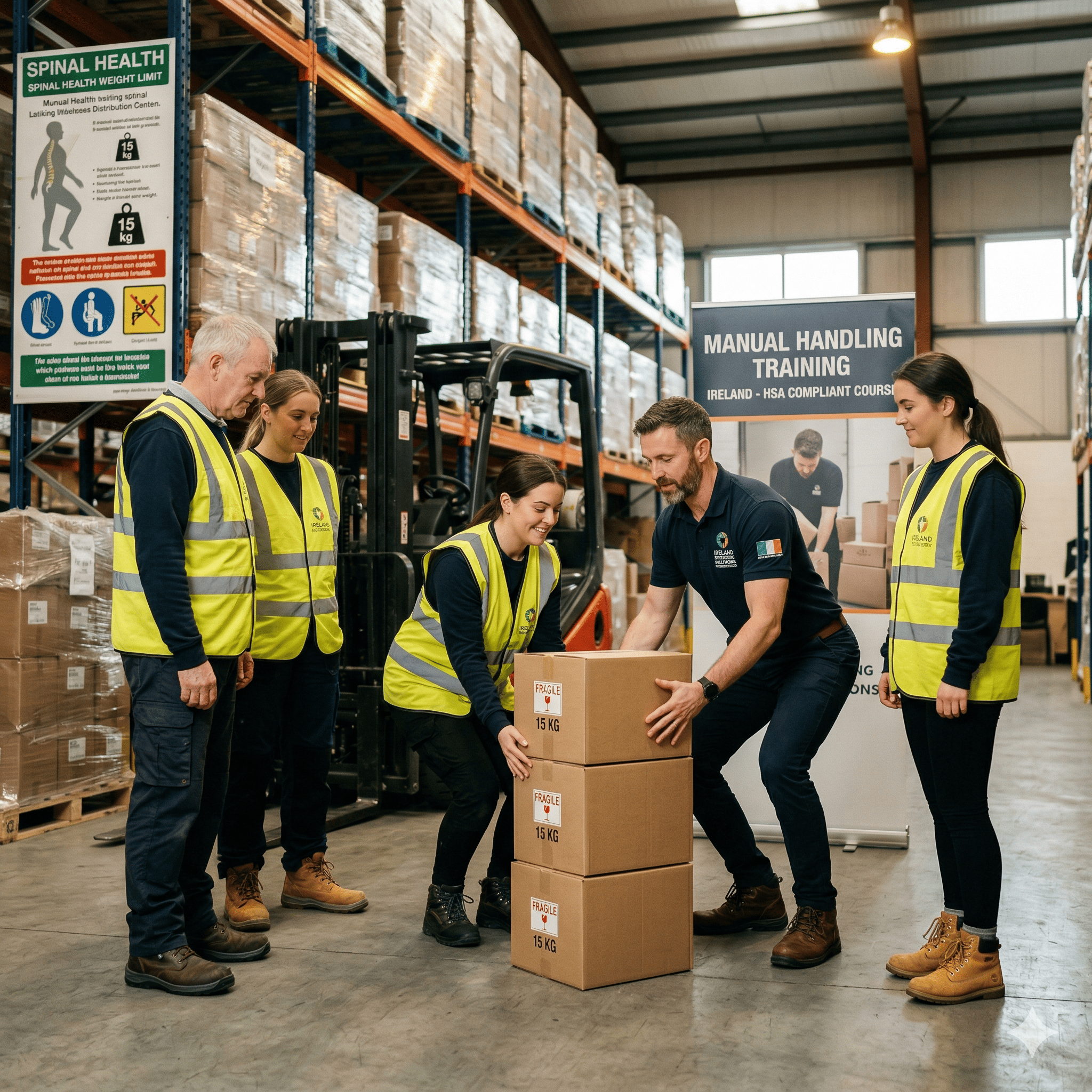
Workplace safety is a top priority for businesses across all industries, and ensuring proper manual handling practices is a key part of that responsibility. In Ireland, employers are legally required to protect their employees from injuries caused by lifting, carrying, or moving loads. This is where manual handling training Ireland becomes essential.
Staying compliant isn’t just about avoiding penalties—it’s about creating a safer, more efficient workplace. In this blog, we’ll explore how businesses can meet legal requirements, implement effective training programs, and maintain compliance with manual handling Ireland regulations.
Understanding Legal Requirements in Ireland
To stay compliant, businesses must first understand the legal framework surrounding manual handling. Irish workplace safety laws require employers to:
- Identify and assess risks related to manual handling tasks
- Reduce or eliminate those risks where possible
- Provide appropriate manual handling training Ireland to employees
- Ensure ongoing supervision and safe work practices
Failure to comply with these obligations can result in fines, legal issues, and increased workplace injuries.
Why Compliance Matters
Compliance with manual handling Ireland standards offers several benefits beyond meeting legal obligations:
- Reduces workplace injuries and absenteeism
- Improves employee morale and confidence
- Enhances productivity and efficiency
- Protects businesses from legal claims
Providing proper manual handling training Ireland is a proactive way to safeguard both employees and the organization.
Step 1: Conduct a Manual Handling Risk Assessment
The first step toward compliance is identifying potential risks in the workplace. Employers should:
- Analyze tasks that involve lifting, pushing, or pulling
- Evaluate the weight and frequency of loads
- Identify awkward movements or poor ergonomics
This assessment helps determine where manual handling training Ireland is needed most and what type of training is appropriate.
Step 2: Provide Appropriate Training
Once risks are identified, businesses must ensure employees receive proper training. This typically involves enrolling staff in a manual handling course Ireland.
Training Should Cover:
- Safe lifting and carrying techniques
- Proper posture and body mechanics
- Risk awareness and injury prevention
- Use of equipment where necessary
Employers can choose between in-person sessions or a manual handling course online, depending on their workforce needs.
Step 3: Ensure Certification for Employees
To demonstrate compliance, employees should complete training and receive a manual handling certificate Ireland.
This certification:
- Confirms that staff have been trained properly
- Provides documentation for audits or inspections
- Enhances workplace credibility
Keeping records of each employee’s manual handling cert is essential for compliance.
Step 4: Keep Training Up to Date
Manual handling training is not a one-time task. Certificates typically expire after 2 to 3 years, so businesses must:
- Schedule refresher courses regularly
- Update training when roles or tasks change
- Ensure new employees are trained promptly
Ongoing manual handling training Ireland ensures that safety standards remain high.
Step 5: Use Online Training for Flexibility
Many businesses are now turning to manual handling course online options to simplify compliance.
Benefits for Businesses:
- Train multiple employees at once
- Reduce costs compared to in-person sessions
- Allow staff to learn at their own pace
- Minimize disruption to daily operations
Online training is especially useful for remote teams or companies with multiple locations.
Step 6: Implement Safe Work Practices
Training alone isn’t enough—businesses must also enforce safe practices in the workplace.
This includes:
- Encouraging proper lifting techniques
- Providing appropriate equipment (e.g., trolleys, lifting aids)
- Monitoring employee behavior
- Promoting a safety-first culture
Combining training with practical measures ensures full compliance with manual handling Ireland standards.
Step 7: Maintain Documentation and Records
Accurate record-keeping is a critical part of compliance. Businesses should maintain:
- Certificates for all trained employees
- Training dates and renewal schedules
- Risk assessment reports
- Incident and injury records
These documents provide proof of compliance and can be crucial during inspections or audits.
Common Challenges Businesses Face
Despite best efforts, some businesses struggle with compliance. Common issues include:
- Failing to update expired manual handling cert records
- Not providing training to all relevant staff
- Choosing low-quality training providers
- Ignoring workplace-specific risks
Addressing these challenges requires a structured approach to manual handling training Ireland.
Tips for Staying Fully Compliant
To ensure ongoing compliance, businesses should:
- Partner with reputable training providers
- Use a mix of online and in-person training
- Schedule regular refresher courses
- Monitor and review safety practices
- Stay updated on Irish health and safety regulations
Investing in a quality manual handling course Ireland is one of the most effective ways to maintain compliance.
The Role of Employers and Employees
Compliance is a shared responsibility:
Employers Must:
- Provide training and resources
- Conduct risk assessments
- Enforce safety policies
Employees Must:
- Follow training guidelines
- Use proper techniques
- Report hazards or issues
Working together ensures that manual handling Ireland standards are met consistently.
SEO Insight: Targeting the Right Keywords
For businesses promoting training services, using the right keywords can improve online visibility.
Primary Keywords:
- manual handling ireland
- manual handling training ireland
- manual handling course ireland
Certification Keywords:
- manual handling certificate ireland
- manual handling cert
Action-Oriented Keywords:
- manual handling course online
- manual handling training for staff ireland
These should be included naturally in website content, blogs, and service pages.
Final Thoughts
Staying compliant with manual handling training Ireland is essential for any business that involves physical tasks. By conducting risk assessments, providing proper training, and keeping certifications up to date, companies can create a safer and more productive work environment.
Whether you choose in-person sessions or a manual handling course online, the key is consistency and quality. A well-implemented training program not only ensures compliance but also protects employees and strengthens your business in the long run.