



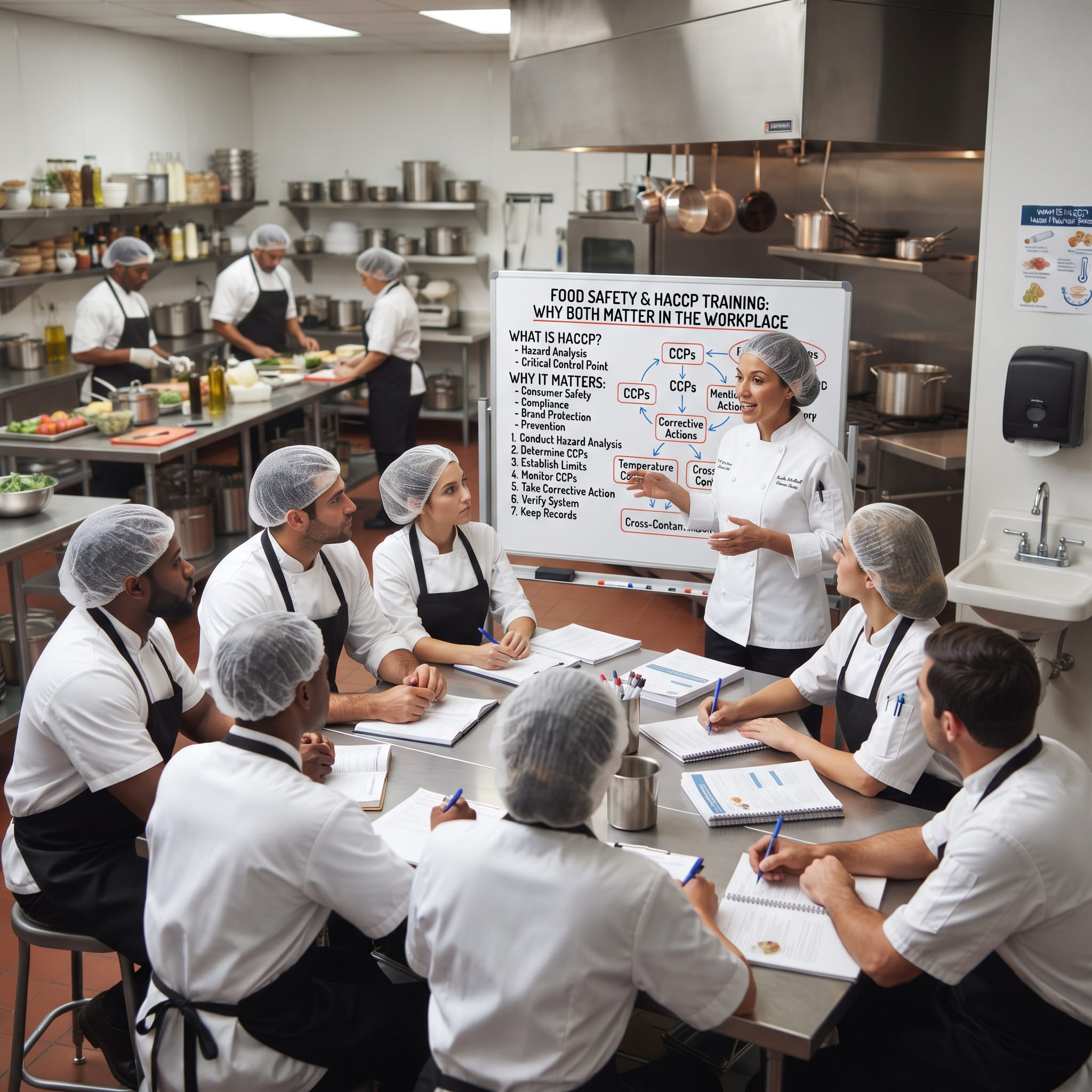
Working with food carries important responsibilities. Whether you are a chef in a restaurant, a kitchen assistant in a café, a catering employee, a food production worker or a member of staff in a takeaway, the way you handle food can directly affect its safety.
This is why HACCP training is an important part of food safety in Ireland. HACCP provides a structured way of identifying food safety hazards and putting controls in place to prevent problems.
For food handlers, however, HACCP should not be viewed as a complicated management system that only applies to supervisors. The principles can be connected to everyday activities such as washing hands, storing food correctly, preventing cross-contamination and following temperature-control procedures.
This practical guide explains what HACCP training for food handlers involves, what you can expect to learn and how the principles can be applied in the workplace.
What Does HACCP Mean?
HACCP stands for Hazard Analysis and Critical Control Points.
It is a systematic approach to identifying, evaluating and controlling hazards that could make food unsafe.
Potential hazards can include:
- Biological hazards such as harmful bacteria and viruses
- Chemical hazards such as cleaning products
- Physical hazards such as glass or metal
- Allergens
- Cross-contamination
- Incorrect temperature control
- Poor food storage practices
The aim is to identify potential problems before they cause harm and establish appropriate controls.
For food handlers, this means understanding where hazards can occur during everyday food preparation and knowing what procedures need to be followed.
Why Is HACCP Training Important for Food Handlers?
Food handlers are often directly involved in activities that can affect food safety.
For example, they may:
- Receive deliveries
- Store ingredients
- Prepare food
- Cook food
- Cool prepared food
- Clean equipment
- Handle raw ingredients
- Prepare ready-to-eat foods
- Serve customers
Each activity can involve potential food safety hazards.
HACCP training helps food handlers understand these risks and the reasons behind workplace procedures.
Instead of simply being told to follow a particular rule, employees can understand why that rule exists and what could happen if it is ignored.
Understanding Biological Hazards
Biological hazards are one of the most important areas of food safety.
They can include harmful microorganisms such as bacteria and viruses.
Food handlers can help control biological hazards by following appropriate procedures for:
- Cooking
- Cooling
- Refrigeration
- Food storage
- Personal hygiene
- Cleaning
- Cross-contamination prevention
For example, if raw food and ready-to-eat food are handled incorrectly, microorganisms can potentially be transferred between them.
HACCP training helps food handlers understand how these risks can occur and what controls should be used.
Preventing Cross-Contamination
Cross-contamination occurs when a contaminant is transferred from one place, person or food to another.
It can happen through:
- Hands
- Knives
- Cutting boards
- Work surfaces
- Utensils
- Equipment
- Storage containers
- Raw food
- Ready-to-eat food
Food handlers should follow workplace procedures designed to prevent these risks.
For example, equipment used for raw ingredients may need to be appropriately cleaned and sanitised before being used for other foods.
Food should also be stored and handled in a way that reduces the possibility of contamination.
Personal Hygiene and HACCP
Personal hygiene is an important part of safe food handling.
Food handlers should understand the importance of:
- Washing hands correctly
- Keeping hands clean during food preparation
- Wearing suitable clean work clothing
- Following workplace hygiene procedures
- Reporting relevant illness or symptoms according to workplace requirements
- Avoiding practices that could contaminate food
Handwashing is particularly important because hands can easily transfer microorganisms to food, equipment and surfaces.
Good personal hygiene therefore forms part of the wider controls used to maintain food safety.
Temperature Control
Temperature control is another important subject covered by food safety and HACCP training.
Food businesses need appropriate procedures for controlling food temperatures during different stages of the food process.
This can include:
- Cooking
- Cooling
- Refrigerated storage
- Frozen storage
- Hot holding
- Transportation
The specific control requirements depend on the food and process.
Food handlers should understand the procedures used in their workplace and know how to use temperature-monitoring equipment correctly when required.
If a temperature is outside the established control limits, employees should know who to report the problem to and what corrective action is required.
What Is a Critical Control Point?
A Critical Control Point, or CCP, is a stage where control can be applied to prevent, eliminate or reduce a food safety hazard to an acceptable level.
This is one of the central concepts in HACCP training.
Not every step in food preparation is necessarily a CCP.
A HACCP system identifies the stages where control is particularly important for managing a specific hazard.
Food handlers may not be responsible for designing the HACCP system, but they need to understand the procedures associated with the CCPs relevant to their work.
What Are Critical Limits?
A critical limit establishes a boundary between acceptable and unacceptable conditions at a Critical Control Point.
Depending on the process, a critical limit may involve factors such as time or temperature.
For example, a workplace may have specific procedures for monitoring cooking temperatures.
Food handlers responsible for these checks need to know:
- What must be measured
- When it must be measured
- What result is acceptable
- How the result should be recorded
- What to do if the required limit is not achieved
Following these procedures consistently is an important part of maintaining HACCP controls.
Monitoring Food Safety Procedures
HACCP relies on monitoring to determine whether controls are working as intended.
Food handlers may be responsible for certain monitoring activities, depending on their role.
These could include:
- Checking food temperatures
- Checking refrigeration units
- Recording cooking or storage information
- Monitoring cleaning procedures
- Checking food deliveries
- Reporting problems with equipment
Accurate monitoring is important because records can help demonstrate that food safety controls are being followed.
What Happens When Something Goes Wrong?
HACCP training also introduces the concept of corrective actions.
A corrective action is the action taken when a control is not working as required.
For example, if a food safety control is outside its established limit, employees may need to stop a process, isolate affected food, correct the problem, report the issue or follow another workplace procedure.
The correct response depends on the HACCP system used by the business.
Food handlers should never guess when dealing with a food safety problem. They should follow the procedures established by their employer.
Food Allergens
Allergen management is another important area of food safety.
Food handlers need to understand that certain ingredients can cause serious reactions in susceptible individuals.
Risks can arise from:
- Incorrect ingredients
- Mislabelled products
- Cross-contact
- Incorrect information being given to customers
- Poor communication between staff
Employees should follow their workplace's allergen procedures carefully.
HACCP training can help workers understand how allergen hazards can be identified and controlled as part of a food safety system.
Cleaning and Food Safety
Cleaning is another everyday activity that can affect food safety.
Food handlers may be responsible for cleaning:
- Work surfaces
- Utensils
- Equipment
- Preparation areas
- Storage areas
Cleaning procedures should be followed according to workplace instructions.
It is also important to use cleaning chemicals correctly because chemical contamination can itself create a food safety hazard.
Employees should understand which products are used, where they are used and how they should be handled.
Receiving and Storing Food
Food safety starts before food reaches the preparation area.
When receiving deliveries, employees may need to check factors such as:
- Packaging condition
- Product condition
- Storage requirements
- Temperature where applicable
- Use-by dates
- Signs of contamination
Food should then be stored according to the business's procedures.
Correct storage can help prevent contamination, maintain appropriate temperatures and protect food from damage.
What Does HACCP Training for Food Handlers Cover?
A practical HACCP course for food handlers may cover:
- The meaning and purpose of HACCP
- Food safety hazards
- Biological, chemical and physical contamination
- Personal hygiene
- Cross-contamination
- Food temperature control
- Critical Control Points
- Critical limits
- Monitoring procedures
- Corrective actions
- Food allergens
- Cleaning and sanitation
- HACCP records
- Safe food storage
The exact content varies depending on the training provider and course level.
HACCP Training Online for Food Handlers
HACCP training online can be a convenient option for food handlers who need flexible learning.
Instead of attending a classroom at a fixed time, employees can complete an online course from a suitable location.
An online HACCP course may include:
- Video lessons
- Written learning material
- Interactive modules
- Knowledge checks
- Online assessment
- Digital certificate
Online training can be particularly useful for employees working different shifts.
However, completing an online course is only one part of workplace food safety. Employees still need to understand and follow the specific procedures used by their employer.
Does Every Food Handler Need the Same HACCP Training?
No.
Training should be appropriate to the employee's responsibilities.
A new food handler may need introductory food safety knowledge.
An experienced chef or kitchen supervisor may require more detailed HACCP training because they have additional responsibilities.
Someone who is responsible for developing or maintaining HACCP-based procedures may need more specialised training.
This is why businesses should consider the employee's actual duties when deciding what training is appropriate.
Practical HACCP Habits for Food Handlers
Food handlers can apply HACCP principles through simple daily habits.
These include:
- Wash hands properly and at appropriate times
- Keep raw and ready-to-eat foods appropriately separated
- Follow temperature-control procedures
- Keep work surfaces and equipment clean
- Store food correctly
- Follow allergen procedures
- Check food according to workplace procedures
- Complete required records accurately
- Report food safety problems immediately
- Follow corrective-action procedures
- Never ignore a potential contamination risk
These actions may seem simple, but consistency is essential.
Final Thoughts
HACCP training for food handlers in Ireland is about understanding how everyday food handling activities can affect food safety.
Food handlers play an important role in preventing contamination, maintaining appropriate temperatures, following hygiene procedures and reporting problems.
HACCP provides the wider framework for identifying hazards and establishing controls. Food handlers may not be responsible for designing the entire HACCP system, but they are often responsible for following the procedures that make the system work.
Whether training is completed in a classroom or through HACCP training online, the most important outcome is practical understanding.
A well-trained food handler should know not only what procedures to follow, but also why those procedures matter and what to do when something does not go according to plan.