



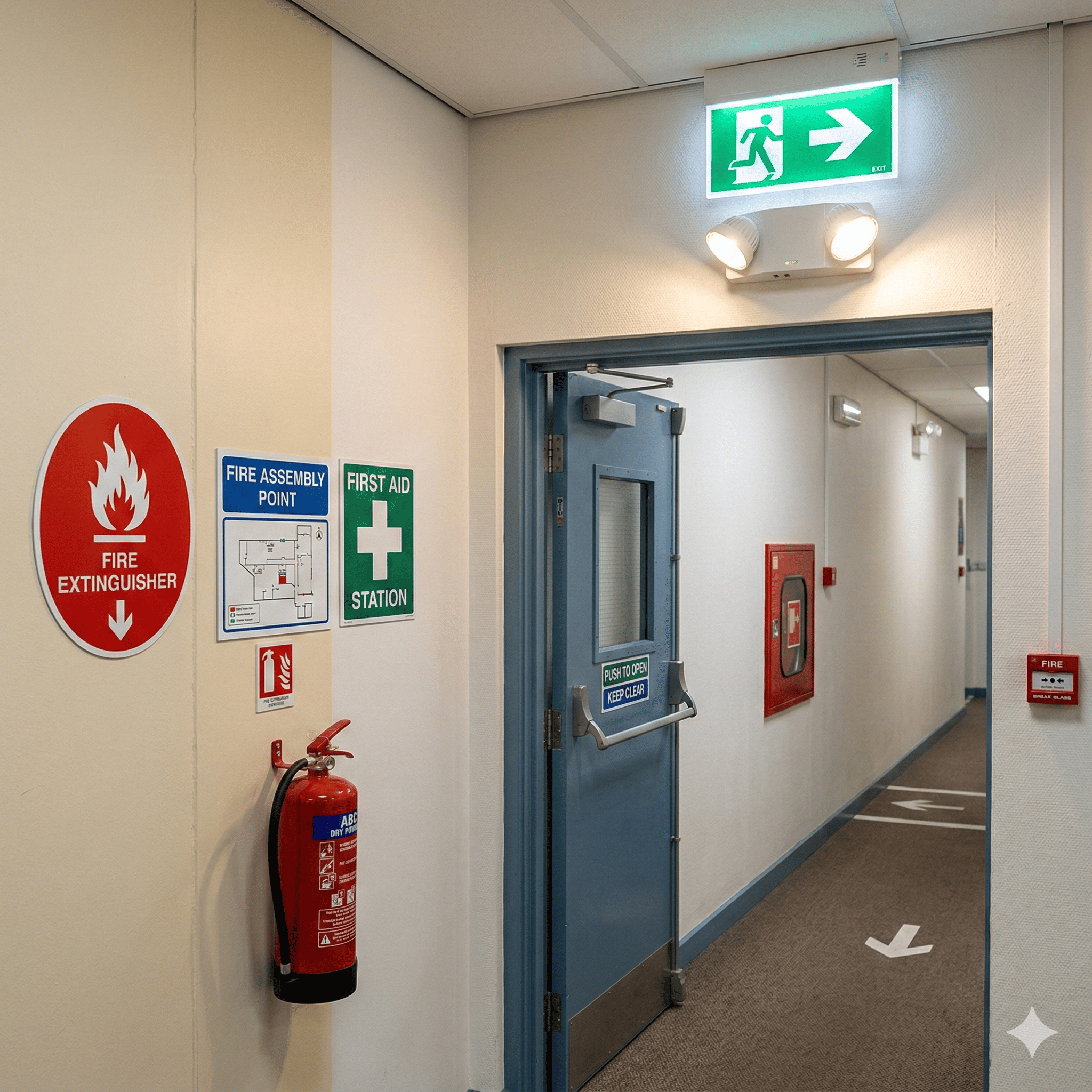
Fire safety signage and emergency lighting are critical components of effective fire safety training in Ireland. In an emergency situation, clear signage and adequate lighting guide occupants to safety, reduce panic, and support a safe evacuation process. Without proper visual guidance, even well-trained employees may struggle to exit quickly and safely.
As part of structured workplace fire safety training in Ireland, organisations must ensure that signage and lighting systems meet legal requirements and are regularly maintained.
Guidance and enforcement fall under the remit of the Health and Safety Authority (HSA), which requires employers to provide safe access and egress in the event of fire.
Importance of Fire Safety Signage
Fire safety signage provides clear visual instructions during an emergency. These signs must be:
-
Clearly visible
-
Properly illuminated
-
Positioned at appropriate heights
-
Free from obstruction
A recognised fire safety course in Ireland teaches employees how to identify and understand different types of fire safety signs.
Types of Fire Safety Signs
1. Escape Route Signs
These signs indicate the direction of travel to the nearest safe exit. They typically include running-man symbols and directional arrows. Proper understanding of escape signage is reinforced through fire safety awareness training in Ireland.
2. Fire Exit Signs
These signs clearly mark final exit doors. Exit routes must remain unobstructed at all times as part of effective fire prevention training in Ireland.
3. Fire Equipment Signs
These signs identify the location of:
-
Fire extinguishers
-
Fire blankets
-
Alarm call points
-
Hose reels
Knowing how to locate equipment is essential for those completing fire warden training in Ireland or fire marshal training in Ireland.
4. Prohibition and Warning Signs
Examples include:
-
No smoking signs
-
Flammable material warnings
-
Electrical hazard warnings
These signs help reduce ignition risks and support health and safety fire training in Ireland.
Emergency Lighting Requirements
In the event of a power failure, emergency lighting ensures that escape routes remain visible. This is especially important in corridors, stairwells, and large open spaces.
Emergency lighting systems must:
-
Activate automatically during power loss
-
Illuminate escape routes and exits
-
Provide sufficient brightness for safe evacuation
-
Be tested and maintained regularly
Proper maintenance of emergency lighting is a legal responsibility and forms part of comprehensive workplace fire safety training in Ireland.
Testing and Maintenance
To remain compliant and ensure safety, organisations must:
-
Conduct regular visual inspections
-
Perform functional tests
-
Carry out annual full-duration discharge tests
-
Keep maintenance records
Maintaining documentation supports fire safety certification in Ireland and demonstrates compliance during inspections.
Role of Training in Signage and Lighting Awareness
Even the best signage and lighting systems are ineffective if employees are unaware of their meaning. Structured online fire safety training in Ireland ensures that staff:
-
Understand escape route symbols
-
Know the location of exits
-
Recognise emergency lighting activation
-
Follow clearly marked evacuation paths
Training ensures that during an emergency, employees act quickly and confidently.
Conclusion
Fire safety signage and emergency lighting are essential elements of effective fire safety training in Ireland. They provide clear guidance during emergencies, reduce confusion, and support safe evacuation procedures.
Through ongoing fire safety awareness training in Ireland, recognised fire safety certification in Ireland, and proper maintenance practices, organisations can ensure that signage and lighting systems function correctly when they are needed most — protecting lives and ensuring legal compliance.