



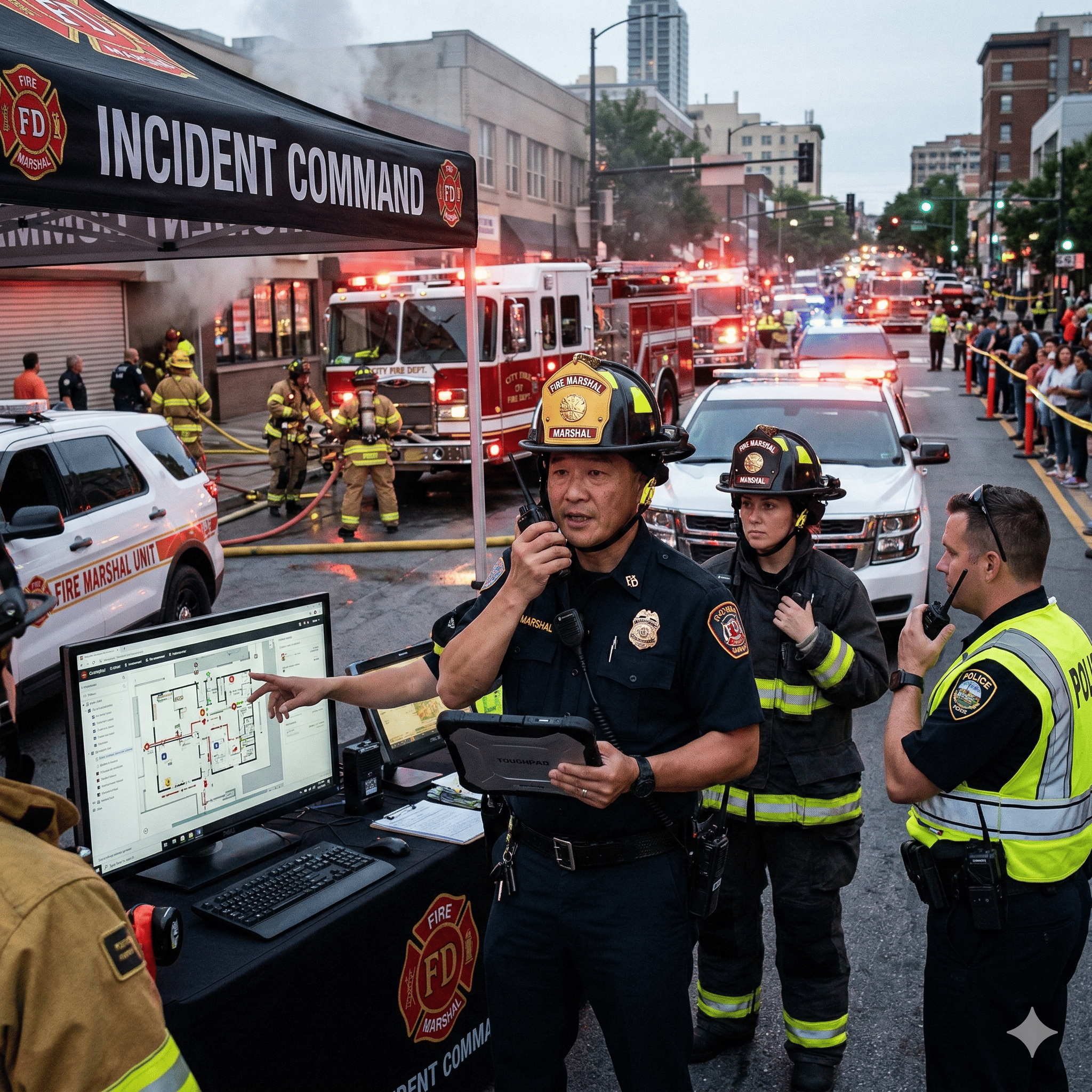
Fire Marshal duties and emergency coordination are essential components of advanced fire safety training in Ireland. While all employees must understand basic evacuation procedures, Fire Marshals take on a leadership and coordination role to ensure that emergency plans are executed safely and efficiently.
Appointing trained Fire Marshals strengthens overall workplace fire safety training in Ireland and supports compliance with Irish health and safety legislation. Employers are required to nominate competent persons to assist with emergency planning and evacuation procedures, as guided by the Health and Safety Authority (HSA).
What Is a Fire Marshal?
A Fire Marshal is a designated and specially trained individual responsible for overseeing fire safety procedures and coordinating emergency responses within the workplace. This role typically involves completing structured fire marshal training in Ireland, often as part of a recognised fire safety course in Ireland.
In larger organisations, Fire Marshals may supervise multiple Fire Wardens and act as the main point of contact during an emergency.
Key Duties of a Fire Marshal Before an Emergency
A significant part of the Fire Marshal’s role focuses on prevention and preparedness. Through advanced fire prevention training in Ireland, Fire Marshals help to:
-
Support workplace fire risk assessments
-
Monitor high-risk areas
-
Ensure fire exits remain clear
-
Confirm emergency lighting and alarm systems are functional
-
Assist with organising fire drills
-
Promote ongoing fire safety awareness training in Ireland
These proactive measures strengthen overall fire safety training in Ireland programmes and reduce the likelihood of incidents.
Duties During a Fire Emergency
During an evacuation, the Fire Marshal’s primary responsibility is coordination. Their duties may include:
-
Confirming the alarm has been raised
-
Overseeing area sweeps carried out by Fire Wardens
-
Ensuring evacuation procedures are followed
-
Assisting with vulnerable persons
-
Directing employees to assembly points
-
Preventing re-entry into the building
-
Liaising with emergency services upon arrival
Effective coordination ensures evacuation happens quickly and safely, which is a core focus of health and safety fire training in Ireland.
Headcount and Accountability
Once evacuation is complete, the Fire Marshal may:
-
Collect headcount information from Fire Wardens
-
Confirm that all employees, visitors, and contractors are accounted for
-
Report any missing persons to emergency responders
-
Maintain communication with management
Accurate accountability procedures are essential for maintaining fire safety certification in Ireland and ensuring legal compliance.
Communication and Leadership
A Fire Marshal must remain calm, confident, and authoritative during emergencies. Strong communication skills are essential to:
-
Provide clear instructions
-
Reduce panic
-
Maintain order at assembly points
-
Coordinate safely with emergency services
These leadership skills are developed through structured fire marshal training in Ireland and regular emergency drills.
Reviewing and Improving Emergency Procedures
After any fire drill or real incident, Fire Marshals may:
-
Participate in post-incident reviews
-
Identify areas for improvement
-
Update emergency procedures
-
Recommend additional workplace fire safety training in Ireland where necessary
Continuous improvement is a key part of effective fire safety management.
Conclusion
Fire Marshal duties and emergency coordination are vital to ensuring safe and organised evacuations. Through advanced fire safety training in Ireland, including specialised fire marshal training in Ireland, organisations equip designated personnel with the knowledge and leadership skills required to manage emergencies effectively.
By combining prevention, coordination, and clear communication, Fire Marshals play a crucial role in strengthening workplace fire safety training in Ireland and protecting lives across Irish workplaces.