



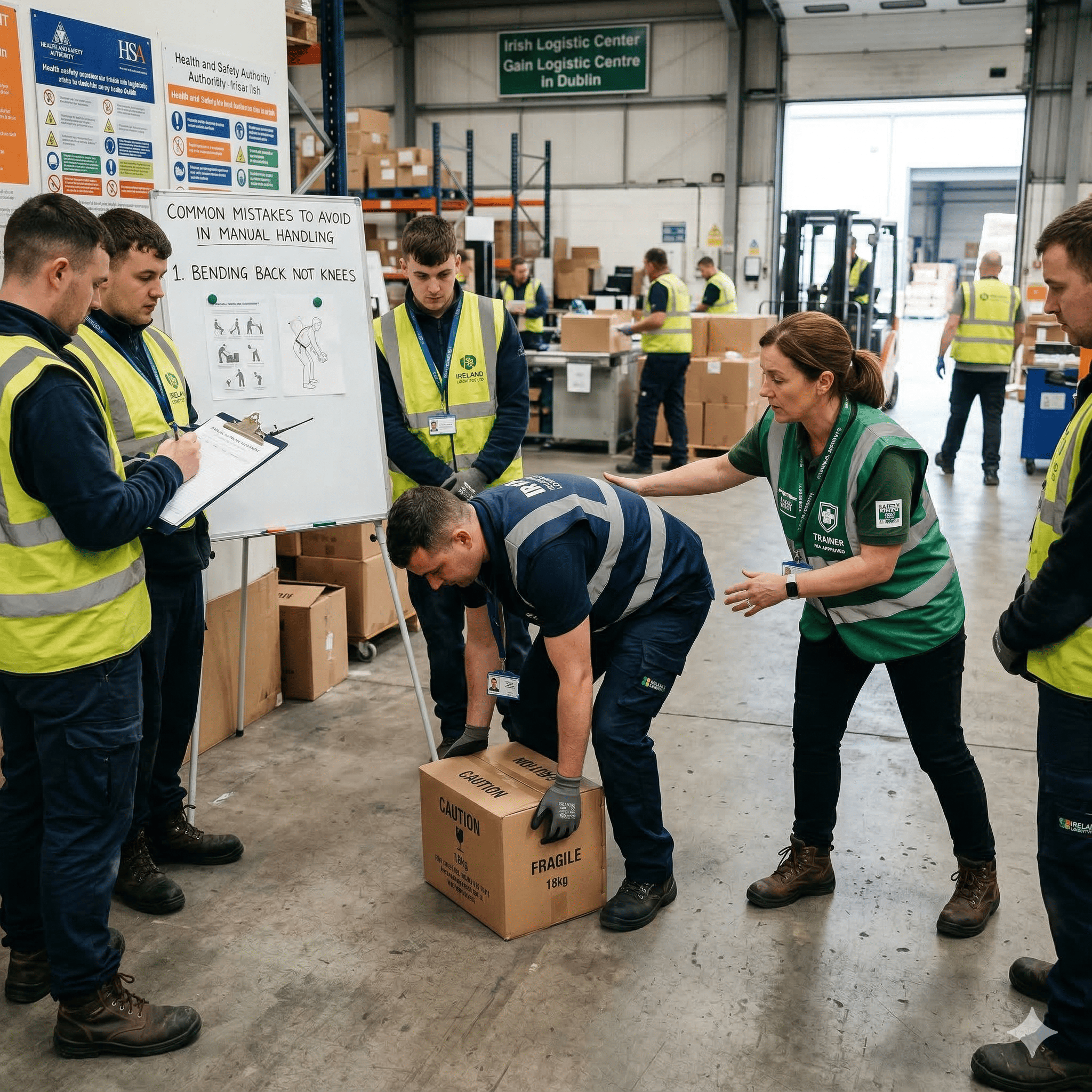
Manual handling is one of the most common causes of workplace injuries in Ireland, especially musculoskeletal injuries. Proper manual handling training Ireland helps reduce risks, but even with training, mistakes can occur. Both employees and employers need to be aware of common pitfalls to ensure safety and compliance.
In this blog, we’ll highlight the most frequent mistakes in manual handling training in Ireland and explain how to avoid them. Following these tips also helps maintain manual handling compliance Ireland and ensures that staff get the most out of their manual handling training for staff Ireland.
1. Skipping Risk Assessments
One of the biggest mistakes is ignoring or rushing through risk assessments. Manual handling training is only effective if you understand the risks in your workplace.
How to avoid:
-
Identify all tasks that involve lifting, pushing, or carrying
-
Consider load size, weight, and frequency
-
Evaluate environmental hazards such as slippery floors or narrow corridors
Including risk assessment in manual handling training Ireland ensures staff are aware of potential dangers.
2. Using Incorrect Lifting Techniques
A common error is lifting with the back instead of the legs or twisting while carrying a load. This can cause serious injuries over time.
How to avoid:
-
Teach staff proper lifting techniques during manual handling training for staff Ireland
-
Encourage bending the knees, keeping the back straight, and holding loads close to the body
-
Use practical demonstrations, either in-person or via manual handling training online Ireland
Proper technique is the foundation of safe manual handling.
3. Choosing Unaccredited Courses
Not all courses provide valid manual handling certification Ireland. Some low-quality providers may offer online courses that don’t meet legal or safety standards.
How to avoid:
-
Verify that the course is accredited or recognised by reputable Irish safety authorities
-
Ensure it meets HSA guidelines for manual handling
-
Confirm that it includes both theory and practical elements
Accredited training ensures compliance and real-world safety skills.
4. Focusing Only on Theory
Some training programs focus heavily on theory and neglect practical skills. Employees may know the principles but struggle to apply them on the job.
How to avoid:
-
Include hands-on practice in training sessions
-
Use case studies and real-life scenarios
-
If using manual handling training online Ireland, ensure it includes interactive exercises or video demonstrations
Practical training reinforces learning and reduces workplace injuries.
5. Ignoring Individual Differences
Each employee’s physical abilities differ. One-size-fits-all approaches to manual handling can be ineffective or even dangerous.
How to avoid:
-
Adapt training to consider the size, strength, and limitations of staff
-
Provide equipment like trolleys, hoists, or adjustable workstations
-
Emphasize safe work practices for all employees in manual handling training for staff Ireland
Personalized guidance prevents strain and injuries.
6. Not Providing Refresher Training
Skills and knowledge fade over time. Failing to provide refresher courses is a common mistake that can compromise manual handling compliance Ireland.
How to avoid:
-
Schedule refresher courses every 2–3 years
-
Offer short online refreshers through manual handling training online Ireland
-
Monitor employee performance to identify areas needing retraining
Regular refreshers reinforce safe practices.
7. Neglecting Workplace Environment
Even the best-trained staff can be at risk if the workplace itself is unsafe. Poor lighting, uneven floors, or cluttered spaces increase injury risks.
How to avoid:
-
Maintain a clean and organized workspace
-
Ensure walkways and handling areas are clear
-
Include environmental awareness in manual handling training Ireland
Safe environments complement proper training.
8. Failing to Document Training
Employers sometimes provide training but fail to keep proper records. This can be a compliance issue during audits or inspections.
How to avoid:
-
Keep a record of all employees trained
-
Note the course type, date, and certification received
-
Track refresher training dates
Documentation ensures accountability and compliance with manual handling compliance Ireland.
9. Overloading Employees
Even trained staff are at risk if they are expected to lift weights beyond their capability.
How to avoid:
-
Set clear load limits for employees
-
Use mechanical aids for heavy or awkward items
-
Encourage team lifts for larger loads
Training combined with proper workload management reduces injuries.
10. Not Engaging Staff During Training
Training that is rushed or unengaging is often ineffective. Employees may not retain the key safety principles.
How to avoid:
-
Make training interactive with quizzes and scenarios
-
Encourage questions and discussion
-
Include practical demonstrations in manual handling training for staff Ireland
Engaged staff are more likely to apply safe manual handling practices consistently.
Final Thoughts
Avoiding these common mistakes ensures that manual handling training Ireland is effective, safe, and legally compliant. By providing accredited, practical, and engaging manual handling training for staff Ireland, employers can significantly reduce workplace injuries and meet manual handling compliance Ireland requirements.
Remember, the best results come from a combination of proper training, ongoing refresher courses, safe workplace practices, and documentation. This approach keeps staff safe and strengthens overall workplace safety culture.