



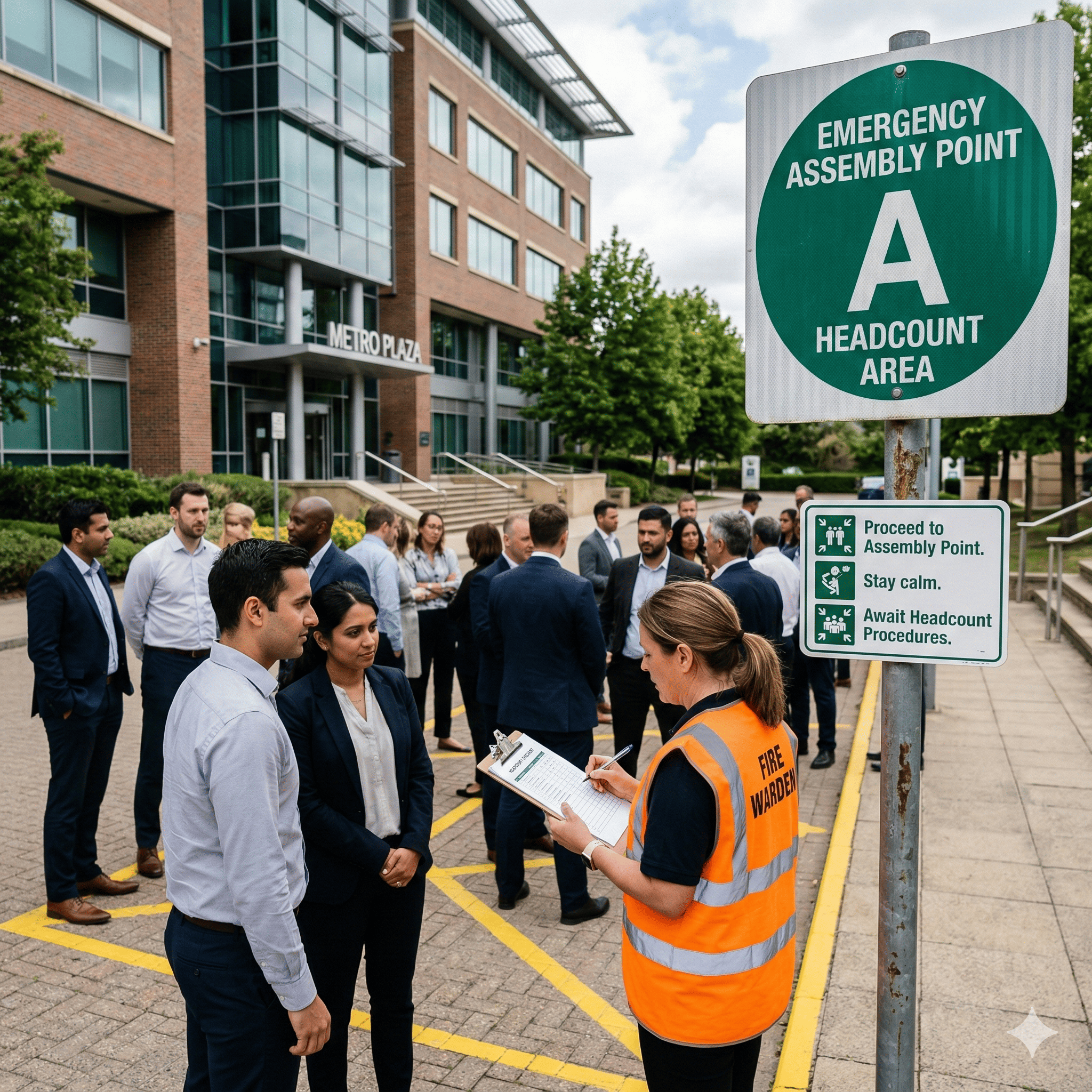
Assembly points and headcount procedures are essential elements of effective fire safety training in Ireland. Once a building has been evacuated, accountability becomes the priority. Knowing that everyone has safely exited the premises is a critical step in protecting lives and supporting emergency services.
Clear assembly point planning and structured headcount procedures form a key part of workplace fire safety training in Ireland and are required under Irish health and safety legislation. Employers must ensure that evacuation plans include designated meeting areas and a reliable method for confirming attendance.
Guidance on employer responsibilities is provided by the Health and Safety Authority (HSA), which emphasises proper emergency coordination and planning.
What Is an Assembly Point?
An assembly point is a pre-designated safe location where employees, visitors, and contractors gather after evacuating a building.
A suitable assembly point should be:
-
A safe distance from the building
-
Away from emergency vehicle access routes
-
Large enough to accommodate all occupants
-
Clearly communicated to all staff
-
Identified during induction and fire safety awareness training in Ireland
Employees completing a recognised fire safety course in Ireland should know exactly where their assembly point is located.
Why Assembly Points Are Important
Assembly points help to:
-
Keep evacuees at a safe distance from danger
-
Prevent re-entry into the building
-
Allow emergency services clear access
-
Enable accurate headcounts
-
Maintain order and reduce confusion
Without a clearly defined assembly point, evacuated personnel may scatter, making accountability difficult and delaying emergency response.
Headcount Procedures During Evacuation
Once everyone reaches the assembly point, a headcount must be conducted. This is a vital step reinforced during health and safety fire training in Ireland.
Effective headcount procedures include:
1. Roll Call System
Managers or designated fire wardens use attendance lists to confirm who is present.
2. Visitor and Contractor Logs
Reception or site supervisors must account for all non-employees.
3. Departmental Accountability
Each department head confirms their team members are present.
4. Reporting Missing Persons
If someone is unaccounted for, this information must be passed immediately to emergency services. No one should re-enter the building to search.
Proper coordination is typically overseen by individuals trained through fire warden training in Ireland or fire marshal training in Ireland.
Role of Fire Wardens and Marshals
Designated fire wardens play a crucial role in assembly and headcount procedures. Their responsibilities include:
-
Sweeping assigned areas during evacuation
-
Guiding occupants to the assembly point
-
Conducting roll calls
-
Reporting results to the person in charge
This structured approach is a key outcome of workplace fire safety training in Ireland and ensures emergency plans operate effectively.
Planning for Vulnerable Persons
Evacuation planning must consider:
-
Individuals with mobility impairments
-
Pregnant employees
-
Visitors unfamiliar with the building
-
Shift or lone workers
Inclusive planning and clear procedures are essential components of fire prevention training in Ireland and ensure no one is overlooked during evacuation.
Testing Assembly and Headcount Procedures
Regular fire drills are necessary to test the effectiveness of assembly points and accountability systems. Drills help organisations:
-
Identify weaknesses in evacuation timing
-
Improve communication methods
-
Ensure headcount accuracy
-
Strengthen emergency coordination
Documented drills also support compliance and contribute to maintaining valid fire safety certification in Ireland.
Conclusion
Assembly points and headcount procedures are critical components of comprehensive fire safety training in Ireland. A well-planned system ensures that everyone is accounted for quickly and safely following evacuation.
By integrating structured evacuation planning into workplace fire safety training in Ireland, supported by trained fire wardens and ongoing fire safety awareness training in Ireland, organisations can protect lives, maintain order during emergencies, and meet their legal responsibilities with confidence.