



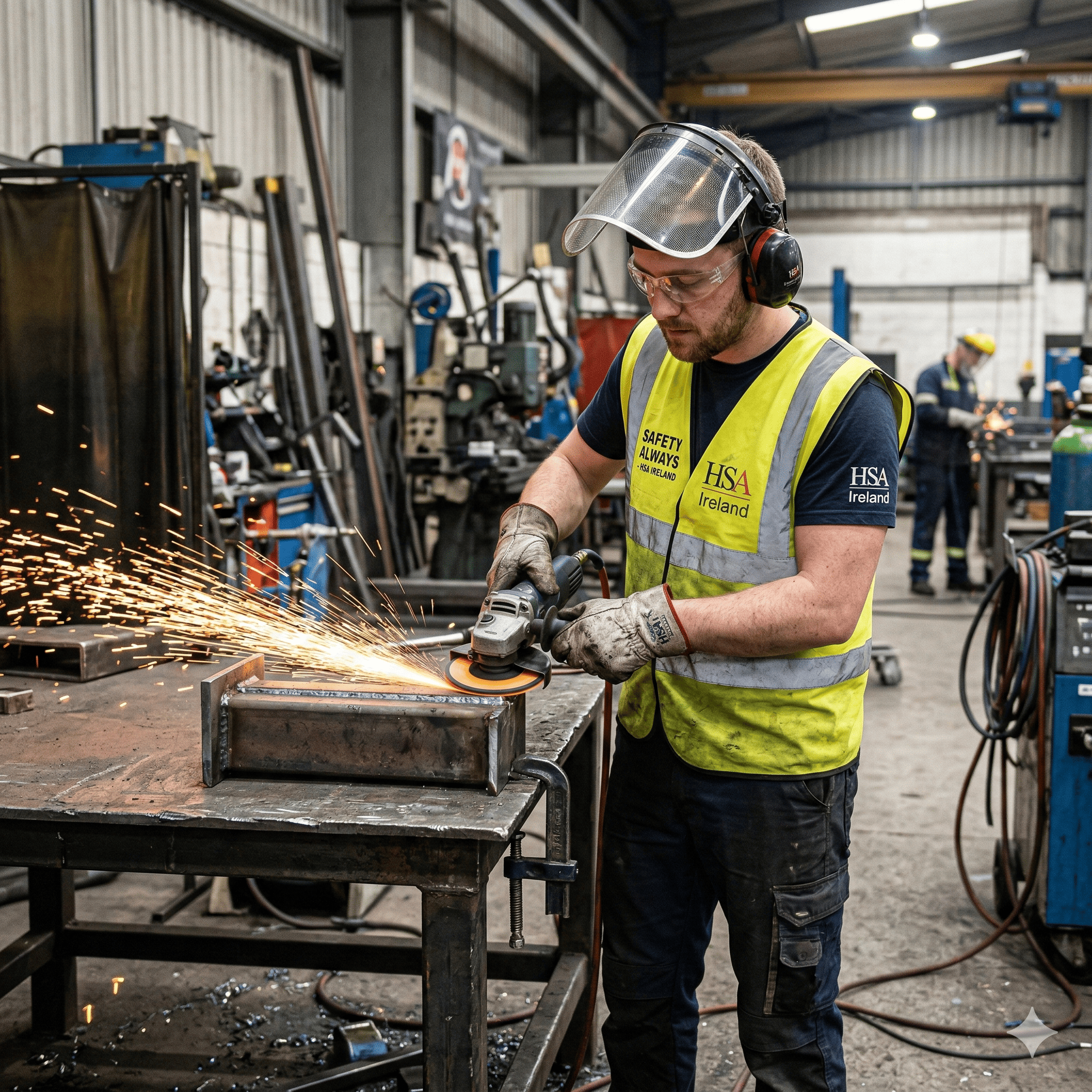
Abrasive wheels — including angle grinder discs, cut-off wheels, and bench grinding wheels — are widely used across Irish workplaces such as construction sites, workshops, factories, and maintenance facilities. When used incorrectly, however, these high-speed tools can cause devastating injuries.
Understanding common workplace accidents involving abrasive wheels in Ireland and how proper Abrasive Wheels Ireland training prevents them is essential for employers and employees alike.
Why Accidents Happen with Abrasive Wheels
Accidents usually occur not because the equipment is defective, but because of incorrect use, lack of training, or failure to follow safety procedures. The Health and Safety Authority (HSA) emphasises that proper training and supervision are key to preventing injuries.
1️⃣ Wheel Burst or Shattering
What Happens
If an abrasive wheel breaks apart while spinning at thousands of revolutions per minute (RPM), fragments can become deadly projectiles.
Common Causes
-
Incorrect wheel selection
-
Using cracked or damaged wheels
-
Mounting errors
-
Exceeding speed ratings
How to Prevent It
✔ Abrasive Wheels Ireland training teaches workers to inspect wheels before use and correctly match wheels to machines.
✔ Ensure wheels are free of cracks or chips.
✔ Never exceed the maximum RPM printed on the wheel.
2️⃣ Eye and Facial Injuries
What Happens
Flying debris, sparks, and wheel fragments can cause serious eye or facial trauma.
Common Causes
-
Inadequate Personal Protective Equipment (PPE)
-
Improper shielding
-
Wheel breakages
How to Prevent It
✔ Always wear safety goggles or a face shield as part of safety training Ireland requirements.
✔ Ensure guards are fitted correctly and never removed.
3️⃣ Hand and Finger Lacerations
What Happens
Hands and fingers are at high risk when workers lose control of the grinder or come into contact with the spinning wheel.
Common Causes
-
Slippery grip
-
Lack of correct stance
-
Inadequate PPE
How to Prevent It
✔ Abrasive Wheels Ireland courses reinforce correct hand positioning and stance.
✔ Use gloves rated for cutting/grinding tasks.
✔ Maintain firm, two-handed grip on tools.
4️⃣ Burns and Fire Hazards
What Happens
Sparks generated during grinding can ignite flammable materials or cause burns.
Common Causes
-
Grinding near combustible materials
-
No fire watch
-
Sparks left uncontrolled
How to Prevent It
✔ Conduct a risk assessment before work begins.
✔ Keep flammable materials away from grinding areas.
✔ Wear protective clothing and ensure fire extinguishers are nearby.
5️⃣ Hearing Damage
What Happens
Prolonged exposure to high noise levels can damage hearing over time.
Common Causes
-
Workers exposed for extended periods
-
No hearing protection provided
How to Prevent It
✔ Safety training Ireland emphasises the use of hearing protection when using abrasive tools.
✔ Provide earplugs or earmuffs and enforce their use.
6️⃣ Inhalation of Harmful Dust
What Happens
Grinding certain materials (e.g., concrete, stone, metals) produces fine dust that can be harmful if inhaled.
Common Causes
-
No dust control measures
-
Lack of respiratory protection
How to Prevent It
✔ Use dust masks or respirators approved for the material being worked on.
✔ Implement dust extraction systems where possible.
✔ Include dust control methods in training content.
How Training Prevents These Accidents
Proper Abrasive Wheels Ireland training delivers key safety skills:
-
Correct wheel selection
-
Pre-use inspection procedures
-
Safe mounting method
-
Understanding speed ratings
-
Proper PPE selection
-
Legal duties of employers and employees
A recognised abrasive wheels certificate demonstrates competence and provides documented proof that workers have been instructed correctly — an important component of workplace safety law compliance.
Employer Responsibilities to Prevent Accidents
Under Irish law, employers must:
✔ Provide appropriate safety training Ireland
✔ Ensure workers are competent and certified
✔ Conduct risk assessments
✔ Supply suitable PPE
✔ Maintain equipment and guards
✔ Keep training and assessment records
Neglecting any of these duties increases the risk of accidents and potential enforcement action by the HSA.
Final Thoughts
Workplace accidents involving abrasive wheels are often severe but highly preventable. The combination of proper training, correct equipment use, and adherence to Abrasive Wheels Ireland safety standards dramatically reduces the likelihood of injury.
Providing effective Abrasive Wheels Ireland training and ensuring workers hold a valid abrasive wheels certificate protects both people and businesses — helping to create safer, more compliant workplaces across Ireland.