



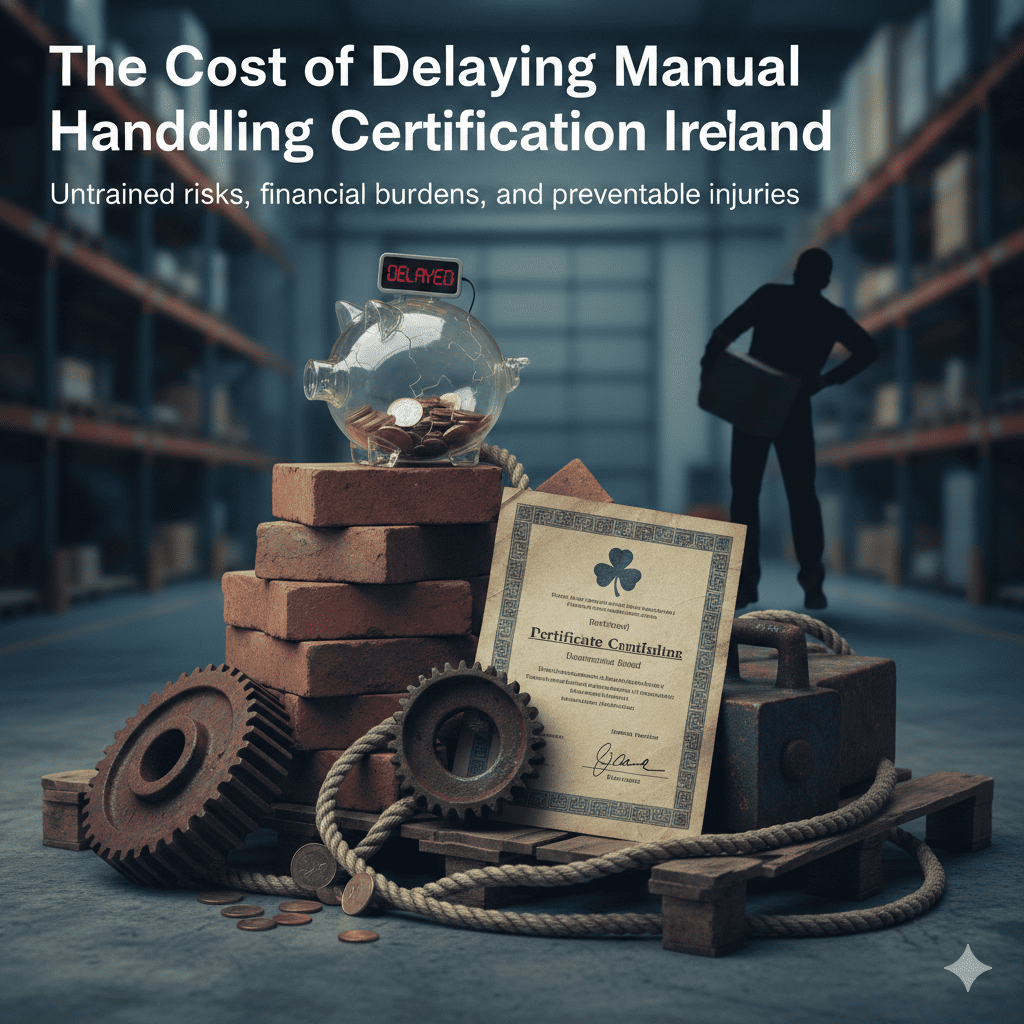
Many Irish businesses view manual handling training as something that can be postponed — especially during busy periods or rapid growth. However, delaying Manual Handling Certification Ireland can have serious financial, legal, and operational consequences.
Manual handling injuries remain one of the leading causes of workplace injuries in Ireland, and failing to address training requirements early often costs far more than investing in proper certification from the start.
1️⃣ Increased Workplace Injuries in Ireland
Without proper Manual Handling Training Ireland, employees are more likely to:
-
Lift with poor posture
-
Twist while carrying loads
-
Underestimate weight or instability
-
Ignore fatigue risks workplace Ireland
Even minor strains can escalate into long-term musculoskeletal injuries. This directly impacts Workplace injury prevention Ireland efforts and increases absenteeism.
A single preventable injury can disrupt operations, reduce morale, and create long-term staffing challenges.
2️⃣ Rising Insurance Claims Ireland Workplace Costs
Workplace injuries frequently result in compensation claims. Delaying Manual Handling Course Ireland completion can significantly increase:
-
Employer liability exposure
-
Insurance premiums
-
Legal costs
-
Administrative burden
Insurers may also review whether proper Employee safety training Ireland was provided. A lack of certification can weaken an employer’s position in claims disputes.
3️⃣ Legal and Compliance Risks
Under the Safety, Health and Welfare at Work Act 2005, employers have clear employer responsibilities Ireland to:
-
Provide adequate safety training
-
Conduct a Manual handling risk assessment Ireland
-
Maintain workplace safety documentation Ireland
-
Implement workplace accident prevention Ireland measures
The Health and Safety Authority (HSA) monitors Safety compliance Ireland and conducts inspections. If employees are performing manual handling tasks without proper certification, businesses may face enforcement action, improvement notices, or fines.
Delaying compliance increases regulatory risk.
4️⃣ Impact on Expanding Irish Businesses
For expanding Irish businesses safety systems must scale with growth. When onboarding new employees quickly, it may be tempting to postpone certification. However, skipping early Irish Manual Handling Certification during employee onboarding Ireland can result in:
-
Higher early-stage injury rates
-
Inconsistent safety standards
-
Poor Workplace safety Ireland culture
Integrating training from day one ensures consistent Irish workplace compliance across all departments and locations.
5️⃣ Operational Disruption and Productivity Loss
Injuries don’t just affect the individual worker — they impact entire teams. Delays in certification can lead to:
-
Temporary staffing shortages
-
Overtime costs
-
Reduced efficiency
-
Lower morale
Investing in Manual Handling Training Online Ireland offers a flexible solution, allowing staff to complete certification quickly without disrupting daily operations.
6️⃣ Weakening Your Safety Documentation
Strong workplace safety documentation Ireland is essential for audits and inspections. Delaying certification means:
-
Gaps in training records
-
Poor documentation during inspections
-
Increased risk during compliance reviews
Having up-to-date certification demonstrates proactive employer responsibilities Ireland and strengthens your overall safety compliance Ireland framework.
The Real Cost: Prevention vs. Reaction
The cost of a Manual Handling Course Ireland is minimal compared to:
-
Compensation payouts
-
Increased insurance premiums
-
Regulatory fines
-
Lost productivity
-
Reputational damage
Workplace accident prevention Ireland is always more cost-effective than reacting to incidents after they occur.
Final Thoughts
Delaying Manual Handling Certification Ireland may seem harmless in the short term, but the long-term consequences can be significant. By meeting obligations under the Safety, Health and Welfare at Work Act 2005 and following guidance from the Health and Safety Authority, businesses protect both their workforce and their bottom line.