



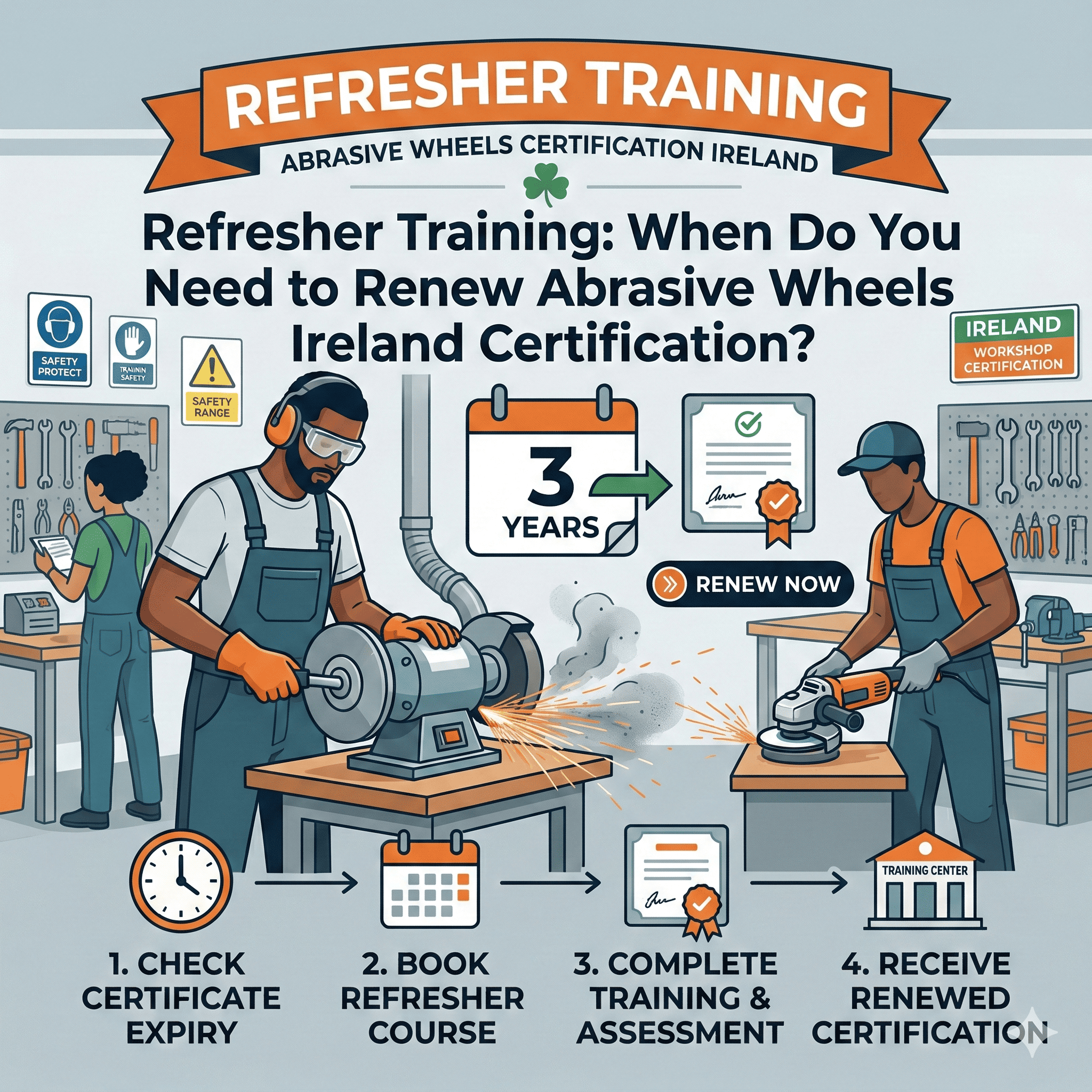
If you already hold an Abrasive Wheels Ireland certification, you may be wondering: When does it expire? And more importantly — when should refresher training be completed?
While there is no fixed statutory expiry date set in Irish legislation, refresher Abrasive Wheels Ireland training is strongly recommended to maintain competence, ensure compliance, and reduce workplace accidents.
Here’s what employers and employees need to know.
Is There an Official Expiry Date?
Under guidance from the Health and Safety Authority, employers must ensure workers remain competent when using work equipment. The law focuses on competence, not just possession of a certificate.
That means even if your abrasive wheels certificate does not show an expiry date, employers are still legally responsible for ensuring skills and knowledge remain up to date.
Many organisations in Ireland adopt a 3-year renewal cycle as best practice.
When Should You Renew Abrasive Wheels Ireland Certification?
Here are the most common situations where refresher Abrasive Wheels Ireland training is required:
1️⃣ After 3 Years (Best Practice Standard)
Although not always legally mandated, renewing your Abrasive Wheels Ireland certification every three years helps demonstrate ongoing competence and commitment to workplace safety.
This is particularly important for:
-
Construction site workers
-
Manufacturing operatives
-
Maintenance technicians
-
Contractors working on high-risk sites
Many employers require updated certification before granting site access.
2️⃣ If You Change Equipment or Machinery
If new grinders, cutting tools, or abrasive systems are introduced, refresher safety training Ireland may be necessary.
Different equipment can involve:
-
New speed ratings
-
Different mounting systems
-
Updated safety features
-
Modified operating procedures
Training should reflect these changes.
3️⃣ After a Workplace Incident
If an accident or near miss occurs involving abrasive wheels, refresher training is strongly recommended.
This ensures:
-
Lessons are learned
-
Procedures are reviewed
-
Risks are reassessed
-
Competence is revalidated
Refresher Abrasive Wheels Ireland training demonstrates proactive risk management.
4️⃣ If You Haven’t Used Abrasive Wheels in a Long Time
Skills fade over time. If a worker has not used abrasive wheels for several months or longer, employers may require refresher Abrasive Wheels Ireland certification before allowing further operation.
5️⃣ If Regulations or Company Policies Change
Updates in safety procedures, internal policies, or industry best practice may require renewed safety training Ireland to ensure compliance.
What Does Refresher Training Cover?
A refresher Abrasive Wheels Ireland course typically reviews:
✔ Hazard awareness
✔ Wheel selection and compatibility
✔ Speed ratings and markings
✔ Safe mounting procedures
✔ Pre-use inspections
✔ PPE requirements
✔ Legal responsibilities
It reinforces correct behaviour and updates workers on any regulatory changes.
Why Refresher Training Matters
Even experienced operators can develop unsafe habits over time. Regular renewal of your abrasive wheels certificate helps:
-
Reduce workplace accidents
-
Improve compliance during inspections
-
Protect employers from liability
-
Maintain high safety standards
-
Reinforce correct procedures
Refresher training is not just about paperwork — it’s about maintaining real competence.
Employer Responsibilities
Employers must:
✔ Monitor certification dates
✔ Keep training records
✔ Conduct risk assessments
✔ Provide refresher training when necessary
✔ Ensure workers remain competent
The responsibility for Abrasive Wheels Ireland compliance ultimately rests with the employer.
Final Thoughts
There may not be a strict legal expiry date for Abrasive Wheels Ireland certification, but competence must always be maintained. As a general rule, refreshing your certification every three years — or sooner if circumstances change — is considered best practice.
Regular Abrasive Wheels Ireland training protects workers, reduces accidents, and keeps your organisation aligned with Irish safety standards.