



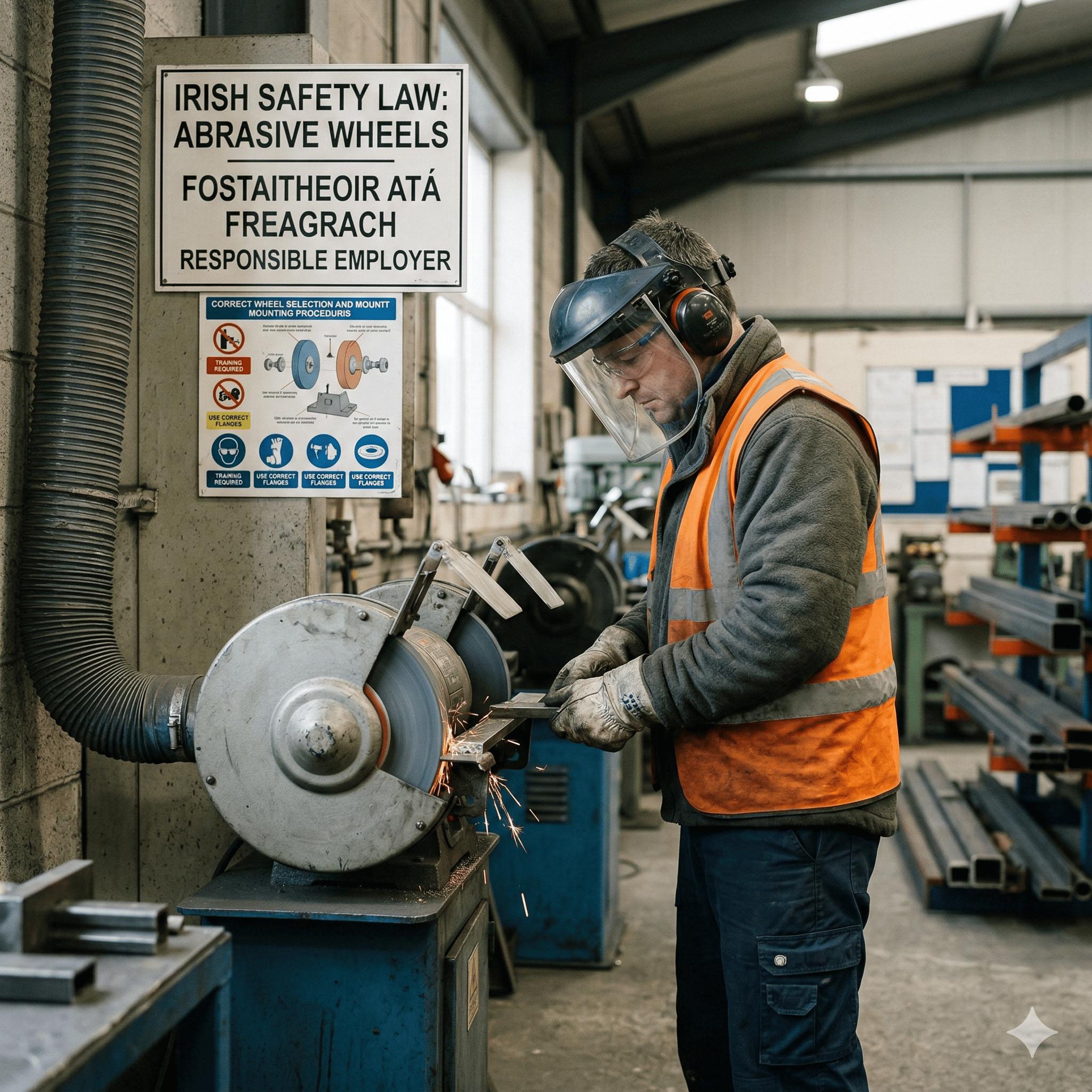
If your employees use angle grinders, cut-off saws, bench grinders, or any equipment fitted with abrasive wheels, you have clear legal obligations under Irish workplace safety law. Understanding your employer responsibilities under Abrasive Wheels Ireland safety laws is essential to remain compliant and protect your workforce.
This guide outlines what employers must do to meet legal standards and ensure proper Abrasive Wheels Ireland certification and safety training.
The Legal Framework in Ireland
Workplace safety in Ireland is governed by legislation enforced by the Health and Safety Authority (HSA). Under the Safety, Health and Welfare at Work Act and associated regulations, employers must:
-
Ensure the safety, health, and welfare of employees
-
Provide safe systems of work
-
Supply suitable work equipment
-
Ensure employees are trained and competent
Abrasive wheels fall under work equipment regulations due to their high-risk nature.
1️⃣ Provide Adequate Abrasive Wheels Ireland Training
One of your primary responsibilities is ensuring that employees who mount, change, or operate abrasive wheels receive proper instruction.
A compliant Abrasive Wheels Ireland training course should cover:
✔ Types of abrasive wheels
✔ Wheel markings and maximum RPM
✔ Safe mounting procedures
✔ Pre-use inspections
✔ Correct use of guards
✔ PPE requirements
✔ Hazard awareness
Issuing a recognised abrasive wheels certificate helps demonstrate compliance.
2️⃣ Ensure Worker Competence
Training alone is not enough — employers must ensure workers are competent.
Competence includes:
-
Knowledge of hazards
-
Ability to inspect equipment
-
Understanding safe operating techniques
-
Awareness of when equipment is unsafe to use
Employers may need to provide supervision for less experienced workers, even after completing safety training Ireland.
3️⃣ Conduct Risk Assessments
Before abrasive wheels are used, employers must carry out risk assessments that identify:
-
Potential wheel failure
-
Flying debris hazards
-
Fire risks from sparks
-
Noise exposure
-
Dust inhalation risks
Control measures must be implemented and communicated clearly.
4️⃣ Maintain Equipment in Safe Condition
Employers must ensure that:
✔ Machinery is regularly inspected
✔ Guards are fitted and functional
✔ Defective equipment is removed immediately
✔ Wheels are stored correctly to prevent damage
✔ Expired or damaged discs are discarded
Failure to maintain equipment can result in serious accidents and enforcement action.
5️⃣ Provide Appropriate Personal Protective Equipment (PPE)
Under Irish safety laws, employers must supply suitable PPE, including:
-
Safety goggles or face shields
-
Hearing protection
-
Gloves
-
Protective clothing
-
Respiratory protection where necessary
Providing PPE is not optional — it is a legal requirement.
6️⃣ Keep Training and Certification Records
Documentation is critical for compliance. Employers should maintain:
-
Copies of abrasive wheels certificates
-
Dates of completed training
-
Refresher training records
-
Risk assessment documentation
These records may be requested during inspections by the HSA.
7️⃣ Provide Refresher Training When Needed
While legislation may not specify an exact renewal period, refresher Abrasive Wheels Ireland training should be provided when:
-
New equipment is introduced
-
Work practices change
-
An incident or near miss occurs
-
A worker has not used abrasive wheels for a prolonged period
Refresher training strengthens safety culture and reduces risk.
Consequences of Non-Compliance
Failure to meet employer responsibilities under Abrasive Wheels Ireland safety laws can result in:
-
Improvement or prohibition notices
-
Financial penalties
-
Increased insurance costs
-
Workplace injury claims
-
Reputational damage
Most importantly, non-compliance increases the risk of serious injury.
Employer Compliance Checklist
To stay compliant, ensure you:
✔ Provide recognised Abrasive Wheels Ireland training
✔ Verify worker competence
✔ Conduct and document risk assessments
✔ Maintain equipment and guards
✔ Supply appropriate PPE
✔ Keep all certification and training records
Final Thoughts
Employer responsibilities under Abrasive Wheels Ireland safety laws go beyond simply providing equipment. You must ensure your workforce is properly trained, competent, and protected at all times.
Investing in recognised safety training Ireland and issuing a valid abrasive wheels certificate not only ensures compliance but also reduces workplace accidents and protects your business.