



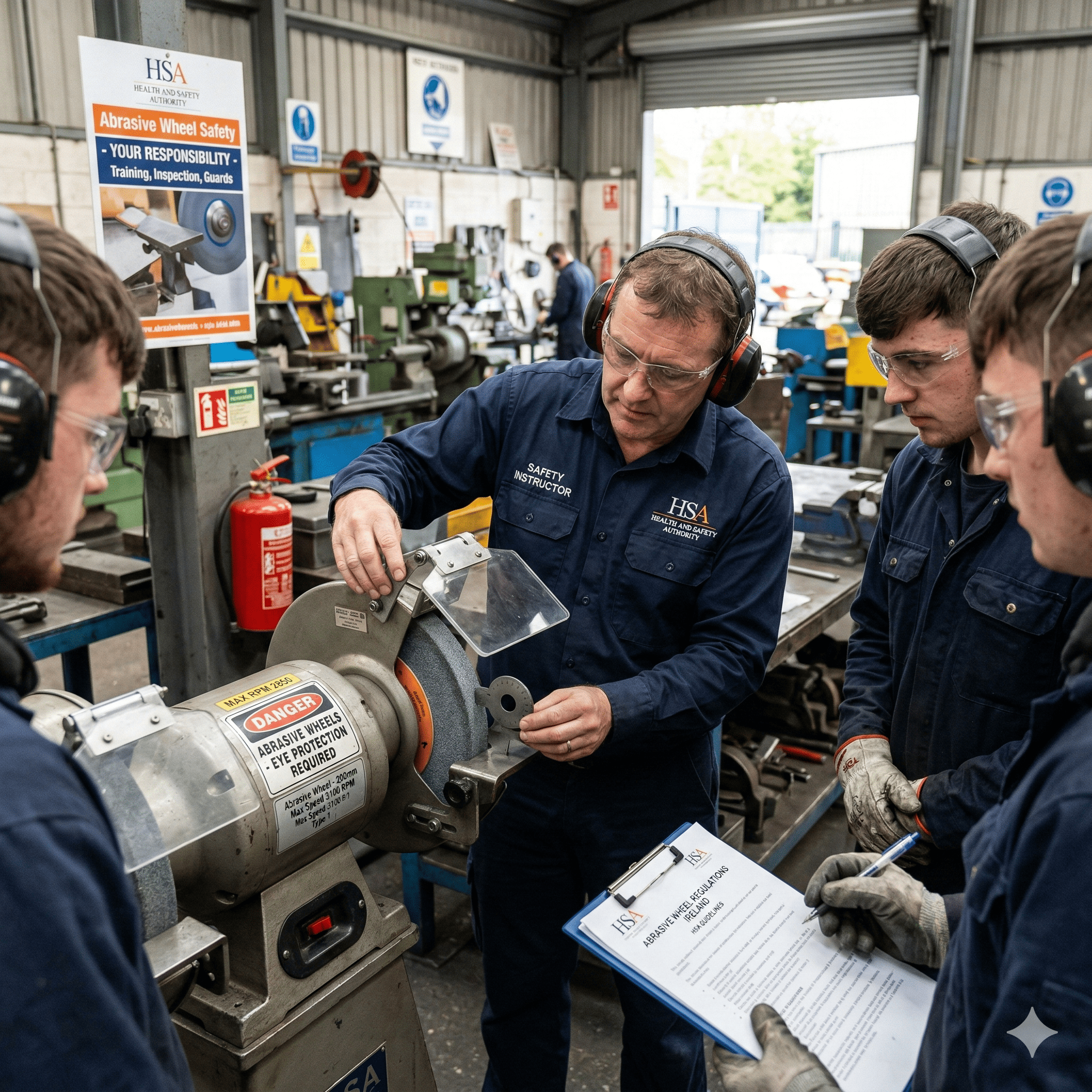
If your employees use grinders, cut-off saws, or other abrasive wheel equipment, understanding Abrasive Wheels Ireland safety regulations is essential. Irish law places clear responsibilities on employers to ensure workers are trained, competent, and protected when operating potentially dangerous machinery.
This guide explains what the regulations mean for your business and how to achieve full compliance through proper safety training Ireland and certification.
Why Abrasive Wheels Are Strictly Regulated
Abrasive wheels operate at extremely high speeds and can cause serious injuries if they shatter or are used incorrectly. Common risks include:
-
Severe cuts and lacerations
-
Eye and facial injuries
-
Burns from sparks
-
Fire hazards
-
Hand-arm vibration exposure
Because of these dangers, the Health and Safety Authority (HSA) enforces safety requirements under Irish workplace legislation.
The Legal Framework Employers Must Follow
Irish abrasive wheels regulations fall under broader workplace safety laws, including:
-
The Safety, Health and Welfare at Work Act
-
Work equipment safety regulations
-
Employer duty-of-care obligations
While the law does not focus solely on abrasive wheels, it clearly states that employers must ensure work equipment is used safely and by competent persons.
Key Employer Responsibilities Under Abrasive Wheels Ireland Regulations
1️⃣ Provide Adequate Safety Training Ireland
Employers must ensure workers who mount, change, or operate abrasive wheels receive appropriate instruction.
A recognised Abrasive Wheels Ireland training course should include:
✔ Wheel types and selection
✔ Speed ratings and compatibility
✔ Safe mounting procedures
✔ Pre-use inspection
✔ PPE requirements
✔ Legal responsibilities
A valid abrasive wheels certificate provides documented proof of compliance.
2️⃣ Ensure Worker Competence
Experience alone is not enough. Employers must verify that workers are competent before allowing them to use abrasive equipment.
Competence includes:
-
Practical knowledge
-
Understanding of hazards
-
Ability to follow safe systems of work
Formal Abrasive Wheels Ireland certification supports this requirement.
3️⃣ Conduct Risk Assessments
Before work begins, employers must identify and assess risks such as:
-
Wheel breakage
-
Flying debris
-
Sparks and fire hazards
-
Noise and vibration
Control measures must be implemented and communicated to staff.
4️⃣ Maintain Safe Equipment
Under Irish regulations, employers must ensure that:
-
Machinery is regularly inspected
-
Guards are fitted and functional
-
Defective equipment is removed from use
-
Abrasive wheels are stored correctly
Proper maintenance is part of ongoing compliance.
5️⃣ Provide PPE and Supervision
Employers must supply suitable Personal Protective Equipment, including:
-
Safety goggles or face shields
-
Hearing protection
-
Gloves
-
Protective clothing
Inexperienced workers should also receive appropriate supervision.
6️⃣ Keep Training Records
Documentation is critical. Employers should retain:
-
Copies of abrasive wheels certificates
-
Training completion dates
-
Refresher training records
-
Risk assessments
These records may be requested during inspections or audits.
Are Online Abrasive Wheels Ireland Courses Compliant?
Yes — online Abrasive Wheels Ireland training can meet regulatory requirements if the course:
-
Covers relevant safety content
-
Includes an assessment
-
Provides documented certification
-
Ensures learner understanding
The law focuses on competence, not the training format.
Consequences of Non-Compliance
Failure to meet Abrasive Wheels Ireland safety regulations can result in:
-
Improvement or prohibition notices
-
Financial penalties
-
Workplace injury claims
-
Increased insurance costs
-
Reputational damage
Proactive safety training Ireland significantly reduces these risks.
Employer Compliance Checklist
To stay compliant:
✔ Identify employees using abrasive wheels
✔ Provide recognised Abrasive Wheels Ireland training
✔ Issue and record abrasive wheels certificates
✔ Conduct regular risk assessments
✔ Maintain machinery and guards
✔ Schedule refresher training when required
Final Thoughts
Understanding Abrasive Wheels Ireland safety regulations is crucial for employers across construction, manufacturing, engineering, and maintenance sectors. Providing recognised Abrasive Wheels Ireland certification ensures workers are competent, protected, and legally compliant.
Investing in proper safety training Ireland is not just about meeting legal requirements — it’s about creating a safer, more professional workplace.